Author Archives: Tom

Karnataka, our last stop in India

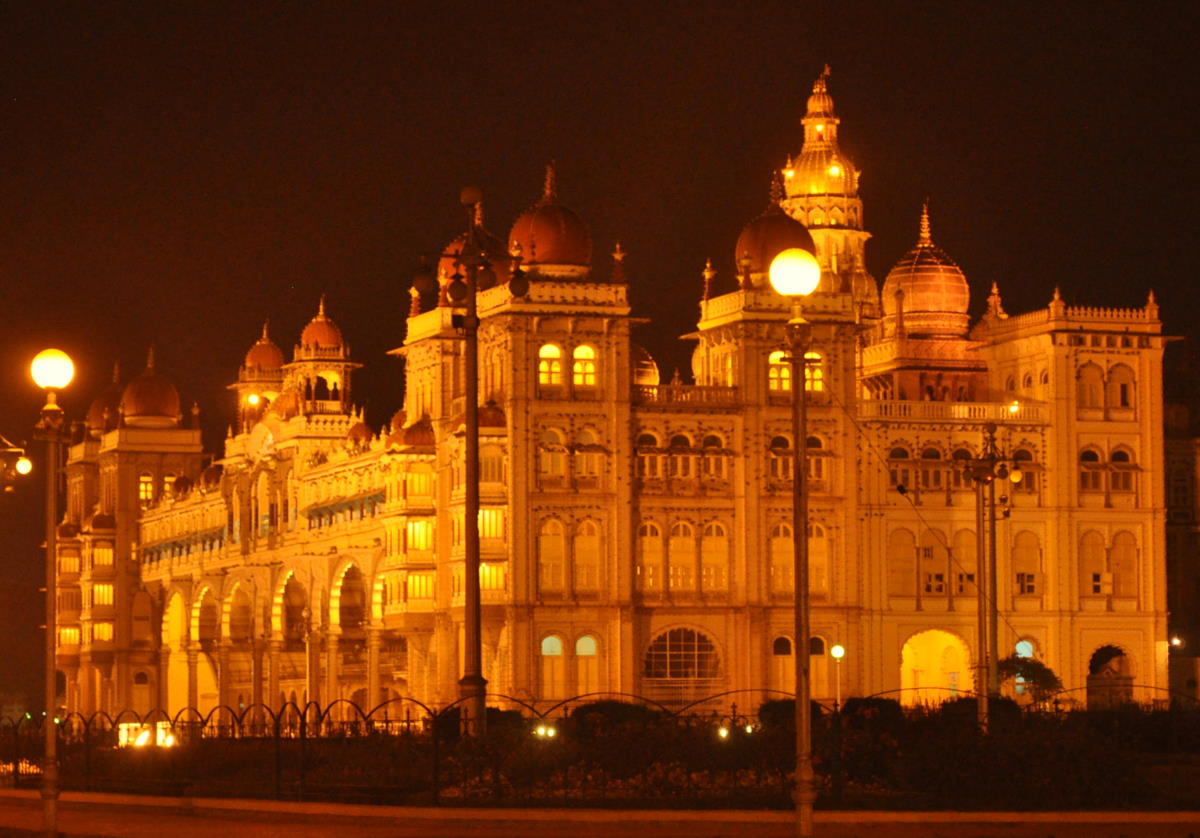
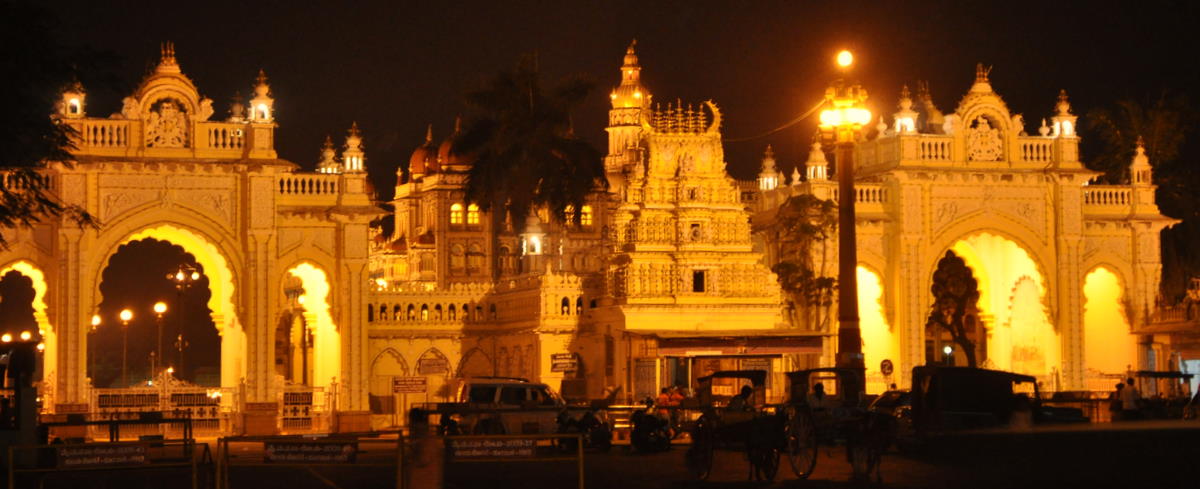
We ended our tour of southern India in the state of Karnataka. Now best known for its high-tech city Bangalore, Karnataka also boasts a number of historic sites from the former heartland of India.


Our first and longest stop was in Mysore, the traditional capital of the state. Mysore is famous for the palace of the Maharaja, which Marcia described in an earlier post. But even outside the palace, there are many monuments large and small, as well as a number of somewhat dusty museums. We found the railway museum the most interesting, with a collection of historic locomotives and cars, including the wooden sleeping and dining cars that the maharaja used when he took to the road.


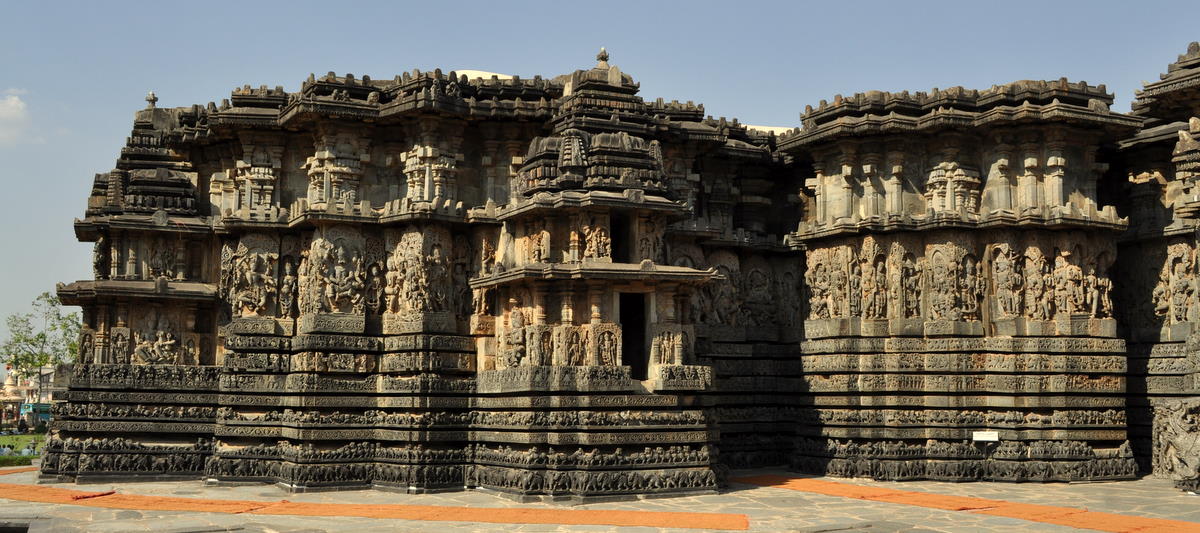
We next visited a group of three historic sites around a provincial town called Hassan. Two of these had remarkable temples created by the 12th-century Hoysala civilization. Different from anything else we had seen, these temples were built on a star-shaped plan and covered with incredibly accurate sculptures. The local artists were blessed with a kind of soapstone that remains relatively soft for the first three months out of the ground but then hardens into an extremely durable rock. In their skillful hands, this stone could be molded into highly realistic sculptures, right down to the lace-like parasols.

Our last historical visit was to Hampi, the 15th-century capital of central India. The city was once as rich and powerful as Rome, but ultimately overrun and destroyed by the Moghul invaders. Even in its ruins, the city’s immense scope was clear from the temples, palaces and bazaars that stretched across several kilometers.


We spent our last day in Bangalore, mostly shopping for drugs and other supplies that would be cheaper or easier to buy in India than in China. Bangalore is a city in transition, with traditional chaotic markets alongside modern skyscrapers for high-tech outsourcing companies. The spiffy new Bangalore airport is an inconvenient 45 kilometers of horrible traffic north of town, sometimes taking three hours through traffic. But inside it is an enclave of first-world modernism.

We flew directly from Bangalore to China on the first flight of a new Air China route. India and China are still fighting their cold war over national boundaries, but business links are starting to form. This flight will cut the travel time from Shanghai to Bangalore by more than three hours.

We are now in Kunming on our next adventure of learning Chinese. More postings soon about a very different country!

Cooling off in the hill stations

It’s true. We can’t take the heat.

Some people adjust to the hot and humid climate of southern India. We did okay for the first few weeks in Tamil Nadu, but once we got to Kerala the added moisture was too much for us. So we did the same thing the British did two centuries ago. We headed for the hills.

The Indian subcontinent is framed by a V of two ranges of mountains called the Western and Eastern Ghats. The Western Ghats are higher and very rugged, rising 2600meters (8000 feet) straight out of the plains. The rise is every bit as steep as the Himalayan foothills.


We took two breaks of a couple days each to cool off and hike around two classic hill stations that the British built to escape the heat and malarial mosquitos below. Both of these were in Tamil Nadu state, close to the border with Kerala.


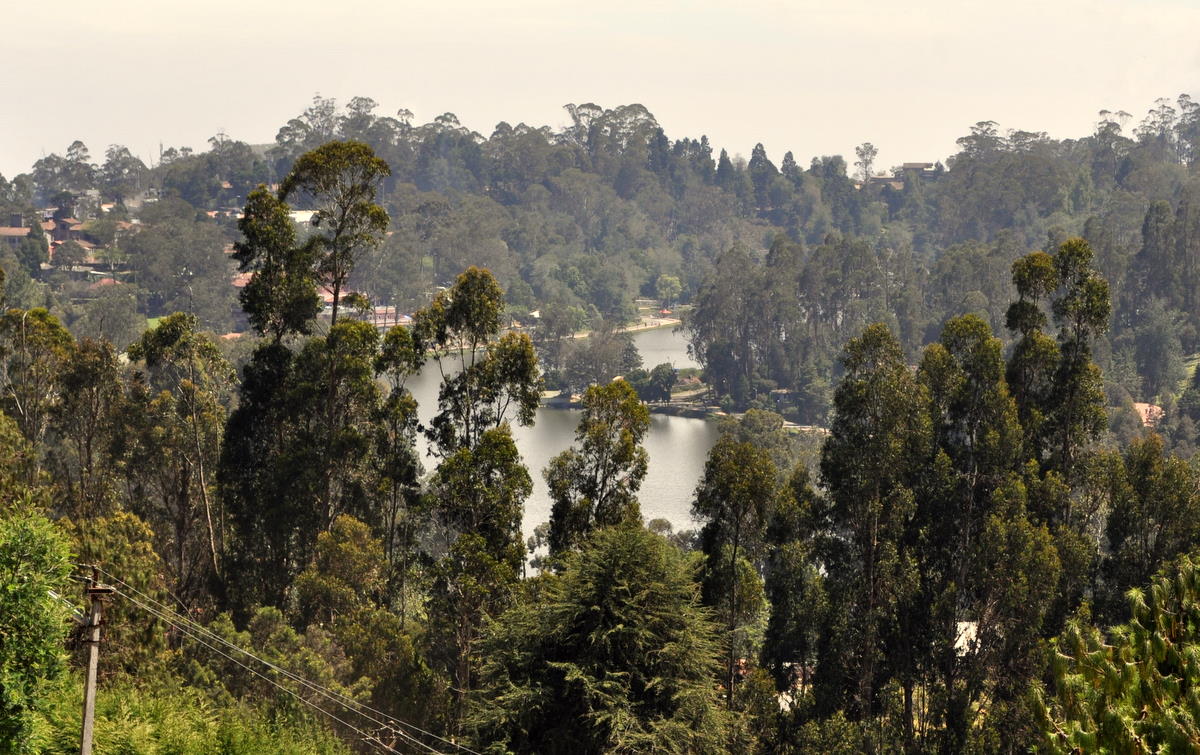
The first was Kodaikkanal, actually a somewhat newer town established in the late 1800’s and not built up until the automobile roads of the twentieth century. Kodaikkanal is built around an artificial lake, and the walking in the surrounding countryside is very peaceful. We saw local bison, flying squirrels, monkeys and lots of birds.


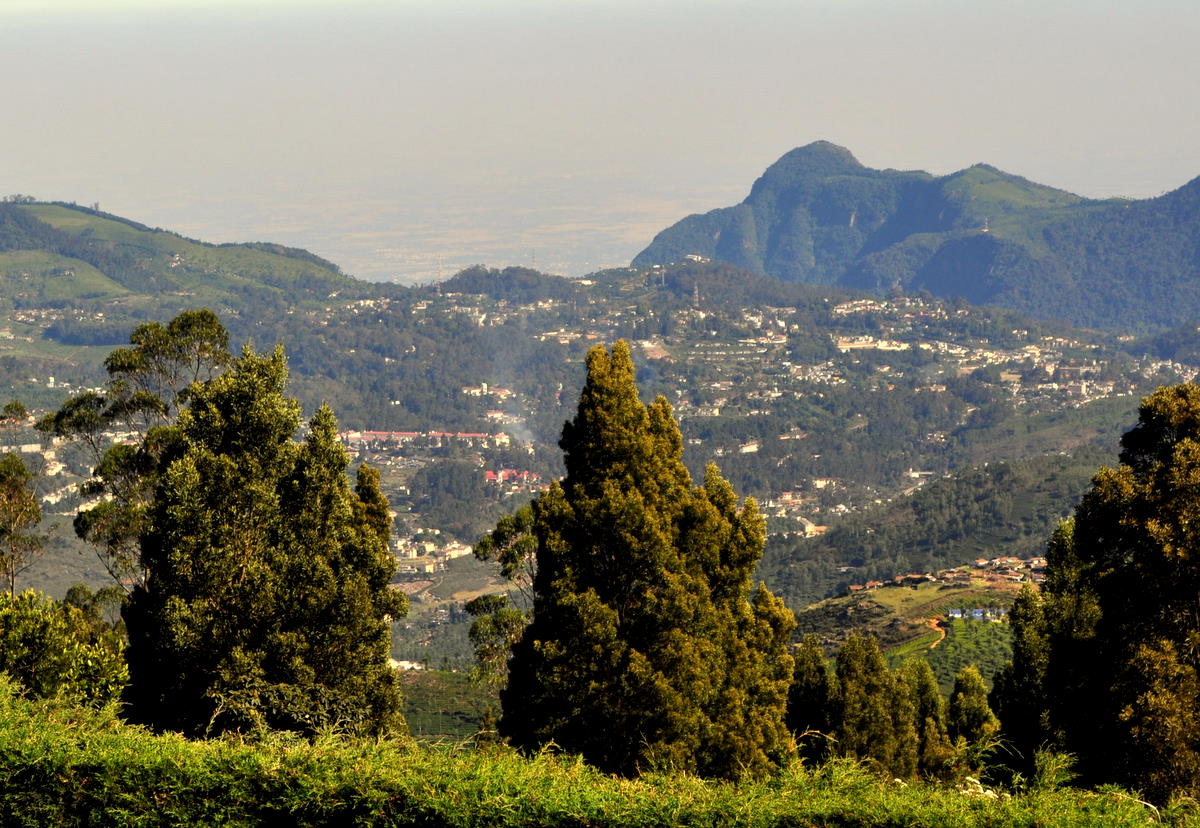
About ten days later, we went to the more famous hill station Udhagamandalam, or Ooty for short. Ooty was built in the 1830s at the end of a narrow-gauge cog railway. Steam locomotives are still used on the steepest stretch of this line, though unfortunately they were not currently running due to track damage. But even the diesel-powered trails were a throwback to a previous era when every compartment had its own door opening to the outside.


We were surprised that Ooty is a relatively large town of almost 100,000 people. The colonial relics live alongside new construction, in many cases palatial mansions owned by rich Indian businessmen. In addition to some nice hiking, we were able to enjoy the town’s lovely botanical gardens, by far the nicest we have seen in India.

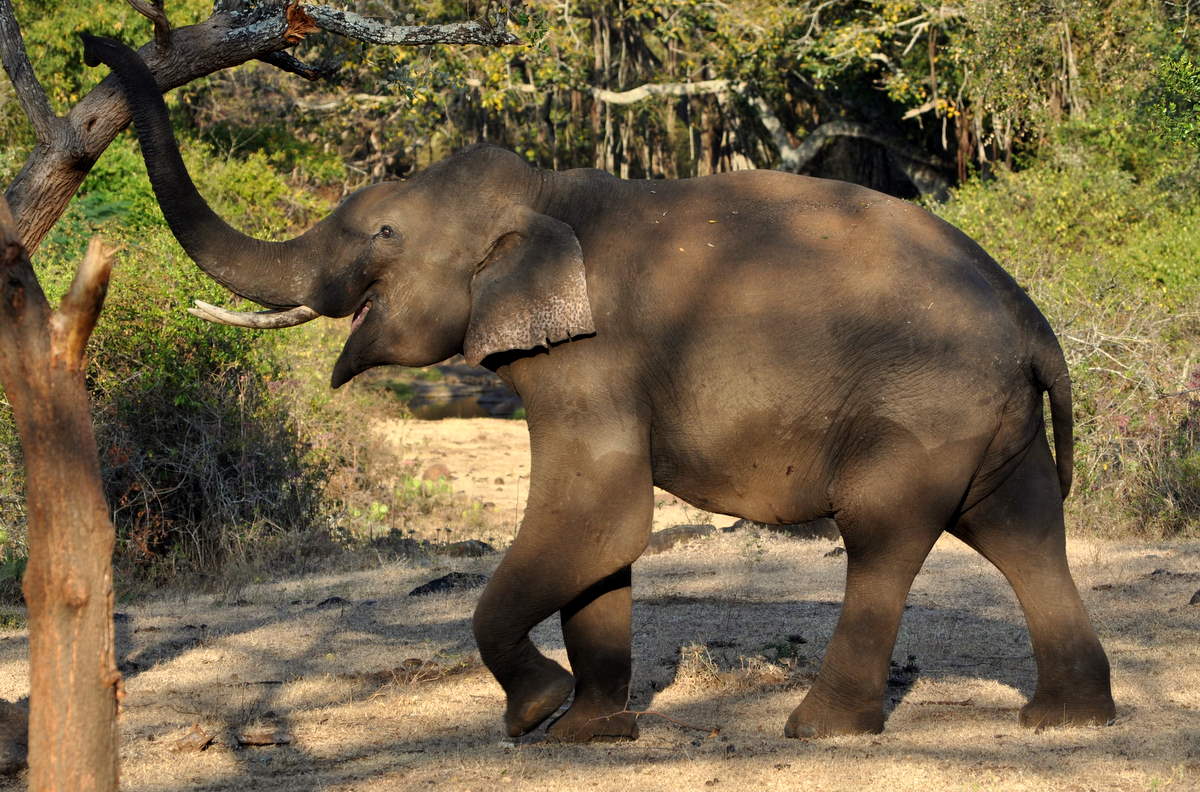
On our way downhill, we stopped at a wildlife refuge on the border with Karnataka. There was yet another boisterous village festival going on with carnival rides and loud religious ceremonies, so the wildlife was staying away from town, but we were able to go out to a small viewing house and spend a few hours watching while a wild elephant, wild boars, peacocks and deer walked by.


Rough and ready transportation

India is a hard place to get around. Distances are large and the roads are very, very bad. No wonder Indian businesspeople use airplanes wherever they can.


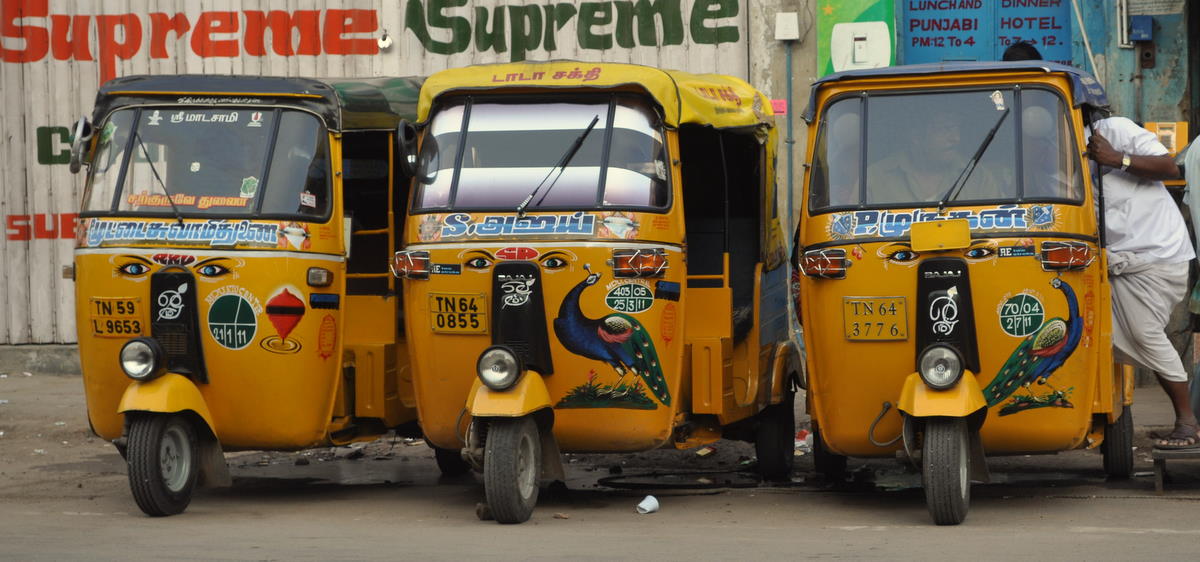
The smallest vehicle we’d typically use is the auto-rickshaw or tuk-tuk. These three-wheelers are basically a tin can on top of a small motorcycle. They are loud, polluting and slow, but very convenient. Drivers are experts at fitting small boxes between lanes of traffic, turning on a dime and often whizzing by cars and people with only a centimeter to spare. And remarkably, we found we could squeeze all our bags and ourselves into one of them. In several cases where there was no alternative, we took a tuk-tuk twenty or thirty kilometers across the countryside.

Automobiles are widely available for rent by the day. For less than the cost of a US rental car, one can hire a car with a driver who knows how to negotiate the cows, people and other obstacles that clutter an Indian highway. Lanes are for reference only and drivers pass on curves with more reliance on their horns than on visibility. The cars are usually recent Tata models, but when saving money one can also get a more classic look. Although the following Ambassador looks like it drove out of a time machine, it came off a local assembly line new in 2008.


Buses are everywhere, both in towns and across the countryside. Most look like they were riveted together out of sheet metal, which conveniently makes them easy to fix after their frequent crashes. Inside, they have the upholstery of an American school bus and sometimes the “feature” of a DVD playing Bollywood gangster flicks at high volume. Because we value our eardrums and longevity, we took as few buses as possible.


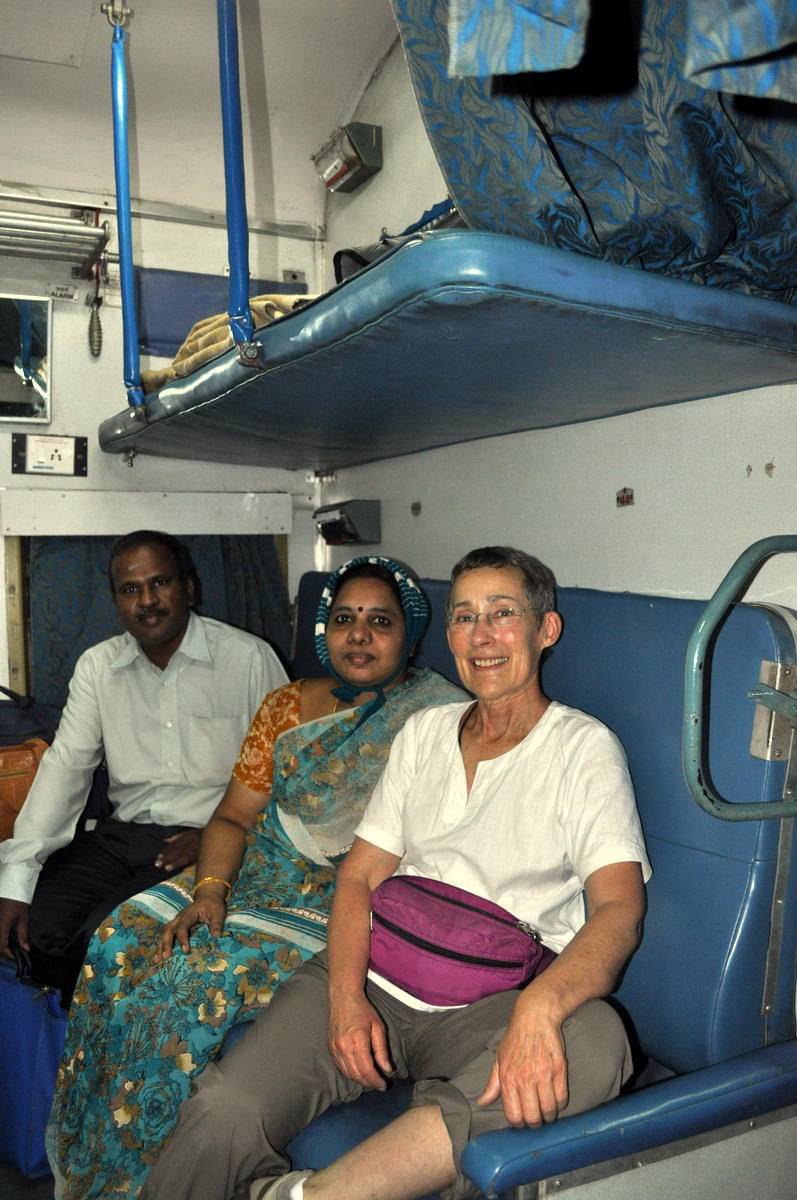
Trains are the way to go as long as you’re not in a hurry. The Indian State Railway network is the second largest in the world, and they move a lot of people around the country. Running on wide-gauge rails, Indian train cars are huge, sleeping six people in three-tier compartments, plus two more lengthwise across the aisle. Relatively comfortable air-conditioned cars are available. Trains run slowly, often stopping for a half an hour or more to let others pass. 400 kilometers is typical for an overnight journey. But despite all this, they work and they are reasonably safe.

I think I’ve finally got the hang of making a train reservation. This can be done either by sitting in a long line in the advanced booking office or by using the railway’s website. The website is more convenient because reservations can be cancelled online rather than by standing in another line at a station that might be way out of the way. Even so, the railways’ website is a disaster, often unavailable or timing out faster than one can complete a single booking. The website is run on underpowered servers that crash daily at 8am when the next day’s tickets go on sale. But it’s worth a few hours online to be assured of a bed on a moving hotel that isn’t likely to have a head-on collision with a tuk-tuk.

Kerala Backwaters

About a week ago, we moved across our first state border from Tamil Nadu into Kerala state. States are more like countries in India, with a new culture and often a new language each time you cross a boundary.

Kerala is a sleepy collection of wetlands that stretches along the western coast of the tip of India. It is actually one of the richest states but not thanks to its socialist, anti-business government. Being close to the ocean and western civilization, many people from Kerala have gone to work in the Middle East, sending petrorupees back from Dubai for their families to build modern houses.


Tourists flock to Kerala to see the “Backwaters.” For about 150 kilometers, the coast is so flat that water goes nowhere. Over time, people have organized canals and levees to separate the waterways from the fields, and these waterways provide a fascinating glimpse into rural life. It isn’t exactly untouched, since tourism is the largest industry, but it’s interesting nonetheless.


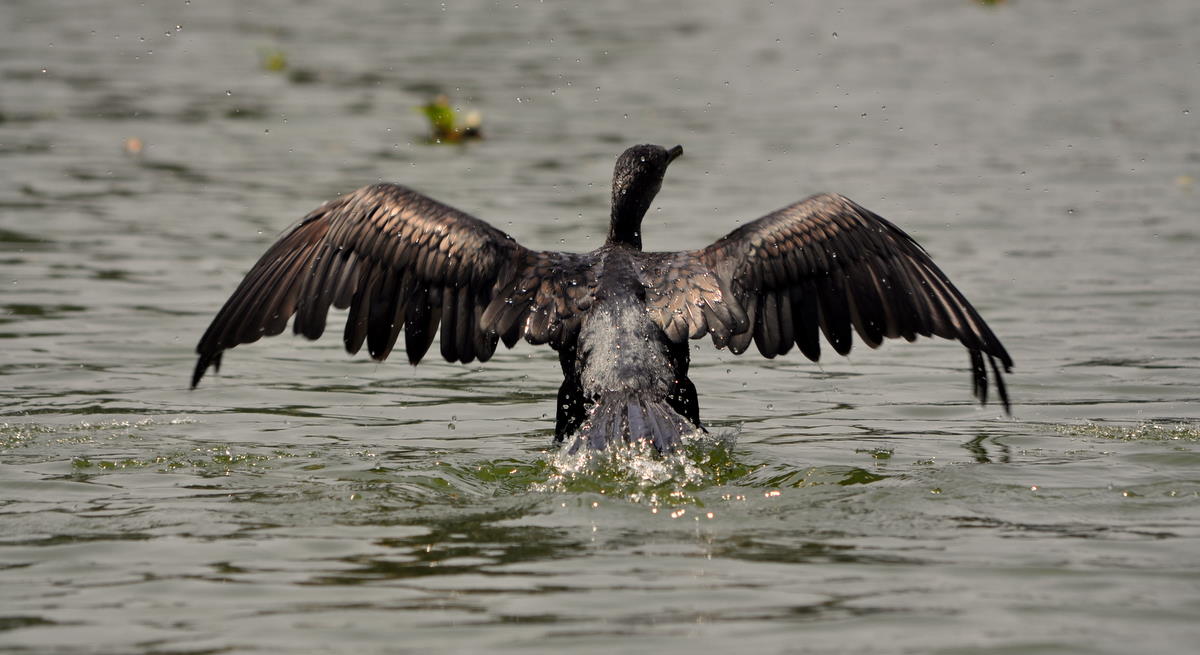
Our first boat was the full-day ride the 70 km from Kollam (Quilon) to Allepuzza (Alleppy). We took the more expensive and comfortable craft, but the program was essentially the same as the local ferries. A few ports of call for lunch and tea. Cormorants and eagles flying and sitting on posts in the water. No one in a hurry.


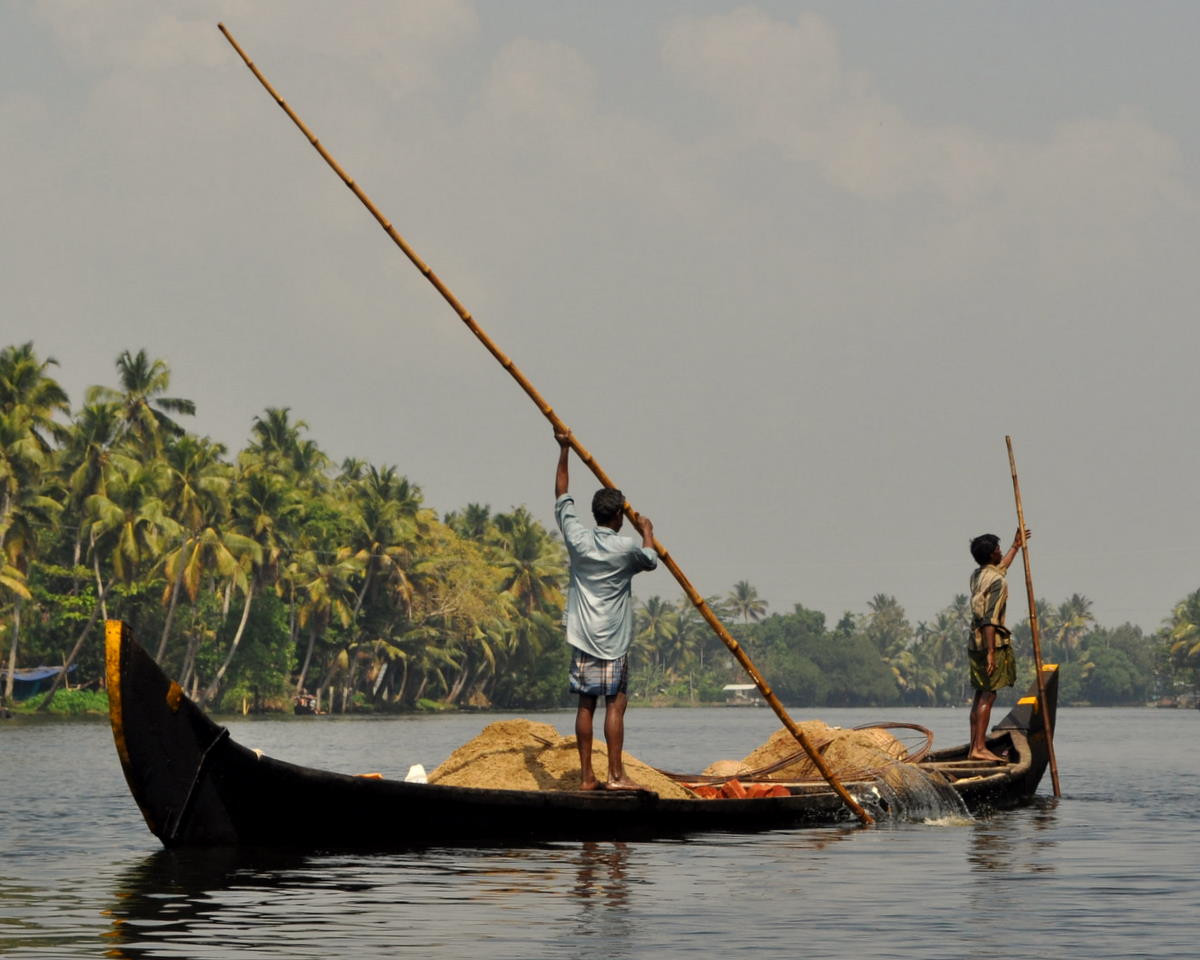
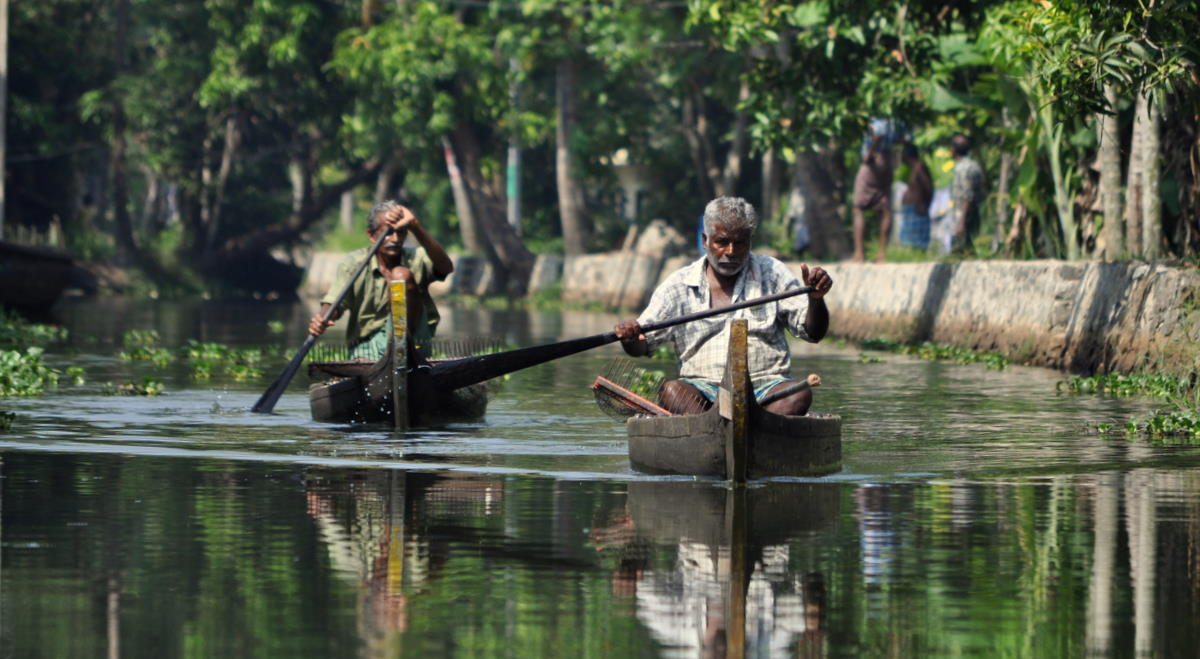
The next day, we hired a canoe. Although I love to paddle, in this heat I left the work to the local driver. It felt a bit colonial, but the driver made good money and sweat less than I did sitting on my butt in the shade. Silent and moving at a walking pace, we were able to see the smaller channels where real life still happens. Men and women washing clothes. Canoes loaded with bricks and sand almost to the waterline. A village ceremony where a man lit a small flame on a pot of flowers on his head and then splashed backwards into the water.


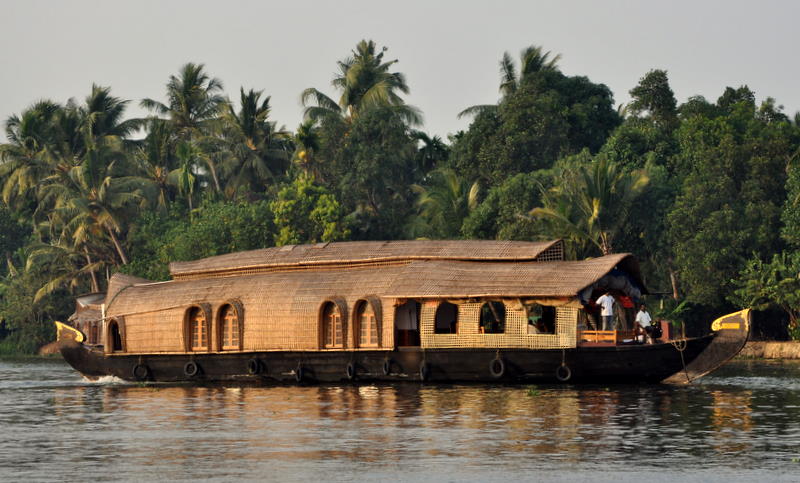
The one thing we didn’t do was rent a tourist houseboat. To feed the tourist hordes’ desire for “authentic” experiences, local people have built over 500 of these imitations of traditional working vessels. Although they make an interesting sight, they inflict serious environmental and cultural damage and just didn’t seem like the way we wanted to spend our holiday. Though I must say, they look like fun.

Kerala palaces

The capital of Kerala is Trivandrum, and it lies at the southern tip. This is a historical accident due to its long-time rule as the small kingdom of Travancore. Here and a few other places, the British found it more efficient to rule through a nominally independent puppet state. In a caste-oriented society, they could control everything if they simply controlled the guy at the top. In Travancore, the guy at the top was more interested in music than in war, which made it easy for all concerned. Descendents of these kings still live in these palaces, though they were stripped of their status after independence.

We visited two Travancore palaces. The one in Trivandrum is more modern and only partially open. Built in the Kerala style with carved horses and slatted woodwork around all sides to promote native air flow, the palace stayed remarkably cool inside. Exhibits included thrones in gold and crystal – gifts from European powers to sweeten the local raja.


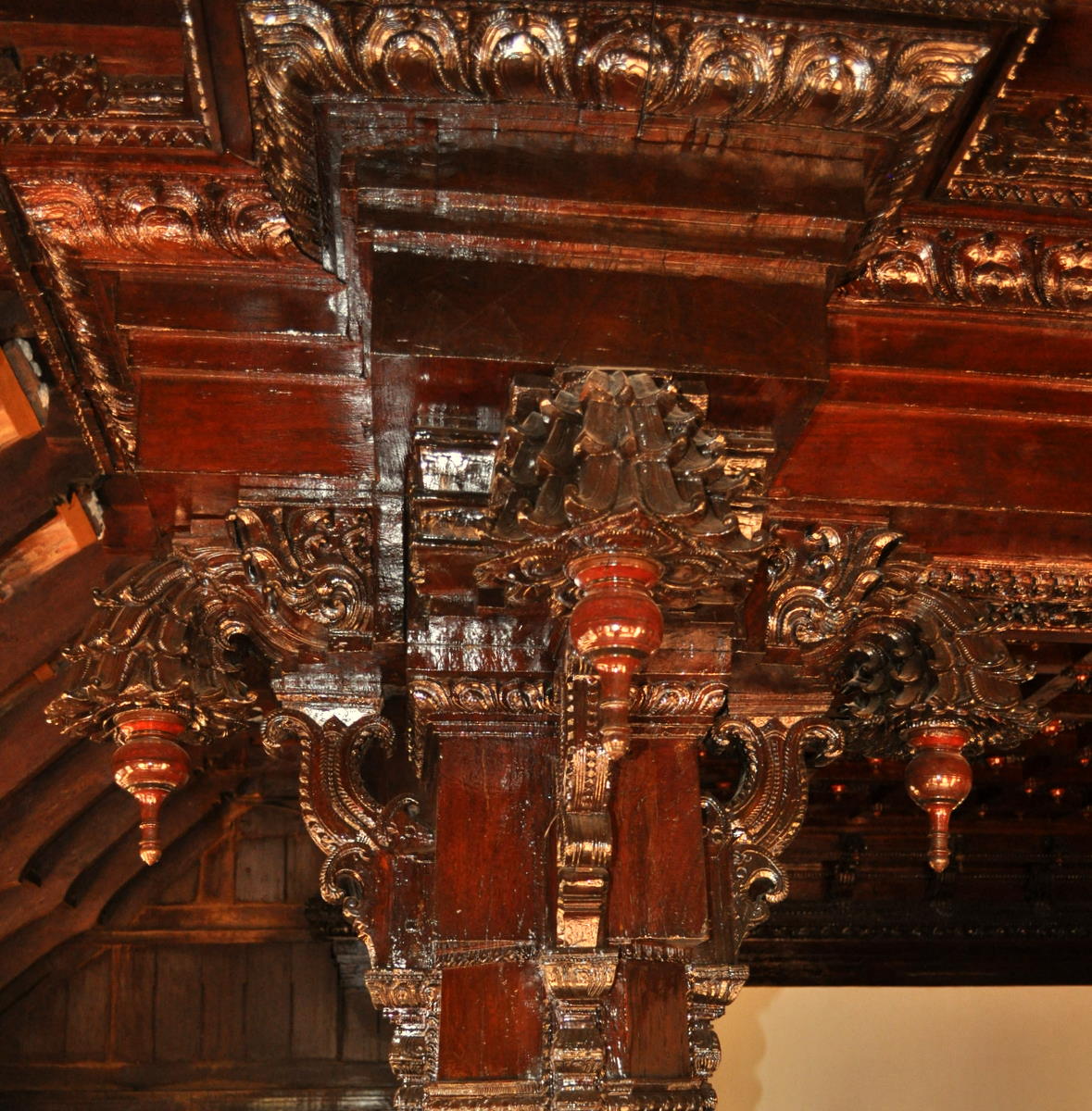
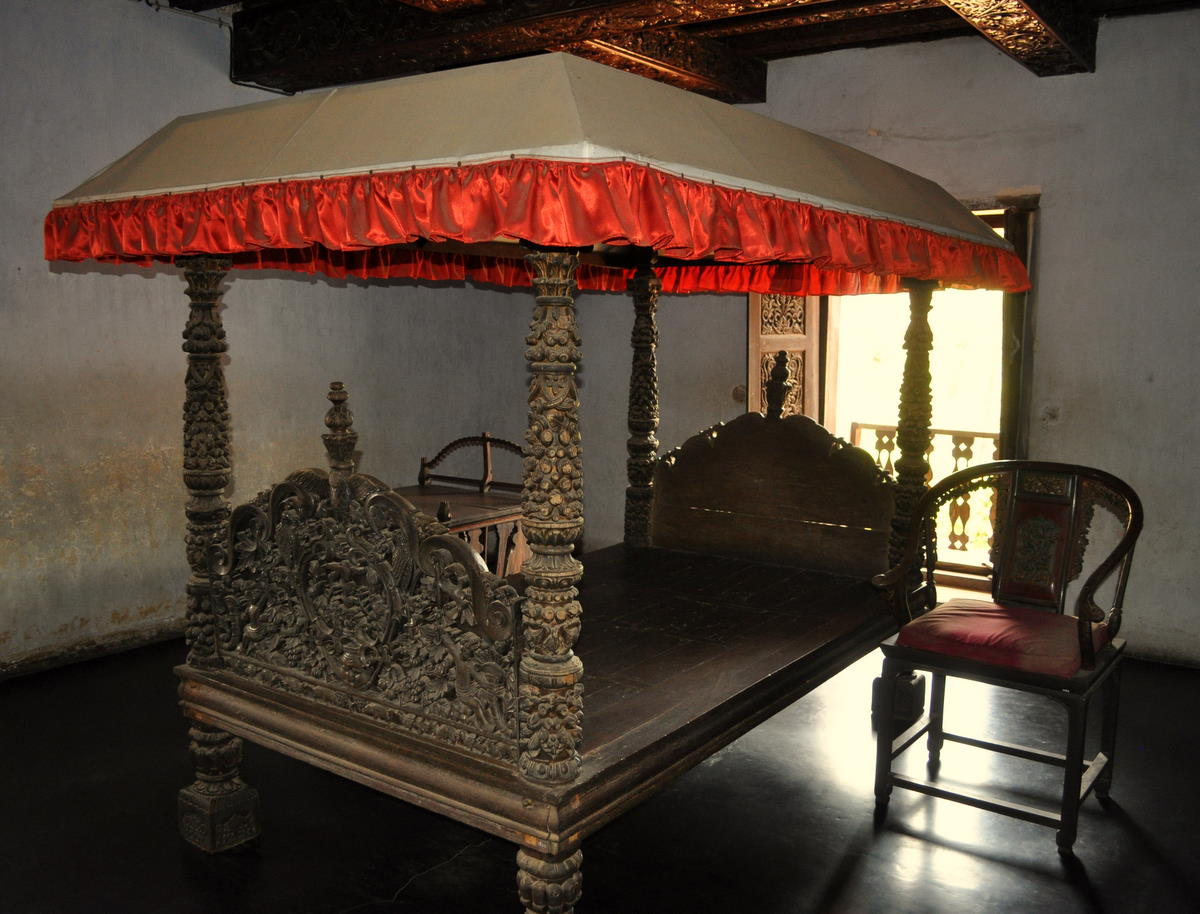
More interesting was the older palace 60 kilometers to the south in the older capital Padmanabahapuram. Some of its column carvings dated back to the sixteenth century. The king’s bed was similarly well carved.


We later spent a day in Kochi (Fort Cochin), the historical capital of another small kingdom north of the Backwaters, which was the beachhead for the Portuguese and later the Dutch and English. Here the palace contained extensive religious murals, only a few of which are visible to the public.

The beach temple festival

While we were in Kochi, a taxi driver told us about a festival happening at a beach village 16 kilometers to the north. We were initially skeptical but decided to take the chance on traveling up in the sweltering heat of the afternoon. We were glad we did.

The festival was in full force when we arrived. Several thousand people were gathered around a small temple and we could hear the sounds of music and fireworks from afar.

The centerpiece of the festival was two teams of seven elephants each. Elephants are sacred due to their association with Ganesh, and large temples often have a temple elephant who delivers blessings with his trunk in exchange for a few rupees. But here they had assembled 14 of the huge animals with gold-colored trunk ornaments and colored tassels. Three people stood on top of each elephant with ceremonial parasols and yak-hair shakers.


In front of each team of elephants played a band of drummers, trumpets and double-reed horns. Each drummer would improvise a few seconds, and the others would answer. The trumpets and horns blared single notes repeatedly as the intensity grew. To each side of the temple, fireworks wallahs set off explosions every few minutes. These bombs were capped metal containers about 15 centimeters high, which they filled with gunpowder in a tent nearby. The man lit their fuses from less than a meter away. The temple elephants seemed quite used to all the noise.

After dark was the real fireworks show. It began with a string of thousands of firecrackers and cherry bombs that stretched most of the way around the temple. I tried to film a video, but it was so loud that I had to cover my ears. This led to a full fireworks show, with rockets launched from ten-centimeter-diameter pipes. Safety precautions were limited to a rope and fence about 5 meters away, and the fireworks professionals were much closer than that. My dad would have enjoyed my front-row seat.


For a real blast, play this video:

(click here if the you cannot play the youtube video)

Rough and ready internet

The idea that India is leading the flat world electronically into the 21st century is a bit of an exaggeration. Although Indians are well educated in the sciences and large parts of the growing economy depend on the internet, these cluster in large cities and isolated groups. Much of the country lies 10 to 50 years behind in infrastructure and sophistication.

Nowhere is this more obvious than the challenges of getting connected while traveling. In the West, we are used to connecting our laptop to a wifi service in any hotel down to the cheapest Motel 6. And during the day, a visit to Starbucks or a quick scan will usually yield an open hotspot, often free.

Not in India. Most hotels haven’t even got the idea that travelers might want to connect from their rooms in the middle of the night. I’m sure it would be different if we were staying at the Taj, but we’re not being cheap, either. We are staying at midrange hotels that cater to foreign and domestic tourists and business travelers, often a business hotel near a train station. But there is nothing in the room and not even a business center or lobby hotspot. Hotel staff generally smile and say no problem – there’s an internet café down the street.

Internet cafes are everywhere, but they are really nasty places. They are rarely air-conditioned, so the heat of the computers adds to the native swelter. Mosquitoes abound. The machines are often five years old and half are broken. Viruses are rampant. Trying to use these machines for anything more than webmail is an exercise in frustration.

Many internet cafes in India refuse to let people connect their own laptop through either a cable or wifi. I’m not sure if it’s fear of viruses, terrorism, bandwidth abuse or just extra work, but they simply refuse. So each time we come to a new town, we have to interview café owners to find the one that will let us connect.

I use my iPhone a lot, though it too has challenges. I have to adjust settings and watch usage to make sure I don’t run over the 100 MB that I’ve paid for. And half of the time it insists on connecting to a carrier that doesn’t include data service or won’t connect it to an international phone.

Despite all this, we have managed to stay connected to both email and the real world. We pay all our bills through the internet. Efax sends me all my junk faxes by email. We get our postal mail thanks to our housesitters and a wonderful service called Earth Class Mail that acts like an electronic PO Box, opening our postal mail and scanning, forwarding or shredding it on our direction.

It all works, but we’re still a long way from a truly flat world.

Temples, temples, temples

We started in Tamil Nadu state because it is the closest to the start of Indian history. The Dravidian culture traces its roots through several thousand years of unbroken history, since this remote area was never overrun by the Aryans, Moghuls, and other waves that swept across the rest of India. So it is like a time capsule with thousands of well-preserved temples, some of the holiest in India.

The capital, Chennai, is huge but hardly historic, since it was founded and built by the British. There are of course many temples and they were built to the same design as temples a thousand years older. We visited several during the two days we stayed there, and they gave us a taste for what would follow.

Although there are many variations on the design that later spread throughout Asia, most Dravidian temples are laid out as a series of concentric rectangles that lead into the central image of a god, usually some manifestation of Shiva or Vishnu. Often the central object is a lingam, a simple post that represents Shiva's power and many other things. This male symbol is usually centered in a basin that represents the female and channels water and holy oils out to a spout. Here in southern India, the whole inner temple may act as the basin with a spout coming out of its side.

Each of the four entrances is usually capped with a high tower called a gopura. In the south, these towers can rise as high as 60 meters (200 feet) and they are often covered with colorful statues.

Our first stop after Chennai was Mamallapuram, a small city two hours to the south. For more than 1300 years, this has been the stone-carving captal of India. In addition to its famous Shore Temple, Mamallapuram houses a set of five “rathas” (chariots) that are small temple buildings carved out of a single rock. They were models and not used as temples; indeed some speculate that they might have been advertisements for the local stonecutters' craft.

We next traveled inland to Kanchipuram, one of the ancient capitals of India. This is now a small city that boasts many large and ancient temples. One of these called Kailasanatha was built by the Pallava civilization in the 8th century and has remained largely untouched except by some clumsy recent efforts at restoration.

Our next temple city was Tiruvannamalai, the place where Shiva is said to have demonstrated his supremacy as a lingam of fire. We arrived just after a huge festival where thousands of pilgrims lined up to receive blessings from the priests at the center of a dimly lit hall. We were sorry to have missed the spectacle, which culminated in a fire at the top of the mountain overlooking the temple, but we were glad not to have to battle the crowds.

We took a brief break from the temples in Pondicherry, the capital of the small French colony in southern India. Pondicherry is an incongruous enclave with Catholic cathedrals at its center and Parisian street names like Rue Suffren. Yet even here the local ashram owns most of the town.

The next town south was Chidambaram, considered the place where Shiva won a dancing competition and became Nataraja, Lord of the Dance. Six times a day for more than a thousand years, the local priests have been performing a ceremony to help Shiva continue the cycle of creation.

We witnessed two of these almost Dionysian ceremonies. In preparation, the priests lit a large number of oil lamps inside the temple. Then, the ceremony began with priests ringing large and small bells in the courtyard and intense rhythmic drumming. Inside the temple, the chief priest lifted one burning lamp after another in a blessing motion. At one point, the drummers led the crowd of worshippers on a procession clockwise around the temple. Finally, two priests ascended into the innermost sanctum and did some more invocations culminating in a circle with the largest burning lamp. This completed the cycle, and the worshippers dispersed satisfied that the world can continue until the next ceremony.

Our next stops were a group of three temples built by the 1000-year-old Chola civilization. In this early period, the central tower dominated the building. Tanjore (Thanjavur), the most famous of these, had the tallest tower in India at the time of its construction. We were struck by the elegance of both its architecture and its many statues.

Tamil Nadu's largest interior cities also have its largest temples. At Trichy, a huge temple dedicated to Vishnu has high gopuras at its main entrances leading to not less than eight enclosures around the central shrine. The outer layers almost blend into the city, with priests and holy object hawkers living and working within its walls. Most of this temple was relatively modern, with the largest South gopura finished only twenty years ago.

After a short break, which we'll describe in other postings, we went to Madurai, a 2500-year-old city that was capital of several civilizations. Its central temple contains areas for both Shiva and a manifestation of his consort Parvati. During the day, each is worshipped in its respective inner sanctum, but at night there is a ceremony to allow them to sleep together. At 9pm, the priests ring a bell at Shiva's temple to signal the start of a procession that brings his traveling image out in a silver sedan chair. The priests are careful to fan the box to keep the god cool, and they provide flowers and food such as a banana. Finally, when Parvati is ready, they take the image into a special room inside her temple and sing lullabies.


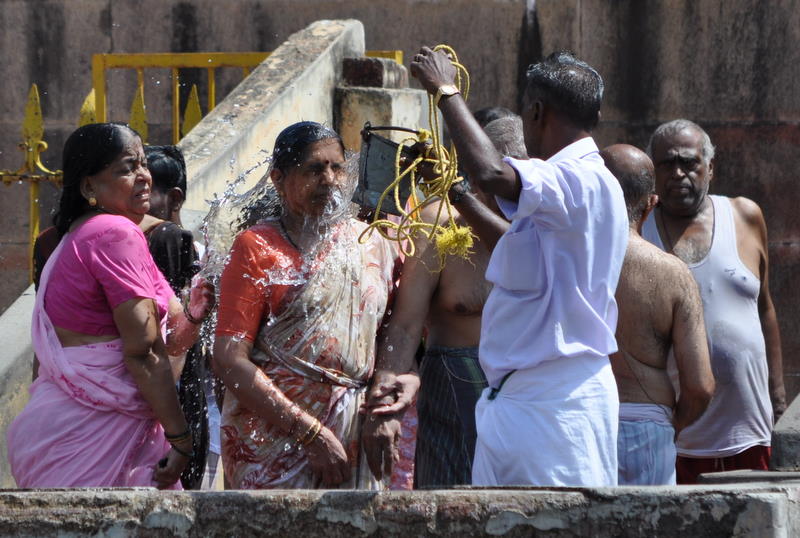
The final stop on our temple circuit was Rameswaram, a pilgrimage town on an island that almost forms a land bridge to Sri Lanka. It is here that Rama was thought to have built a lingam of sand to make up to Shiva after rescuing his wife from the monster Ravena, who was a brahmin and therefore not entirely cool to kill. This is a big stop on the Hindu pilgrim trail, with thousands dousing themselves with the water from 22 tanks around the temple, each thought to have a different shealing property. The temple itself is famous for its long corridors built in the 16th century. Several of them are over 200 meters long and supported by 1216 carved pillars.
Forts and palaces

Although temples dominated our itinerary, we also saw some more secular monuments along the way.

The largest was a fort built over several centuries at Gingee, a small town in the middle of nowhere. The outer defensive wall was a triangle measuring several kilometers on each side, with walls over 10 meters thick. Inside, many layers of imposing defences were built on three mountains that rose out of the plains. We climbed the 1200 steps up the highest of these, unbearably hot even on a winter morning. These defences seemed impregnable, but they did not ultimately stop anyone, as the fort passed from Indian to French to British hands. I can only guess that in a determined siege, walls and mountains count less than access to food, water, and local support.

Other forts seemed to have a less military purpose. Trichy is famous for its Rock Fort, built to overlook the city by the seventeenth-century Nayak kings. Most of the construction along the 400 steps to the summit was temples, however, and the castle at the top seemed more for living than defence.

In Tanjore, the same Chola king who built the temple with the great tower also built a palace. Most of what remains today, however, is from the 17th to 19th centuries and is slowly rotting even though the king's descendants are still living inside.

Madurai has an impressive palace built by the Nayak kings in the 17th century. Much of it was torn down to reuse building materials, a common sport of both Indian and British rulers. But the main hall is still impressive enough to serve as backdrop for innumerable Bollywood movies, one of which was filming an assassination scene while we visited.

The most remarkable was a forgotten palace in Ramanathapuram, a small town on the road back from Rameswaram. Only one guidebook thought to mention it, and it was so obscure that our driver had to ask directions to find it down dirt streets. And yet inside, every wall and ceiling was covered with impressive 17th-century murals. They were unlit and unmaintained, with piles of wood scattered around the floor. The Architectural Survey of India's only interest seemed to be employing two people to sell tickets to the occasional visitor.

Rough and ready hotels

The leaders of Rough and Ready Tours actually prefer nice hotels. We can't afford to stay in five-star luxury, but we don't need to go to the bohemian extreme either. In India, $30 can buy a decent air-conditioned room, sometimes the best in town.

But often things don't work perfectly. A few good hotels have internet connections, but the routers are usually broken or working only in the lobby. Hot water might be turned on only a few hours each morning, and it can take forever to reach the tap. Better are the “geysers” (pronounced “geezers”), personal water heaters that are almost as fast as flash heaters. But these are often turned on by complex switches that only the hotel staff know.

Hotel staff can be unfamiliar with modern appliances. We struggled to get a working remote control for an air conditioner. The bellman brought us several and seemed convinced they were working even though they had no effect on the unit. It was not until I pointed out that they were from a different manufacturer that he realized he had to find a different one.

Service can be spotty. Because of a festival one day, we were forced to pay extra for a deluxe room in an upscale hotel on the edge of town. The room was great, but their restaurant's service was the worst I have seen anywhere in the world.

We were the first people in the restaurant when we arrived a little before 7. We had to fight to get a menu, which was unnecessary because they did not start serving food until 7:30 and even then almost nothing was available. After a long interview in sign language, we convinced the waiter to bring a small starter, thinking we could take a minute to decide on the rest.

Big mistake. The waiter disappeared for about 20 minutes and finally came back with the snack. But nothing could convince him to take our order. He went back and forth to other tables pretending to do something. Each time he would then go back to the kitchen window and write on his pad for 10 minutes for no particular reason. By the time we physically grabbed him and gave him our order, several other customers had stormed out of the restaurant.

Amazingly, our food showed up almost immediately.

And then there was the Ritz. All the guidebooks agreed that one temple town had no good hotels. But two books suggested the Hotel Ritz. We made a reservation and had good hopes when we pulled up to the “Al Ritz” sign.

We should have moved on at the first sign of trouble. The first room they showed had an air conditioner, but it blew only hot air. The secod room was very smokey. In a third room, the a/c worked but the ceiling fan did not. In the fourth room, they couldn't get the a/c going. Finally they found a fifth room where everything more or less worked. At least they had plenty of free rooms.

We got out our sleeping bags to avoid the bed bugs. The sheets and pillowcases felt like they hadn't been washed in a month. In a few places we could see throgh holes to the mattress.

As we settled in for the night, we noticed small blood stains on the wall where previous residents had swatted mosquitos. Sure enough, the mosquitos joined the bed bugs in bothering us all night even though we turned the ceiling fan on high. They were probably coming in through a large hole in the bathroom wall.

Flushing the toilet was also amusing. The plumbing had cracked in such a way that half the water spurted out the back of the basin. Fortunately, Indian hotel bathrooms have drains in the floors.

We were glad it was for only one night.