Author Archives: Marcia

Obesity

The Times of India, 2/23/10, dateline Mysore: The police launched a fitness training program for their personnel. Over 70 personnel who have been found obese have been selected for training.

Despite a seemingly healthy traditional vegetarian diet rich in vegetables, grains, and legumes, middle-class mature adults, both men and women, tend to be quite fat.

There are probably multiple causes: increasing prosperity, abundant use of deep-fry as a cooking method and butter as an ingredient, sedentary life style, a cultural sweet tooth attracted to the wide variety of confections on offer in ubiquitous shops and food stalls specializing in sweets.


By contrast, mature adult villagers are thin as saplings. During the heat of midday, village men often hike their dotis or lunghis above the knee. Flesh seem to be stretched over nothing but sinew and bone. Perhaps body fat is a traditional cultural sign of wealth and status.

According to Wikipedia, obesity is epidemic in India. Among the causes may be the increasing consumption of processed foods. Additionally, many Indians carry a gene that predisposes for fat accumulation, especially around the middle.

Meals Ready

Typical south Indian breakfasts and lunches are served on a banana leaf – placed either directly on the table or on a large round stainless steel plate.


For breakfast we can choose one or more of several standard menu offerings: masala dosa is a large thin, crispy crepe-like pancacke made from rice and lentil flour and filled with a spicy mixture of potato and onion; pongal is a porriage-like concoction made from rice boiled in milk and flavored with cashew nuts, curry leaves, peppers and ghee (clarified butter); idli is steamed bread made of a batter of special rice and lentil flours, fermented overnight like sour dough, and served with sambar, a spicy lentil and vegetable soup for dipping; vada is bread made from lentil flour and masala spices, deep fried in either a doughnut or doughnut hole shape; poori is puffy, deep fried circle-shaped bread, like American Indian fry bread but unsweatened; paratha is fried bread made from dough rich in ghee, may include egg or potato.

Filter coffee is strong, dark, sweet and mixed with frothy boiling hot milk. Both coffee and tea are generally served sweet, but I always request 'no sugar'. Coffee is served in a small, stainless cup set inside a small stainless bowl. The drill is to pour the coffee back and forth between the two vessels until cool enough to drink. Upscale restaurants serve milk coffee in a regular cup and saucer. It is usually Nes (short for Nescafe coffee powder), which costs more than the delicious filter coffee.


A thali meal is a fast food lunch, generally vegetarian, the south Indian equivalent of the American burger and fries. Restaurants specializing in lunch thali advertise 'Meals Ready'. First a waiter places a banana leaf in front of each diner. Then another waiter arrives carrying a bucket-like vessel with three compartments containing various masala-seasoned vegetable stews and scoops a portion from each onto the banana leaf. Next another server ladles out various Indian pickle condiments. Rice comes next. A waiter carrying a large pot of steamed rice scoops out a giant heap onto the center of the banana leaf. Another waiter follows close behind ladeling dhal, a thin, spicy lentil soup, onto the rice. Thali lunch may also include small stainless bowls of yogurt and a sweet, pudding-like dessert.

All the locals, no matter what age, gender, or social class, dig in with gusto using only the right hand. I tried eating with my hand but after a couple of awkward meals gave up and used fork and spoon.

Everywhere, from upscale restaurants to open-front food stalls to push-cart street vendors, fresh fruit juice is available: orange, sweet lime, pineapple, grape, apple and sugarcane. Fresh lime juice with soda and sugar is a favorite all over south India. It's a favorite of mine too, but unsweetened so I can add just a touch.

South India

Of India’s 28 states, four are located in the southern portion of the Indian peninsula:

  • Tamil Nadu – about the size of Greece or Louisiana and stretching 910 km (550 miles) along the Bay of Bengal and across from Sri Lanka.
  • Kerala – about the size of Switzerland or Maryland and stretching 580 km (360 miles) along the Arabian Sea.
  • Karnataka – about the size of Syria or Oregon, Bangalore is its capital and high tech center.
  • Andhra Pradesh – India’s fourth largest state, larger than France and about the size of Colorado, Hyderabad is its capital and high tech center.

The States Reorganization Act created states along linguistic lines in 1956. In each of the four southern states the majority of the population speaks one of four Dravidian languages derived from ancient Tamil. Linguists disagree about the relationship of Dravidian languages to other language groups. Nothing is known about the ancient Dravidian parent language. It is widely accepted that Dravidian speakers must have been widespread throughout India before the arrival of Indo-European languages and Vedic Sanskrit from the steppes of central Asia.

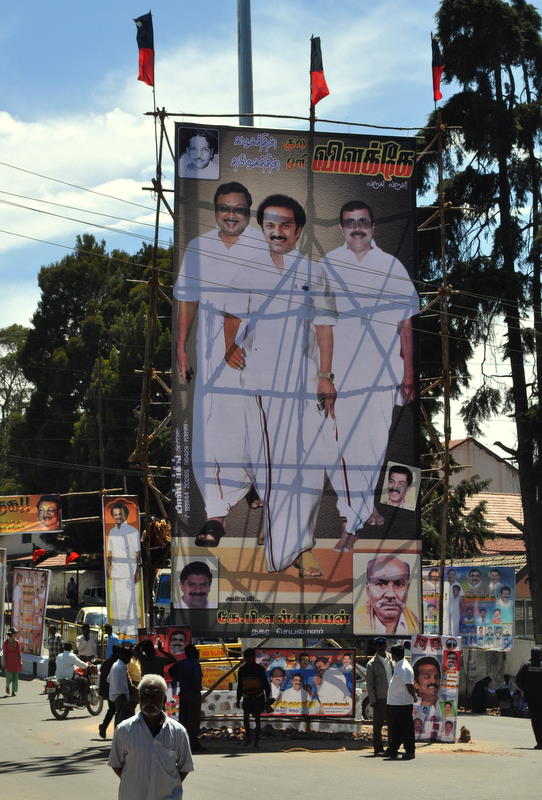
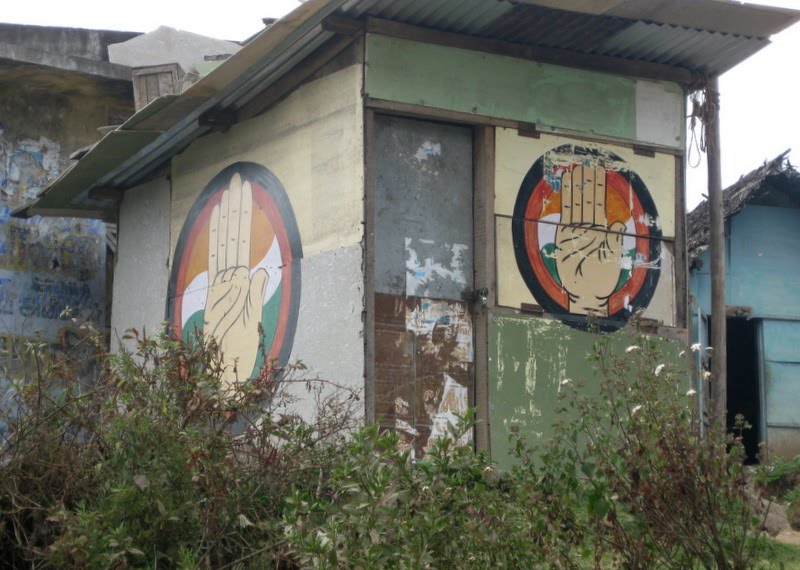
State politics in southern states tends to be dominated by language-based local parties and by all appearances is a lively matter. Regional newspapers place heavy emphasis on local politics. In one of the towns we visited, a new bus station was about to open, with Tamil Nadu’s Deputy Chief Minister attending. In preparation, workers set up hundreds of huge placards with his picture all over the town and its approaches. The Tamil Nadu supreme court recently had to overturn a right-wing party’s attempt to require all people moving into the state to speak Tamil. Each political party is known by both its name and a symbol, which are both shown on ballots to help illiterate voters.


Because of its many seaports, southern India has a long history of trade-based relations with other parts of the world. In the ninth century BC, King Solomon may have had trade relations with a port along the coast of present day Kerala. Chinese, Arabic, Greek, and Roman texts provide first-hand accounts of lively trade and cultural exchange. Syrian Christian missionaries arrived in the first century AD to proselytize Kerala’s resident Jewish community. Islam arrived with Arabic traders centuries before Islamic Mogul rule. Portuguese, Dutch, French and English established trading arrangements with local rulers. Catholic and Protestant missions succeeded each other with shifting politically-based trade relations.

The current sari and salwar kameez traditional dress for women dates from the nineteenth century and was at least partly a result of Victorian prudery. In the heat of parts of south India, women and men traditionally covered only their lower bodies for all but ceremonial occasions.

Due perhaps to its ancient cosmopolitan culture, southern India tends to be more forward looking than the north. South India’s states have the highest literacy and standard of living. State and local governments tend to be less corrupt than in northern India, with more government resources going to infrastructure and social programs. It’s not surprising that India’s high-tech centers are concentrated in southern India.

For an interesting perspective on modern India, I recommend Financial Times journalist Edward Luce’s 2006 book In Spite of the Gods.

Kattai Kuttu Performance

Soon after arriving in India, we got an opportunity to attend an authentic kattai kuttu performance at an all-night village festival.

Kattai kuttu is one of several traditional Indian entertainments and is indigenous to Tamil Nadu state. A mixture of music, dance and theater, kattai kuttu performances enact well-known mythological stories from the Mahabharata, making the legends accessible to the people.

We arrived after dark and the festival, honoring the village goddess, was already in progress. A tractor pulled a large flower-decorated float carrying an image of the goddess and many children through town. A man with a long pole hoisted electrical wires so that the float could pass underneath.

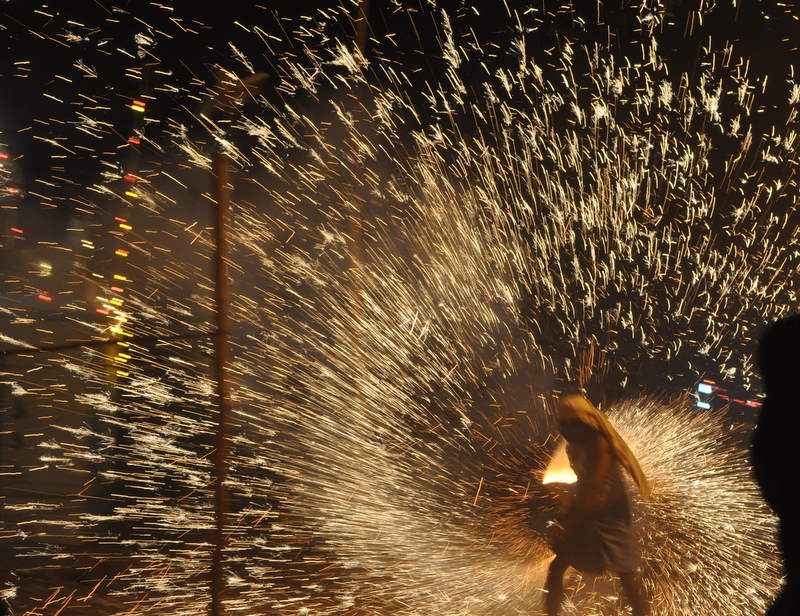
Then villagers set off fireworks and tremendous firecracker ‘bombs’, all the more impressive because we could have walked right up to the exploding shells.


The kattai kuttu performance began at 11pm and ended at 7am without a break. Along with 200-300 villagers, we sat on the ground under the stars. From time to time we lay down and napped or got up and walked around. Some villagers slept, but a good core paid rapt attention through the night. Audience members sometimes came on the stage to give money to the actors playing their favorite deities.


Performers wore elaborate makeup and costumes dictated by the kattai kuttu tradition. The actors spoke, sang and danced accompanied by a chorus of singers and an orchestra of a harmonium, finger cymbals, drums and a loud oboe-like instrument.


Most of the actors, chorus members and musicians were students at a boarding school founded by a hereditary kattai kuttu actor. The school’s mission is to pass on the kattai kuttu tradition and to provide young performers with an education so they can qualify for good jobs in India’s growing economy – performing alone will not provide a living.

Women’s dress


I am struck by women’s dress and the manner in which it juxtaposes modesty and display. Almost without exception, south Indian women who I’ve seen out in public wear traditional clothing – either the 6.5m sari draped over a short sleeve, close-fitting, midriff-baring top or the three piece salwar kamise – long or elbow length sleeve top of varying lengths, trousers varying from baggy to tights, and a long shawl draped in such a way that both ends hang down the back . Married women generally wear the sari and single women the salwar kamise.

For foreigner women or the odd local women who wear western clothing, trousers are okay but shorts, bare legs and bare shoulders are considered immodest – even though daytime temperatures are hot throughout the year. Except in the most popular tourist destinations, foreigners are fairly rare and the locals seem to enjoy looking us over from a distance. Northern Hemisphere tourists who choose to wear tank tops and short pants are either ignorant of local sensibilities or choose to ignore them.


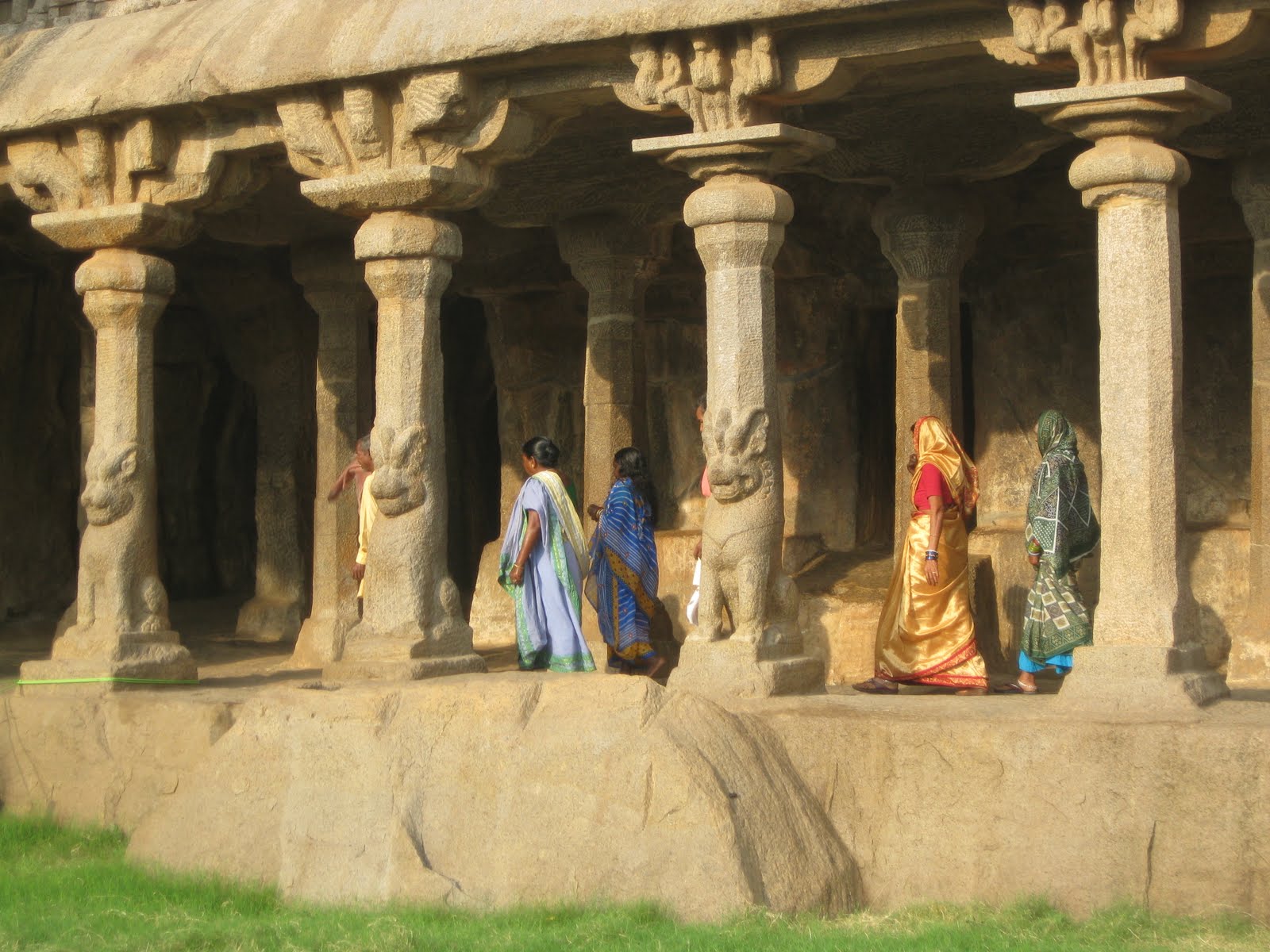
Here in the south, the center of silk weaving, saris of thin silk are common dress for shopping and visiting temples. Colors range across the spectrum from deep red, orange, purple and green, to brilliant red and yellow, to pastels of every hue. Designs are woven into the silk saris and always include a border and often an intricate design on the portion of the sari that drapes down over the back. Designs are made with gold thread and often include sequins and shiny beads. Necklaces, ear rings and large filigree nose studs are of various grades of real gold. Jewelry also includes rings on the fingers and toes and ankle bracelets of small bells that jingle with each step. Unlike in Mediterranean countries where traditionally dressed older women often wear black, white haired grandmothers wear saris as bright as those of their granddaughters.


School girls wear simple uniforms – blouse and mid-calf length skirt or simple cotton salwar kamise. Otherwise out in public with parents, little girls wear knee length dresses or salwar kamise (without the shawl) often decorated with ruffles, sequins or other things that sparkle. Older girls wear salwar kamise or blouses with modest length sleeves and long skirts. The fabrics are often silks of beautiful colors, textures and decorations.

The smattering of Muslim women in their long black robes, black headscarves, and for some a veil over the nose and mouth, stand out like black crows among peacocks. Their girl children dress in bright colors like Hindu children. I can only imagine that under the black shroud, the Muslim women are just as colorful as their Hindu sisters.

Waiting for Transport

It is late afternoon of our second full day in Nepalgunj waiting for transport to Juphal and the beginning of our trek. Tom and I recall now that “waiting for transport” is an experience we’ve had before while embarked on a rough and ready tour. Most recently in Kaktovik, Alaska, on the Arctic Ocean, pinned down by bad weather, we waited patiently for a flight back to Fairbanks.

Even though both the temperature and humidity are high we set out from the refuge of our hotel to have a look at Nepalgunj. It is one of Nepal’s largest cities. The streets are crammed with bicycles, bicycle rickshaws, horse-drawn carts carrying people or freight and tractors pulling loads of bricks or lumber.

Women are wearing colorful saris or the pants and overdress salwar kameez. A few women are in full black burka. Men are wearing a wide variety of traditional clothing. Many, especially younger men, wear western clothing. Though the loose fitting traditional garments appear more comfortable for the climate.

While walking around, we saw one other western couple. But western foreigners are rare here. Even our Sherpa guide and cook are foreigners here. The locals love to stare at us. Only the young and old are brave enough to risk interacting with us. Young boys and girls offer a shy “Hi” or “Hello” and seem tickled to get a response get in English. A very old sari-clad woman made a big point of vigorously waving to us from across the street and gave me a wide toothless grin when I waved back.