Category Archives: All

Termiz

Out of the way and without major tourist sites, Termiz is skipped by most visitors unless they are trying to cross the bridge over the Amu Darya (Oxus) River into Afghanistan. We weren’t going to do that, but we wanted to visit anyway because of a museum and a handful of historical sites in the area.

Termiz was as close to ancient Bactria as we were going to get. Bactria’s center was Balkh 100 kilometers (60 miles) to the south across the rolling fields of northern Afghanistan. But it was not safe and probably not very interesting anyway, because Balkh has apparently been ruined even more than ancient Merv.

Our first stop was the town’s historical museum, which had a few interesting artifacts from the stone age through the present. The most interesting were from the Kushan period of the first through fourth centuries CE. This was a Buddhist culture that spilled over the mountains from India, and it was obviously a melting pot of Indian and European cultures and ethnicities.
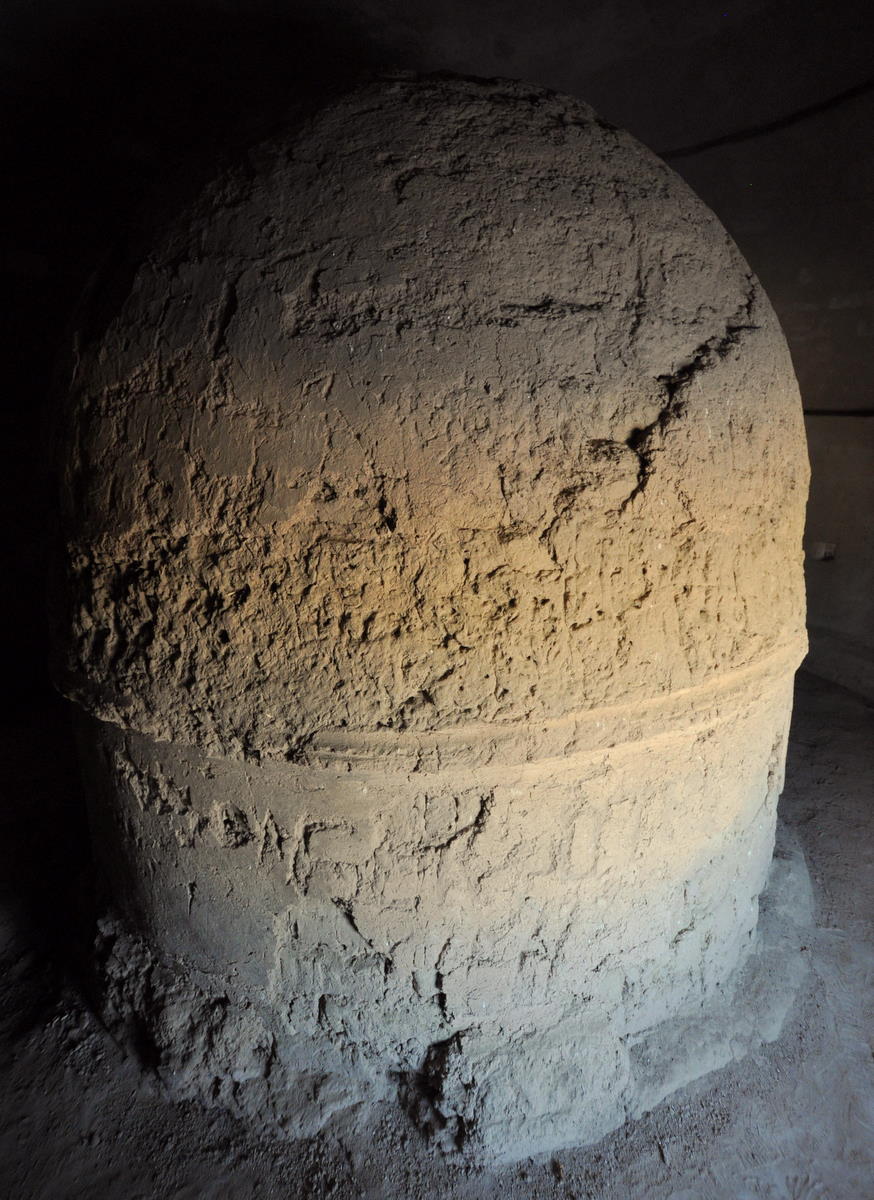
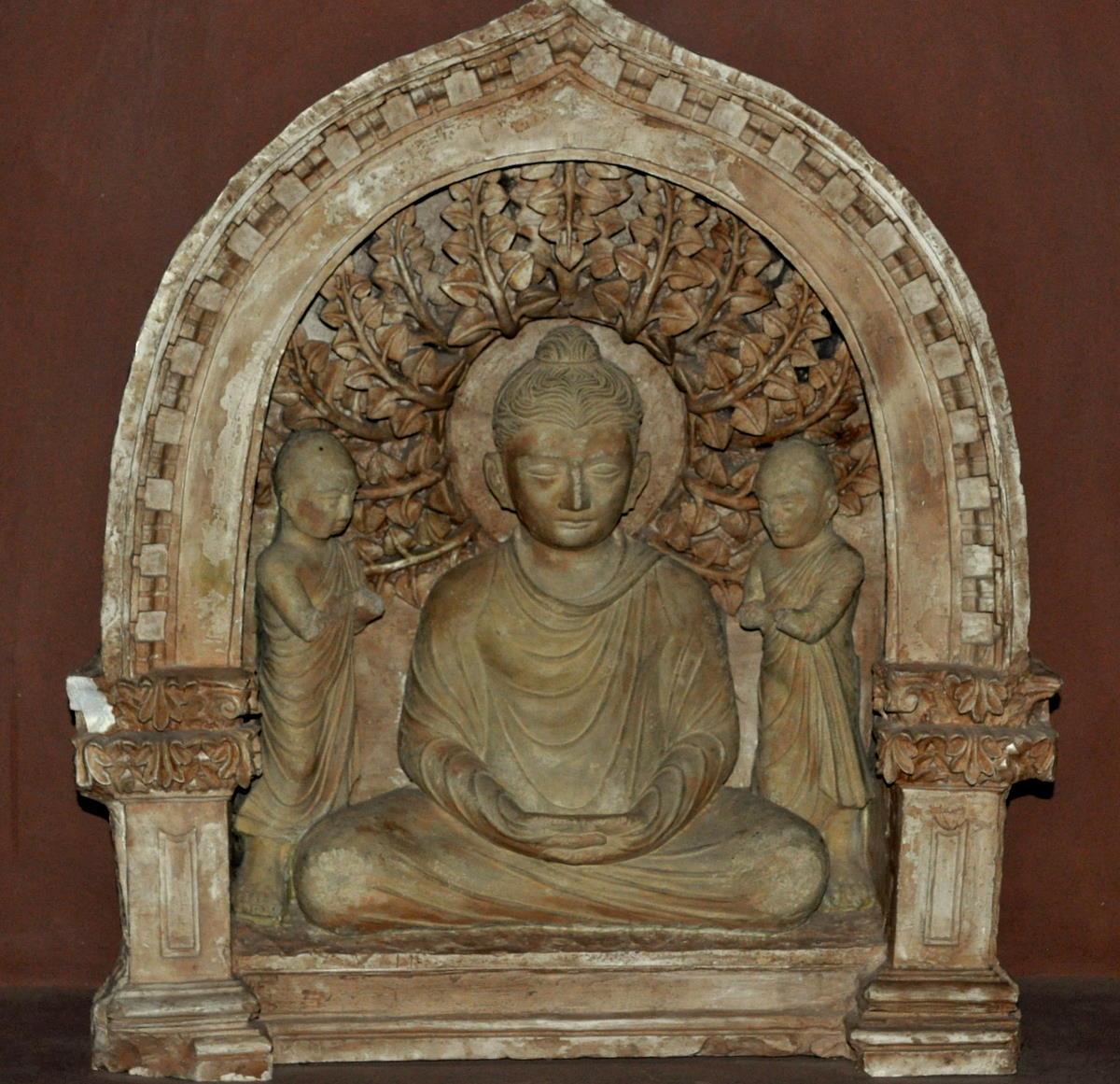
This was all the more obvious at the ruins of Fayoz-Tepe. A large Buddhist complex on the edge of the ruined Old Termiz, the temple had a remarkable early Buddhist stupa preserved under a dome that approximated one that might have been there in the past. Nearby, a UNESCO-supported museum contained a copy of a complete Buddha sculpture, which still showed signs of Greek influence in the flowing robe that covered the body. Buddhist iconography would not be codified until several centuries later when the religion reached China.

There was a much larger Buddhist stupa in a field a few kilometers away. This one may have been over 2000 years old and it stood 20 meters (65 feet) tall.


Termiz also has some more recent monuments. A mausoleum to the 9th-century Sufi philosopher Al-Hakim al-Termizi drew brightly clad pilgrims.
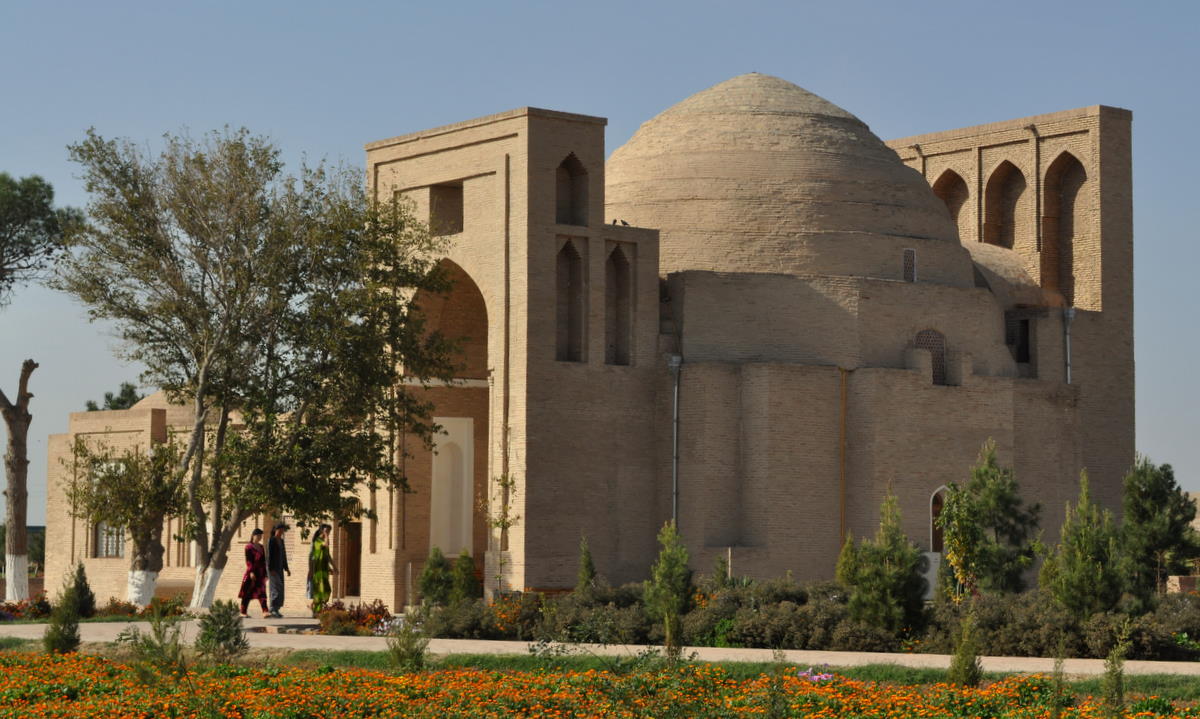
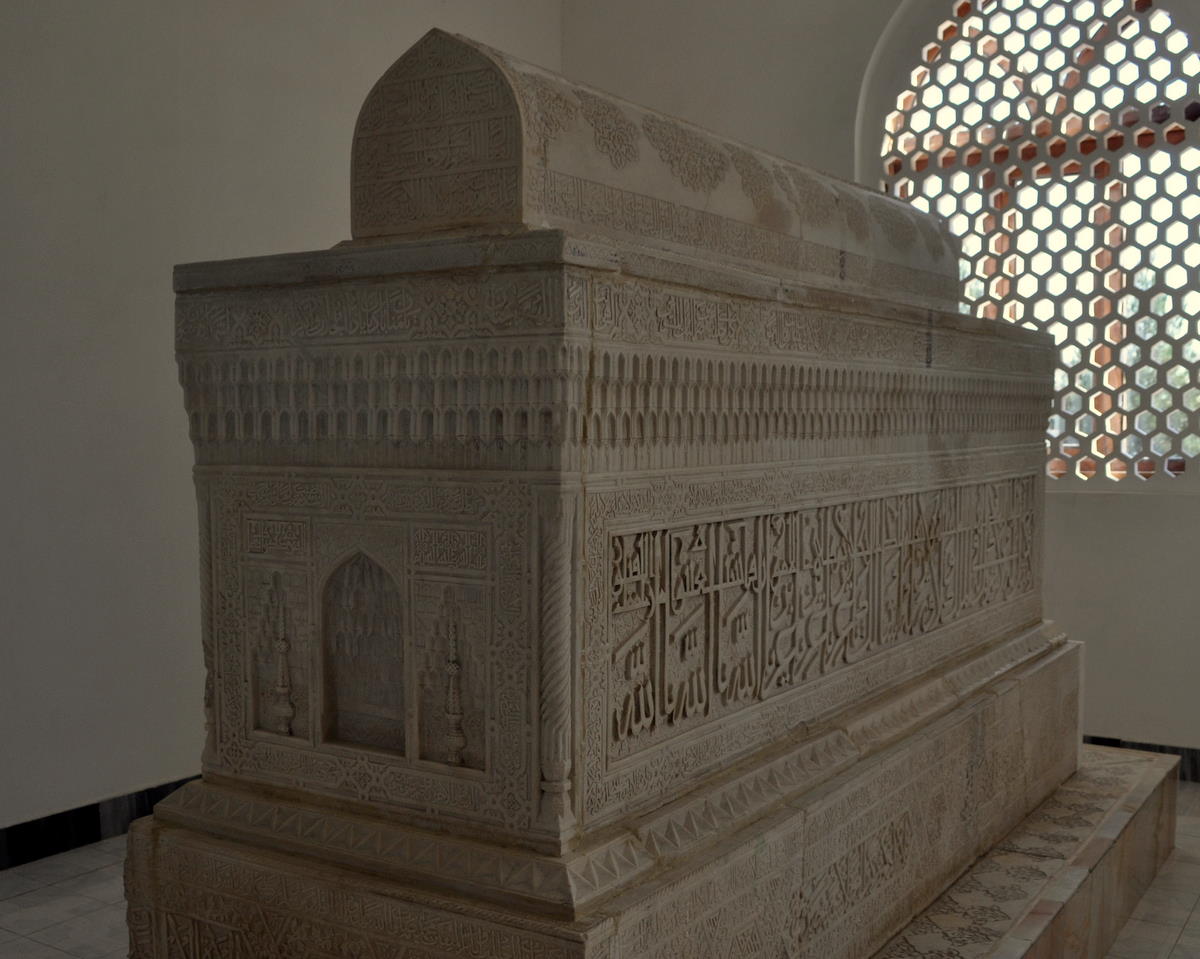

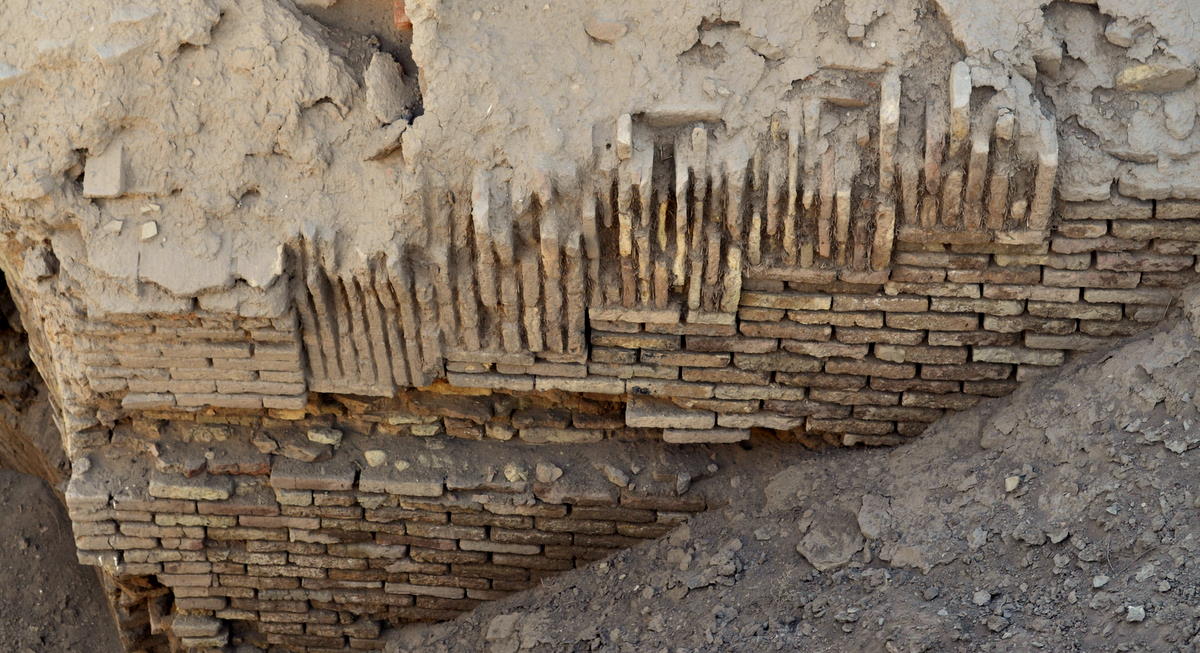
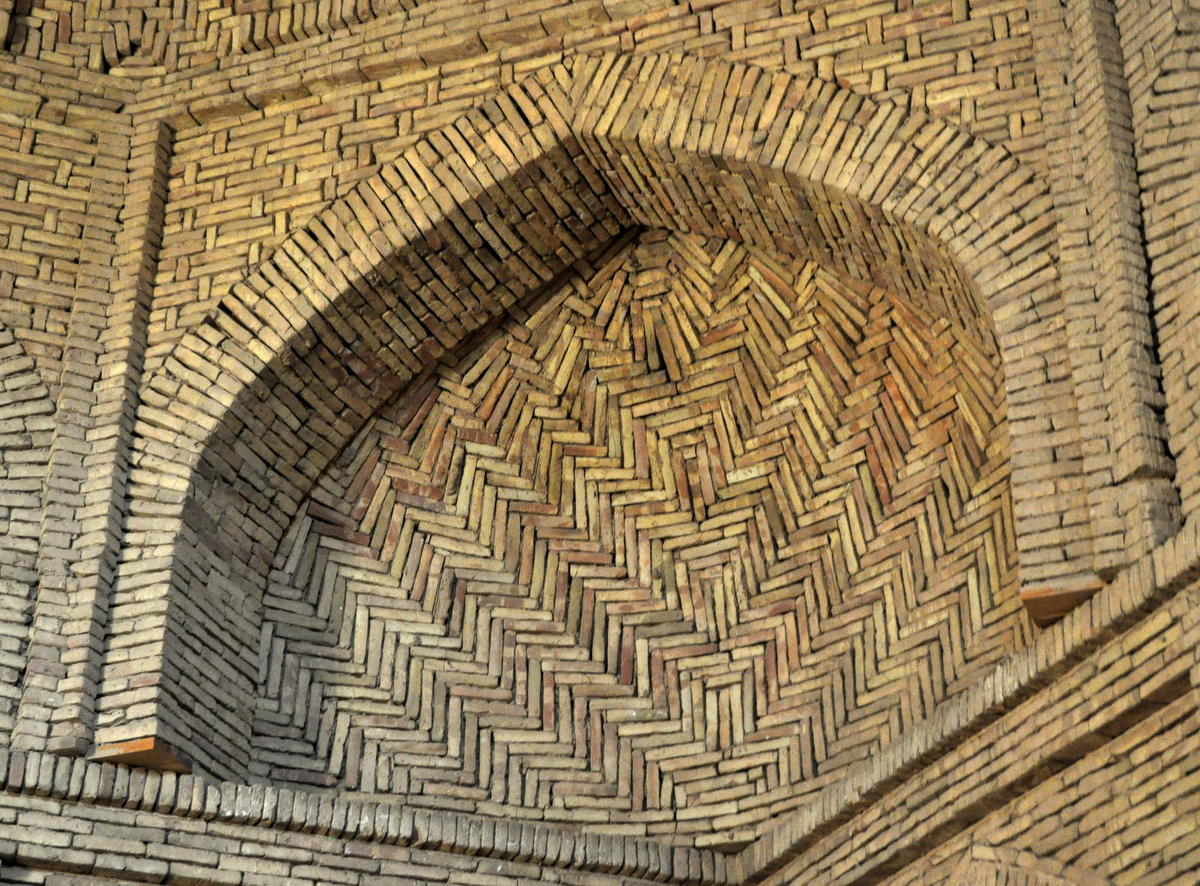
Another 12th-century mausoleum contained some interesting brickwork in the corner arches.

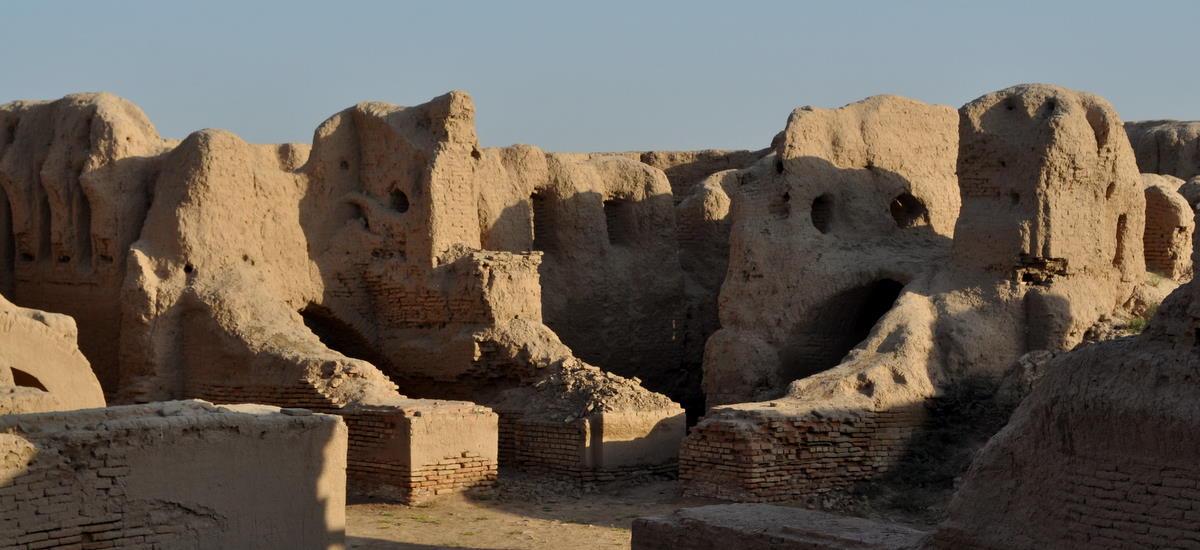
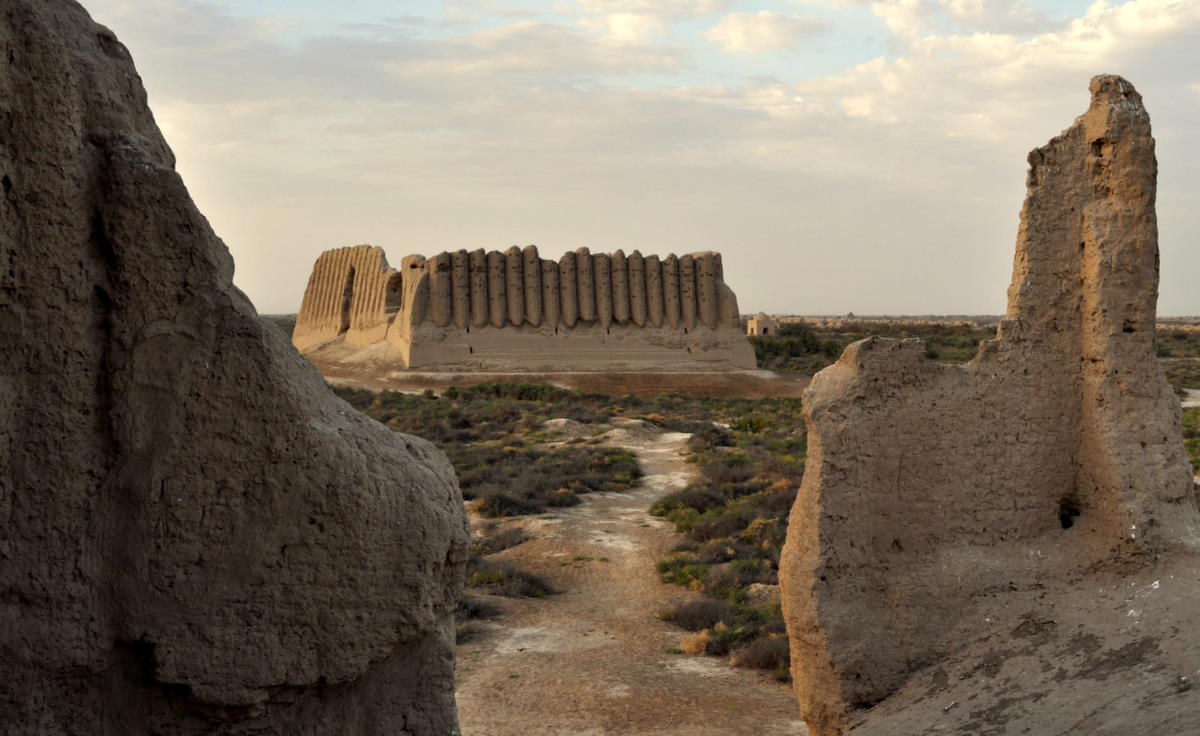
A medieval castle lay crumbling nearby.
Uzbekistan Airways

Our next destination was Termiz, a medium-sized city on the Afghan border in the far south. We could have gone there by bus from Samarkand, since it’s only 4 hours south of Sakhrisabz, but we had limited time before the fixed date of our entry into Turkmenistan. So we decided to take a break from the pounding of our overland travel and take an airplane.

Uzbekistan Airways is far more professional than Tajik Air, and although some of the flights were on the same Russian Antonov turboprops, at least the seats were in good repair. Several of the flights, though, were on modern 757s and they were quite enjoyable despite the closely packed seats.

The only difficulty was changing planes in Tashkent. Flight connections with checked-through luggage are not supported, since few people would want to fly from one provincial city to another. So we had to pick up our bags, haul them 500 meters to the domestic departure terminal, and check them in again. Fortunately, our flights were on time and we made our connection.

Khiva

Khiva is the third of the “big three” historical cities in Uzbekistan. Further west than Bukhara and Samarkand, it was an isolated emirate until 1873, when the Russians “accepted” the khan’s pledge of obediance. The khans stayed around as Russian subalterns until 1920, when the Bolsheviks finally evicted them. No one mourned the khan’s departure, since he was every bit as ruthless and arbitrary as the rest of the Central Asian rulers.

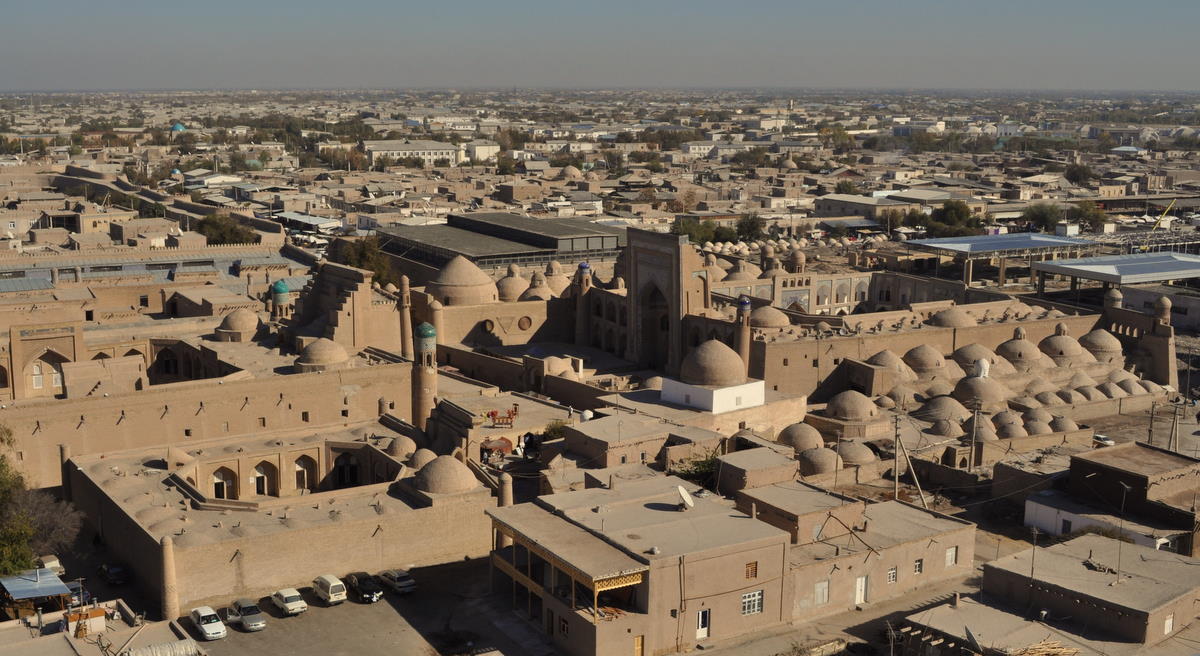
Unlike the other two cities, Khiva is almost perfectly preserved. It is newer than the others, with many of its buildings dating from the 17th to 19th centuries, and the Russians took over without having to lob shells at the inner city. And during the Soviet period, it was preserved and restored while its residents moved to proletarian housing. As a result, Khiva has the feeling of a completely preserved medieval city, even if the museum-like atmosphere reeks of formaldehyde.

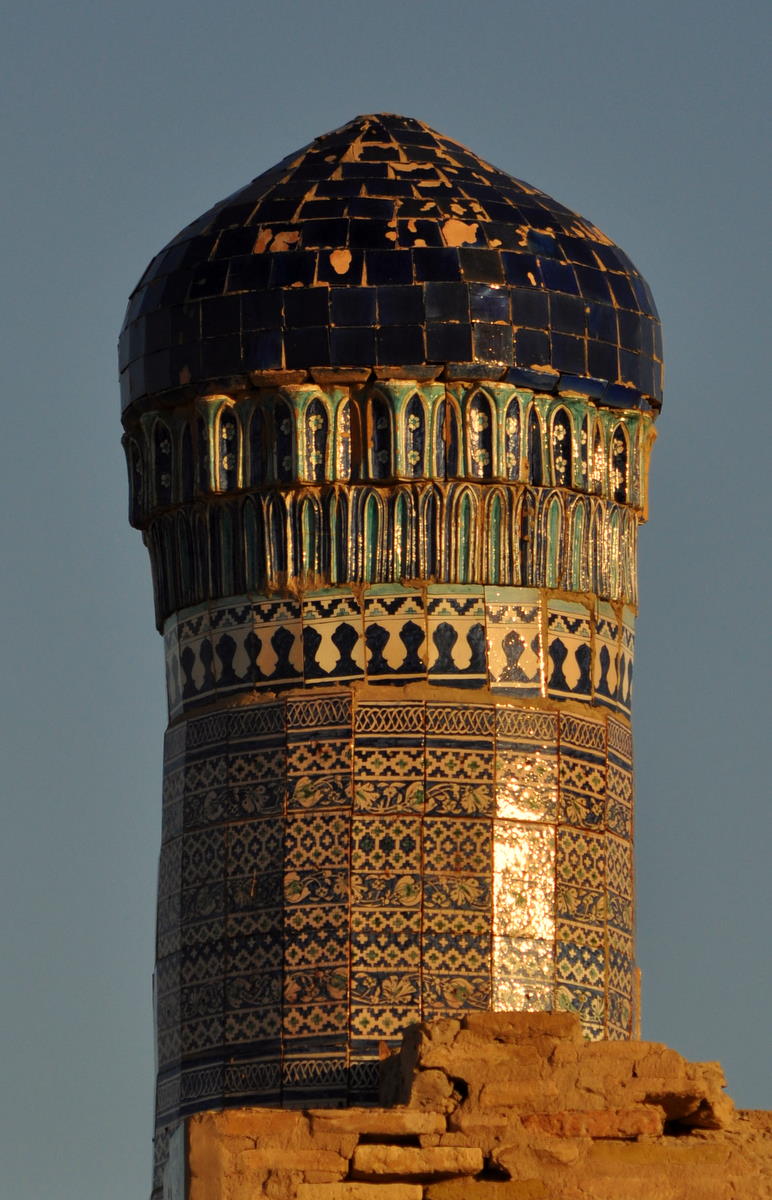
The largest minaret was actually completed only in 1910. From the top, one can see the vaults of the stone markets and madrassas, as well as one of the khan’s palaces. At 57 meters (190 feet), it is only slightly shorter than the minaret in Konye Urgench, but almost 1000 years newer.


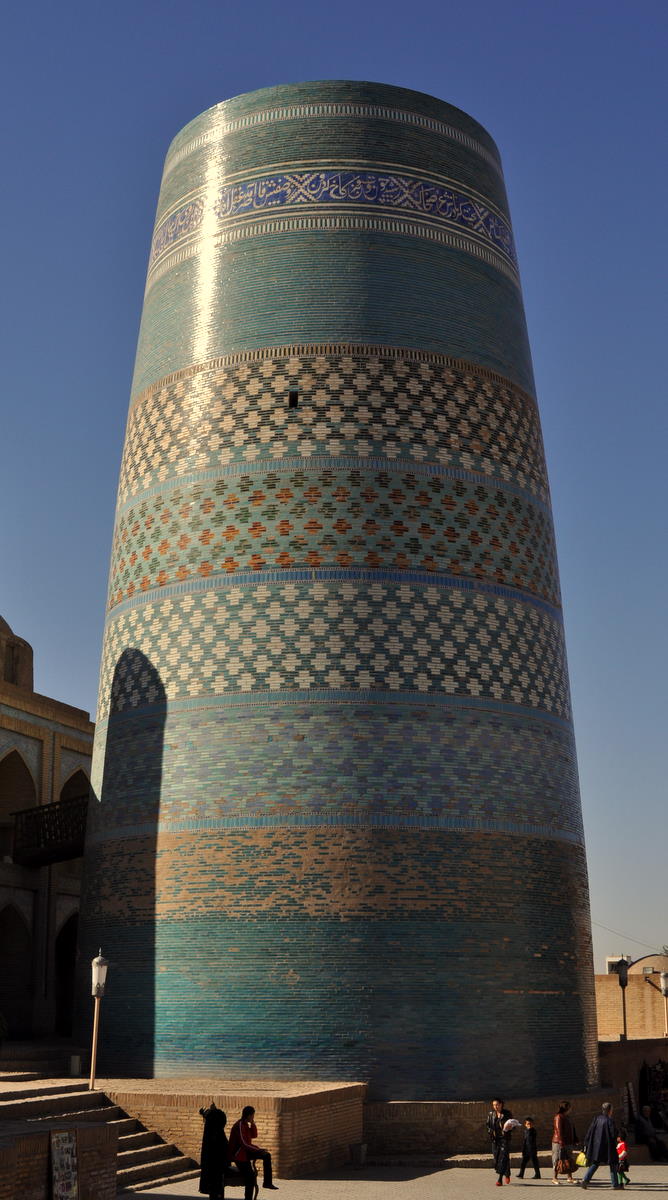
A nineteenth-century khan wanted to build an even taller minaret, but was killed before he got beyond the second story. If he had completed it, the minaret would have been the tallest in the world.

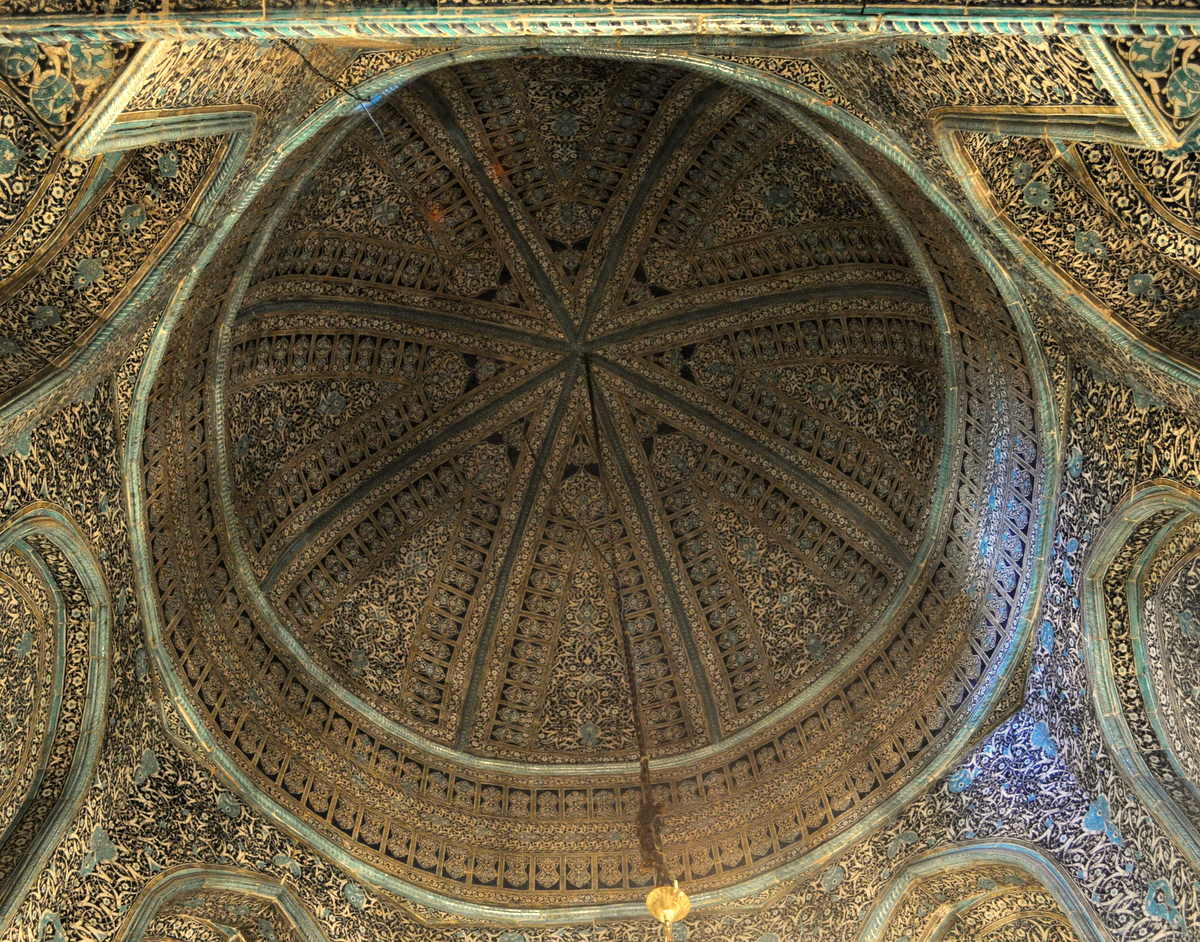
The Pahlavon Mahmud Mausoleum is the best known monument in Khiva, dedicated to a legendary poet, wrestler and saint. Inside its turquoise dome is some of Khiva’s finest tile work.


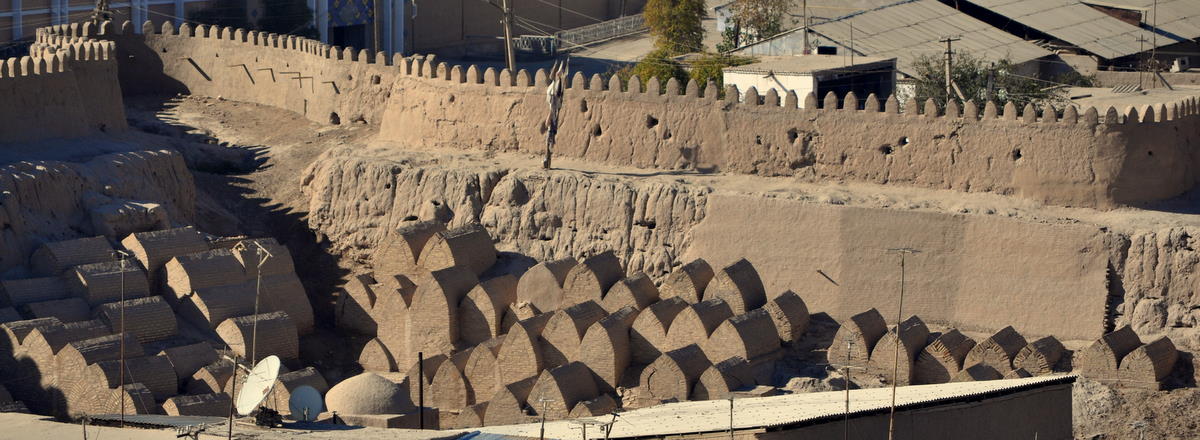
Khiva was surrounded by two layers of walls. Gates allowed traffic from each of the four directions, and the east gate provided extra niches for displaying slaves for sale, one of Khiva’s specialties. Graves are stacked on top of each other in front of one corner of the inner wall.


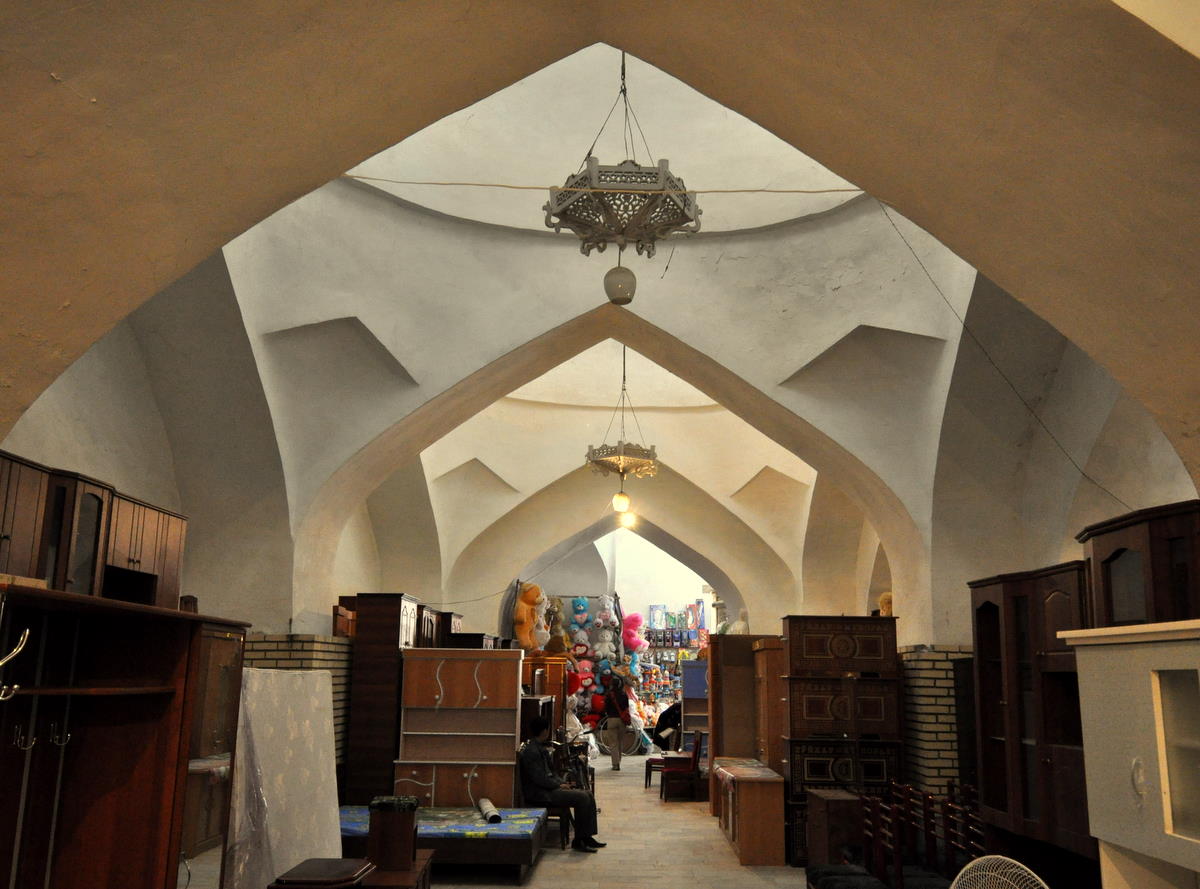
Near the east gate is the city market, built in an old caravansarai.


The khans loved to build palaces. The oldest is the Khuna Ark, with parts dating back to the fifth century. But most of it was modern, with large covered iwans for the khan to sit in the shade and dispense whatever he considered to be justice.


By the middle of the nineteenth century, the khans were tired of living in their ancestral digs, and almost every one built a new palace. They also built a summer palace on the edge of town. Each palace of course had its own harem sealed off from all male visitors except the khan. It must have been a pretty boring place for the ladies, who had nothing better to do than look at the painted ceilings.


Camels and sand castles

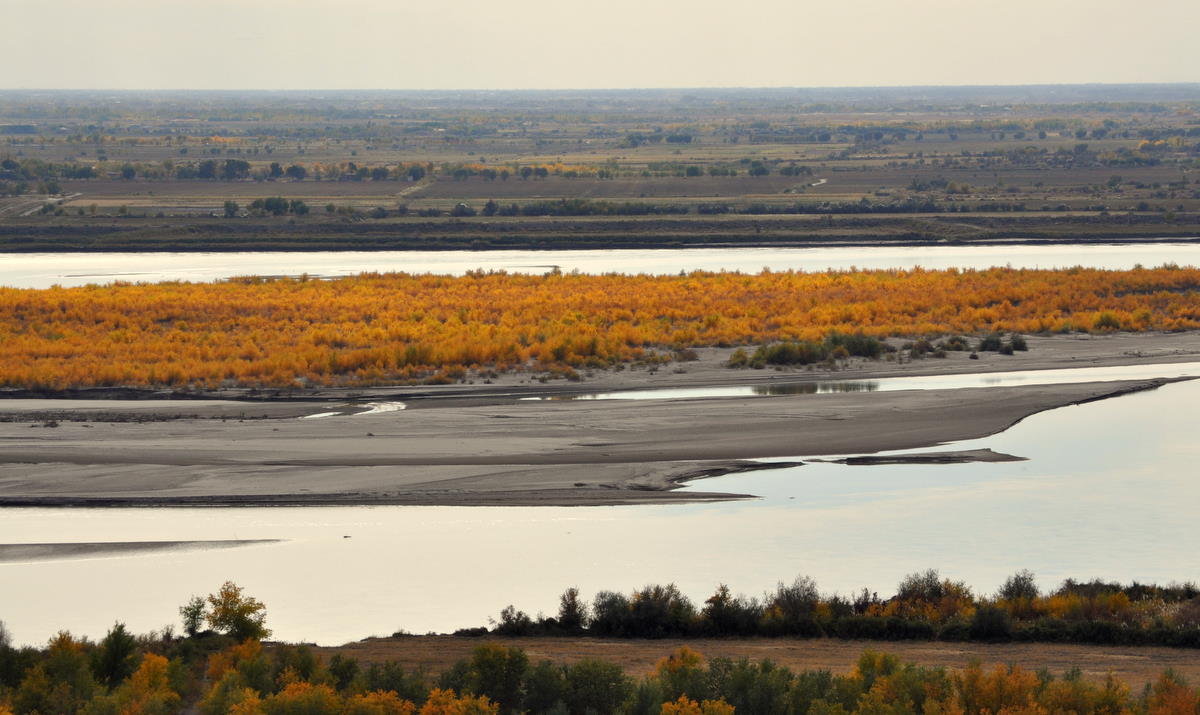
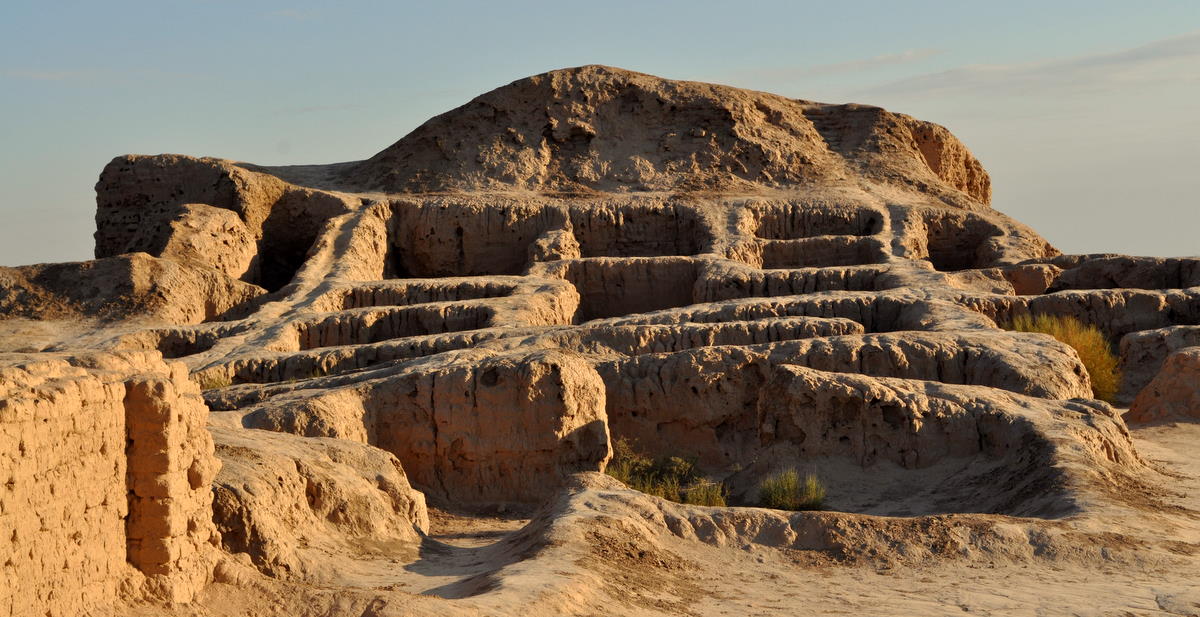
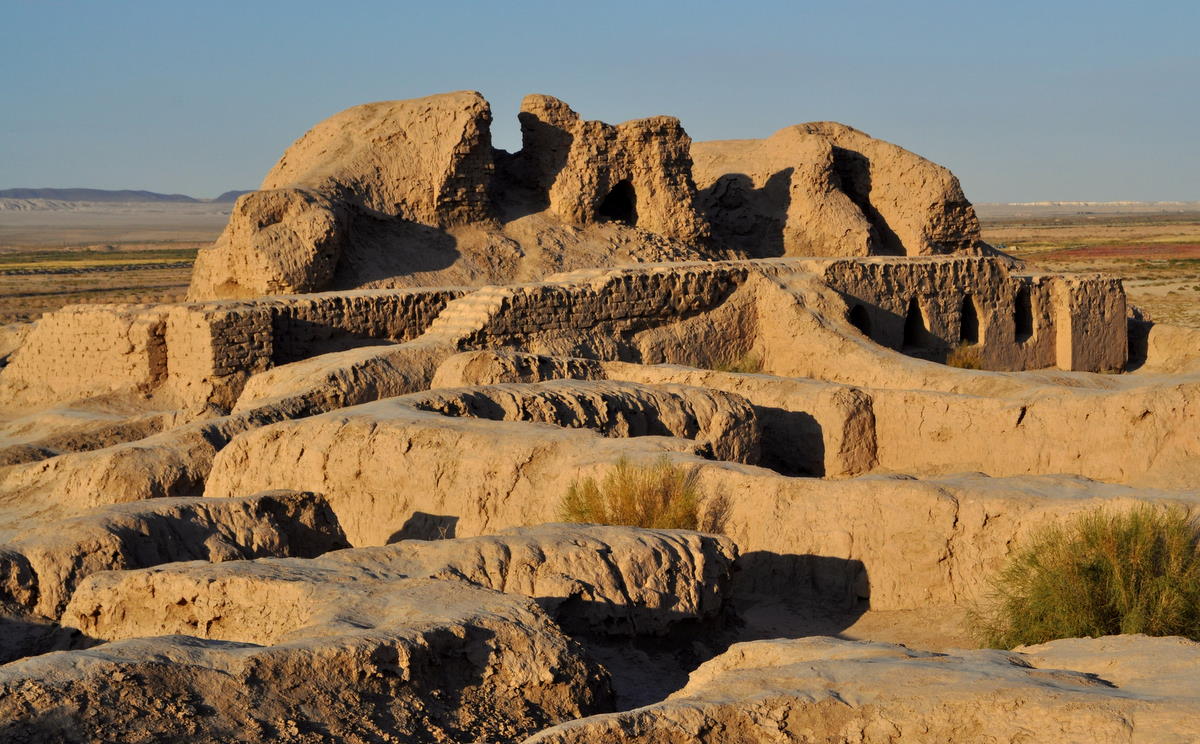
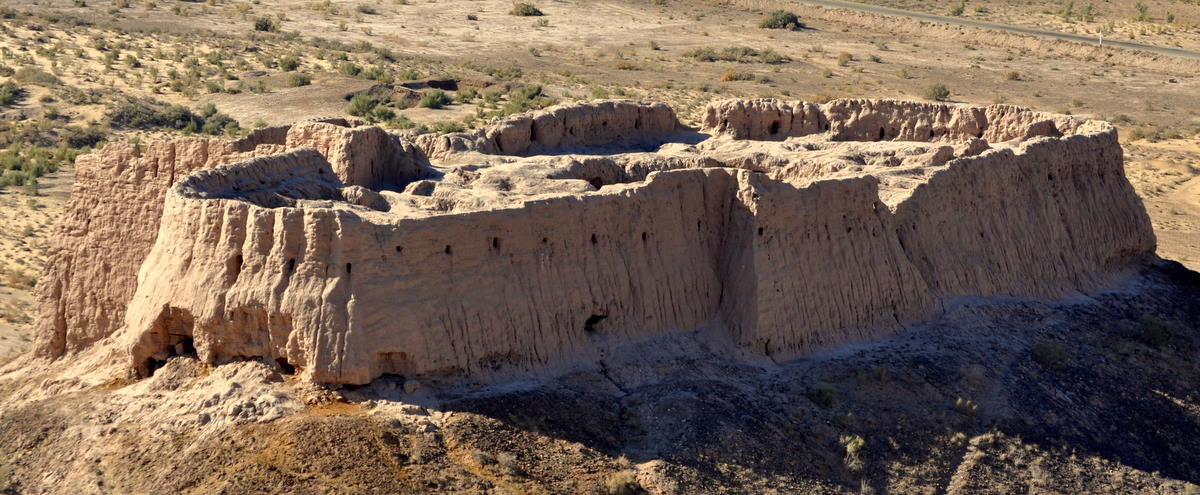
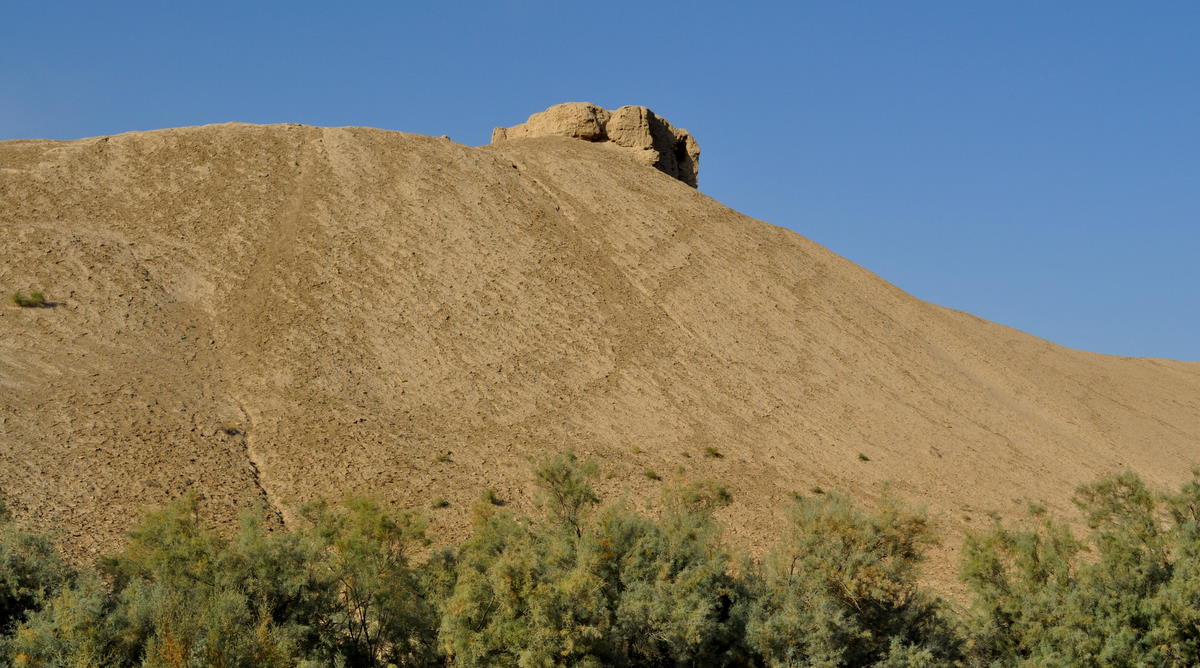
After leaving Nukus, we hired a taxi to drive us around the Elliq-Qala (“Fifty Forts”) area of ruins dating over 2000 years. No one knows quite how many forts there are, but they show that this area was once the heart of a rich farmland watered by the Amu Darya (Oxus) river, once as large as the Mississippi. The Amu Darya still flows nearby but has only a fraction of its water.


The forts are ruins now, but some are still quite impressive, with large walls and multistory dwellings.


We spent the night at a yurt camp in the desert and in the morning we sprung $10 each for a camel ride. We were skeptical because it sounded so touristy, but these were real desert camels and it was actually quite fun. My camel was pretty comfortable, certainly much better than a yak, but Marcia had a little trouble sliding off the hump. Camels are pretty foul-mannered, and they complained as much as the yak while they were being saddled up.


The desert stretched as far as the eye could see.

Voting by fax

There is an American election next Tuesday, and Marcia and I are doing our part to make sure at least California reelects some sensible progressive politicians.

Voting from Uzbekistan isn’t easy. In theory, we could have had Alameda County send us an absentee ballot at a hotel, but that would have required knowing where we were going to be. And most Central Asian post offices are known to take an month or more to deliver mail, so there was a good chance we wouldn’t have been able to receive it or send it back.

Fortunately, some recent legislation has guaranteed overseas Americans the right to vote in alternative ways, and California allows voting by fax. Alameda County faxes a ballot to us, we print and fill it out, and we fax it back. What could be easier?

Well, to begin with, they sent the ballot to us by mail rather than fax. That was no problem, though, because our PO Box service scans everything and we were able to download a much more readable copy than we would have received by fax. We printed it and filled out the ballot and the required declaration that we were waiving our right to a secret ballot (the person receiving the faxes would obviously see our votes).

And Uzbekistan has fax machines, right? Sure, and somewhere one might actually work. The machine in our hotel refused to send over the noisy line. So we went to the post office, which is supposed to have fax machines in every city. It didn’t have one. They pointed to a computer shop around the corner, but its machine was also broken. I had them scan the pages, but the scans were unusable. Marcia wanted to try some hotels, but I was frustrated and didn’t want to keep running up phone bills on failure.

I had to use every piece of hardware and software in my arsenal, but I think I got it done. To get a good quality scan at high enough resolution to fax readably, I photographed each page with my Nikon camera. I then edited each image to make it as purely black and white as possible, then converted it to PDF files. I tried to transfer it to my computer in the basement of my house in Berkeley, but my machine with the fax line was dead for some reason. So I signed up for a trial account at efax.com and emailed two 9 MB attachments. One has now been delivered and I’m waiting for confirmation of the other.

Frustration with technology aside, I can still be thankful I am a citizen of a country that still has reasonably free and fair elections. When Uzbekistan last had elections, the token opposing candidate was allowed to make only one campaign appearance – to vote for “President” Karimov, who of course won with over 99.9%. Karimov recently started his third term despite the fact that the country’s constitution forbids such a thing. Who bothered to check?

Nukus and Karakalpakstan

On the other side of the border back in Uzbekistan, we quickly reached Nukus, the capital of the Karakalpakstan Autonomous Region. A republic within a republic (neither of which is anything like a republic), Stalin glommed this region onto the Uzbek SSR in 1926 when he couldn’t think of anything to do with its large area and small population.

Since then, Karakalpakstan has been hard hit by one disaster after another, particularly the drying up of the Aral Sea, which was once the world’s fourth largest inland lake. Starting in the 1950′s, the Soviet Union and later the independent ‘Stans consciously diverted the Amu Darya river to such an extent that not a drop of its water now makes it to the Aral basin. In theory, this was to irrigate fields of the all-powerful cotton industry, but in fact more than two thirds of the diverted water evaporates or sinks into the sand before reaching the fields. As a result, the Aral Sea is now a wasteland and the local fishing industry is gone. The residents who haven’t moved away are left in an increasingly dry climate swept by toxic dust storms.

We obviously didn’t want to spend a long time here, but there was one place we had to visit.

Nukus has one of the most remarkable art museums in the world. A Russian artist named Igor Savitsky moved to Nukus in the 1950s and began collecting avant-garde art both locally and in Moscow. Many of these artists had been forced underground or into the gulags by official policies that viewed “art for art’s sake” as bourgeois and counter-revolutionary. Somehow, because Nukus was at the end of the earth, Savitsky was able to get away with buying and displaying this art that was forbidden everywhere else. By the time he died in 1984, he had assembled one of the most remarkable collections in the world.

The museum is interesting because it displays a large set of work from a few artists who are completely unknown to me and probably most others outside of Russia. Some of the work is quite remarkable and inventive: for example, an artist painting his “self-portrait as a sculpture”. It’s worth the trip.

Turkmenistan

After Bukhara, we did a six-day swoop through Turkmenistan. The most closed of the Central Asian “republics,” Turkmenistan can only be visited on an organized tour on fixed dates, much as Intourist controlled travel in the former Soviet Union. We had arranged this tour over the summer, and we worked the rest of the trip around these dates.

Turkmenistan has a well-deserved reputation as one of the most closed and bizarre police states on the planet. Its government is as close to the Soviet Union as still exists, and indeed its “Democratic Party of Turkmenistan” is simply a renaming of the machine that ran the Turkmen SSR. But using energy riches found since independence, the “presidents” have gone on a spree of building monuments to their own grandeur that would make even North Korea blush. The result is a country that lives in its own twilight zone divorced from normal economic reality, where marble-covered buildings and gold statues of the great leader live alongside a population still mostly at the poverty line.

Because internet access is tightly controlled and monitored in Turkmenistan, we were unable to post blogs as we went. I have therefore assembled all the entries in a series of posts in chronological order starting TM-#, which follow this one. As always, you will probably need to click the “Older Posts” link at the bottom to get to the later entries.

TM-1: Crossing the border

Turkmenistan and Uzbekistan are both paranoid police states, and they don't like each other. A sizeable Uzbek minority lives across the border, and the Turkmenistan government is perennially worried about uprisings.

As a result, the border is heavily fortified, even compared with others we have crossed. The Uzbek exit post was relatively straightforward with none of the problems we had heard of travelers being shaken down for bribes. But then we needed to cross the no-man's land, a strip of fenced-off desert about 2 kilometers (1.2 miles) wide with land that is left empty on each side of the real border line. Especially on the Turkmenistan side, the road is lined with barbed-wire fence and the surrounding land is probably mined. With trucks backed up the whole way across this area, we had no choice but to walk, fortunately a pleasant day on a cool autumn morning.

A picture of the smiling face of President Berdymukhamedov greeted us above the Turkmenistan border station. A former dentist, he is the second of Turkmenistan's independent presidents, the first being President Niyazov, who created such a bizarre personality cult around himself that he renamed the months after members of his family (so did Caesar Augustus, I suppose). He was the undisputed eternal ruler of Turkmenistan's new “Golden Age” until December 21, 2006, when he suddenly died of a massive heart attack. President B, as I will call him for brevity's sake, took over in a surprisingly smooth transition, and has continued most of the building spree, though toning down some of the more bizarre programs of his predecessor. So far, he has contented himself with large pictures of himself rather than gold statues.

Our guide was waiting for us at the Turkmen border station, and he helped us through the entry process. Because of the packaged tour, we were able to get our visa on arrival at the border upon payment of $65 each in US dollars. A Turkish truck driver told me his 6-mointh multiple-entry visa had cost $800.

And then we were suddenly on the road in Turkmenistan.

TM-2: Merv

Merv, or Margiana as it was once called, was one of the great cities of the ancient world. It was already a giant citadel when Alexander's armies came through, and he modestly renamed it Alexandria Margiana. It prospered at the center of the Silk Road until 1221, when Genghis Khan's most brutal son sacked the city in retaliation for a snub to his emissary. In a typically Mongol gambit, he accepted the 300,000 inhabitants' peaceful surrender then slaughtered every one of them. There were some attempts to build a new, smaller town, but it was sacked again by Bukhara and abandoned by its river, which changed course 30 kilometers to the west. By the time the Russians came, Merv was little more than a nomad camp beside ancient ruins.

There are actually five ruined cities from different eras, as the population center moved gradually westward. The earliest was the one that Alexander knew, a large citadel with mud brick walls 40 meters (170 feet) high. Although that city was 600 meters across, it was small compared with the cities that followed.


The second was a cosmopolitan city several kilometers across. Remains were found of Buddhist, Zoroastrian, Nestorian Christian and Islamic worship. This water tank near the mosque shows excellent brickwork.


The third even-larger city was built by the Seljuk, and it was the zenith of Merv's power.


The only thing Genghis Khan left standing was the mausoleum of Sultan Sanjar, a 38-meter-high domed tomb that has been restored with Turkish money.


A few other interesting buildings lie outside the town walls. Two large structures might have been houses of rich families.


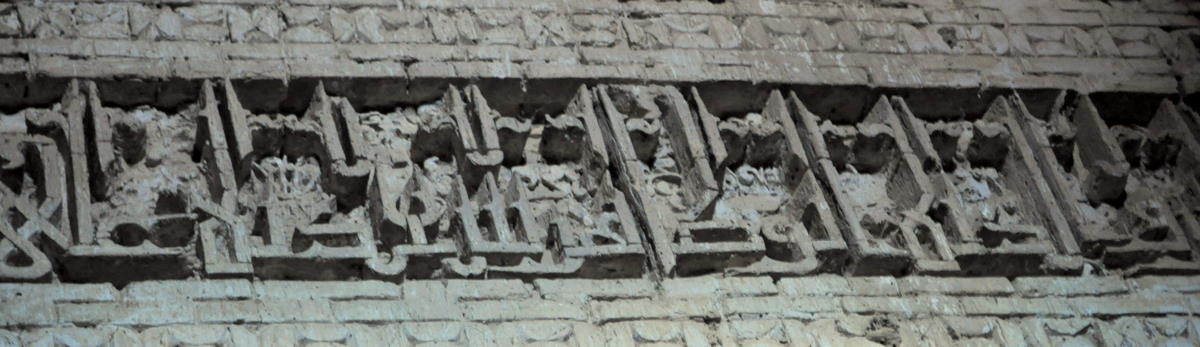
A small 12th-century mausoleum is named after the Shiite martyr Mohammed ibn Zeid, although it probably does not contain his grave. It does, however, contain some fabulous Arabic calligraphy carved in brick, as well as a wall with clearly Zoroastrian symbols, which still infiltrate the Islam of the area.


We spent the night in the Soviet city of Mary, the heart of an irrigated farm belt near the present course of the river. Our hotel was pretty shabby with a door lock that didn’t work, but it was apparently better than the rest of the soviet-style hotels in town.

TM-3: Gonur

The next day, we visited the even older ruin of Gonur, a bronze-age settlement across desert tracks 60 kilometers to the north. Linked with cities in Bactria (now in northern Afghanistan), Gonur flourished in the delta of the Murghab River from about 3000 to 1500 BC. Archaeologists speculate that its residents moved out when the river changed to the location of Merv. Others may have moved even further, as it appears that Gonur’s fire-worshipping religion might have spawned Zoroastrianism.

Gonur has been unearthed over the last thirty years mostly by the Greek-Russian archaeologist Victor Sarianidi, and the great man was on site. Now in his 80s, Sarianidi's health is failing, and he is in a rush to finish his digging with finds that will cement his reputation. A gracious man with only a few words of English, he invited us into his tent for tea at the end of our visit.

Gonur is a large and impressive site, to the extent that any archaeological dig can be called impressive. Spread over about a square kilometer, this was clearly the capital of a prosperous and advanced kingdom. A palace complex stands at the center and several large temples nearby. A set of ponds were separated by a water filtration house, and underground clay pipes brought the water into the palace walls.

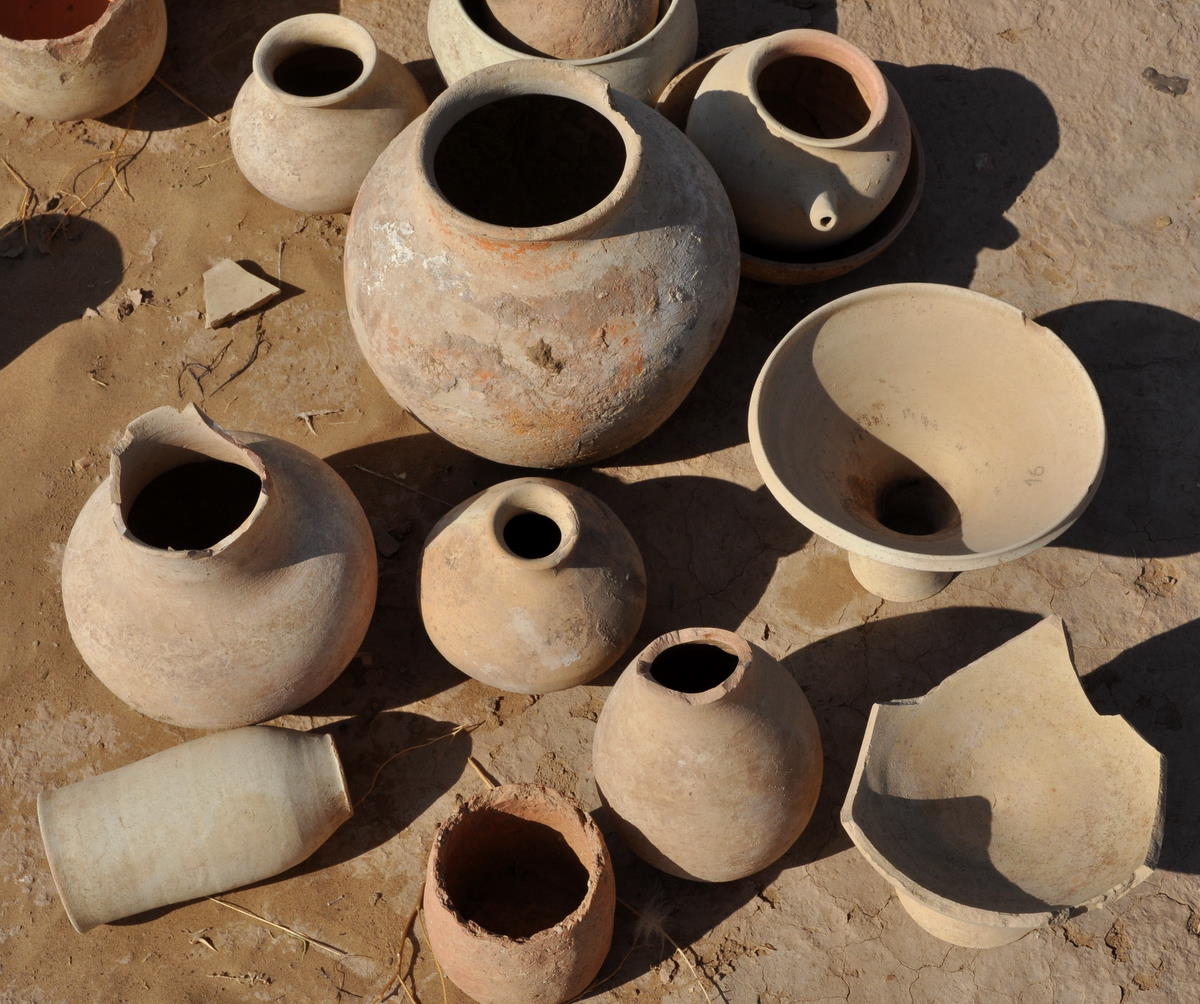
Pottery and other relics found at the site are exquisite, equal to things made in Merv two thousand years later.


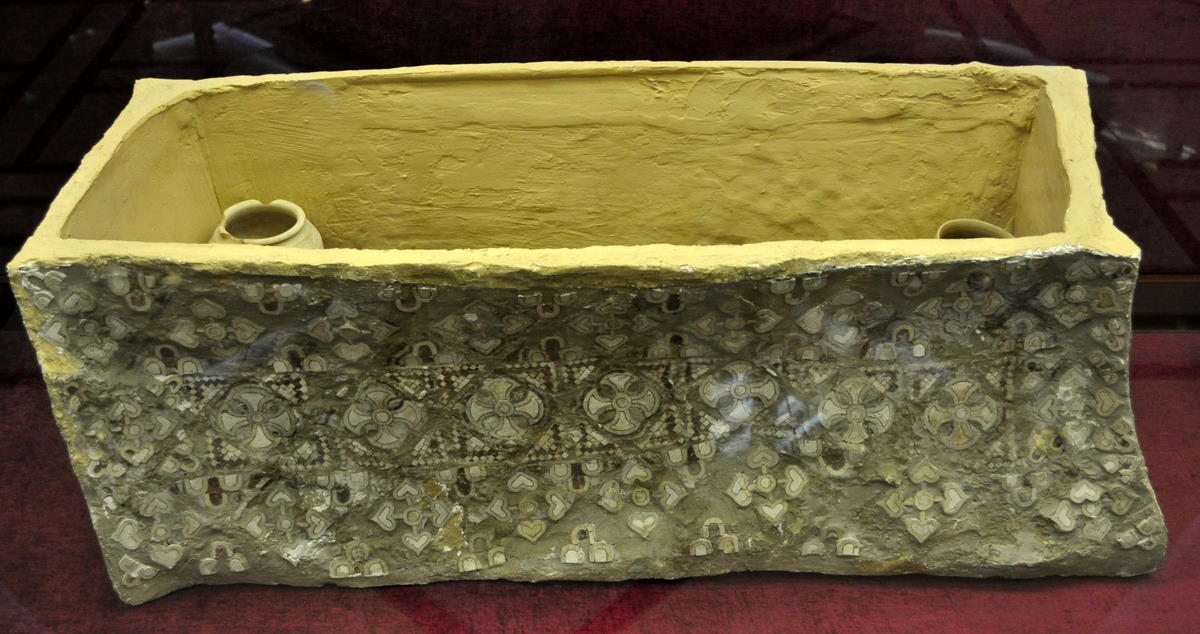
Royal graves included skeletons of animals and chariots with bronze-reinforced wheels.


Sadly, the rush to dig is not matched by a rush to conserve. Only a few of the palace walls have been recovered by mud and the rest have been left to the elements. Mud-brick walls literally melt within a few years when left open to the harsh desert air, and large parts of the site have already become indistinct mounds like those we saw at Penjikent. Soon there will be nothing left but shards of pottery.