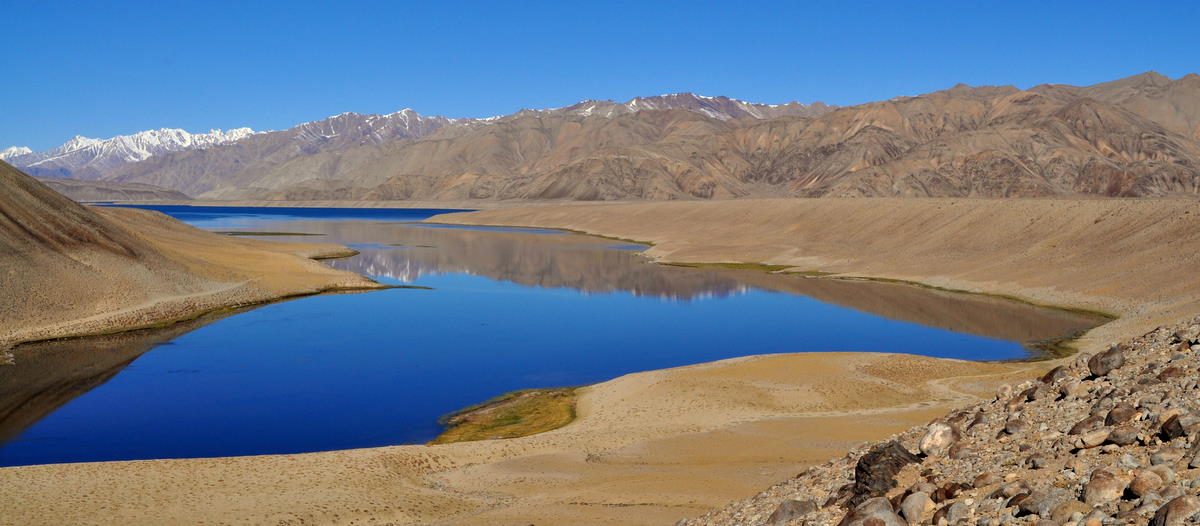
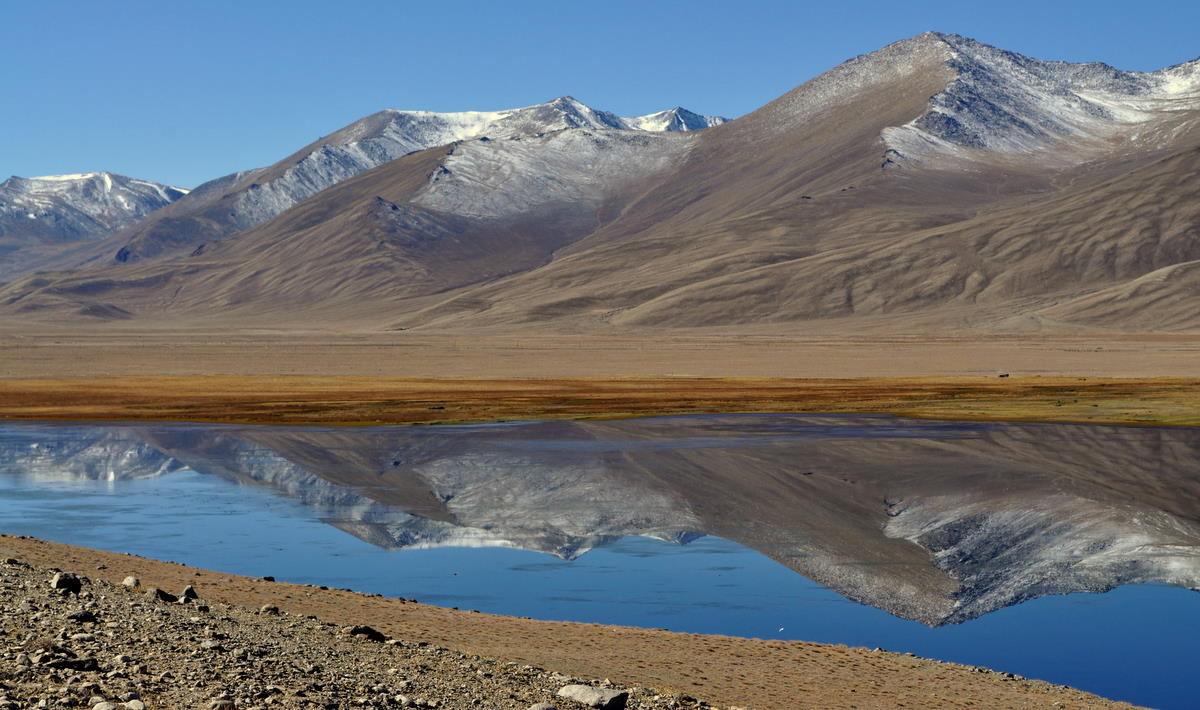
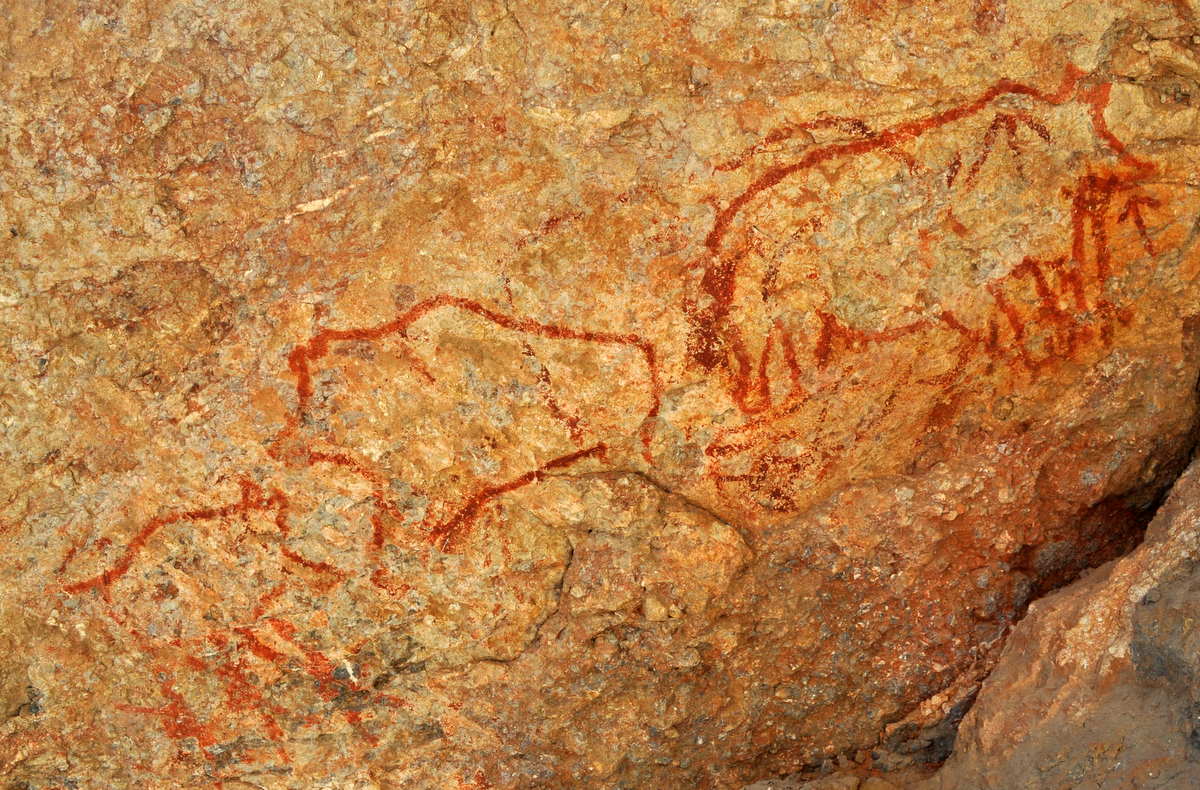
After three nights in Murghab, we were ready to move on along the Pamir Highway, but we were still taking our time. In fact, we only went about fifty kilometers before our first turn-off to look at prehistoric cave paintings.
Our next turn-off was an overnight detour to the Southern Alichur range to the south. There I planned to take a long dayhike to a pass overlooking the Great Pamir valley and Zorkul (Victoria) lake, another hotbed of Great Game exploration along the Afghan border. (With her knees still recovering from the previous pass crossing, Marcia had decided to skip the hike and wait below.) The trail would be long, so we agreed to drive as far up the valley as possible before spending the night. A local shepherd came with us and directed our driver to his yurt, which he rents out to passing visitors.

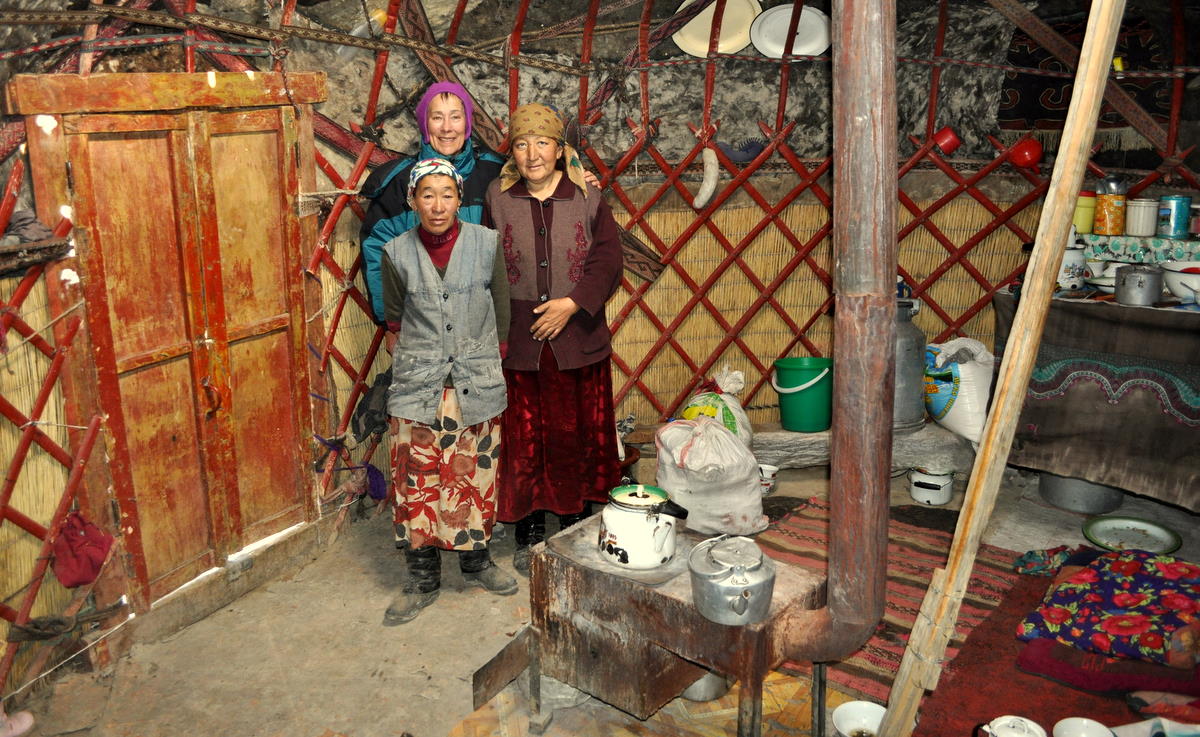
A yurt is surprisingly comfortable. Sheepskin coverings make it warm and windproof. A wood stove sits in the middle to provide heat and cooking surfaces. Everyone sits on the floor around a tablecloth for meals. We
used our sleeping bags and were toasty warm at night.
The shepherd also proposed a way of shortening the long hike up to the pass. I could ride his brother's yak.


Riding a yak is as close as one can get to riding a woolly mammoth. People in Nepal and India generally use yaks only as pack animals, because they are still half-wild with deep-throated snorts. But the real problem is that yaks are so wide that a human rider must really stretch his legs. When I got off after a little more than an hour, I could hardly walk. Fortunately, my balance returned within a few minutes, but my crotch still hurts to think of it.
The pass itself was covered by about 30 centimeters (1 foot) of new snow, and I hiked on foot because my yak refused to go further. From the top, I could see the end of the lake and the Wakhan range beyond. In the distance a few peaks were visible from the Hindu Kush on the border between Afghanistan and Pakistan.

I got back to the yurt about 3pm and we packed and left. We spent the night in a homestay in Bulunkul, a small settlement near several large lakes in the Alichur Pamir. Inaccessible to the north lies Lake Sarez, a huge lake formed in 1911 by a massive landslide dam. Should the dam ever give way, the flood would be the largest in recorded history. The lakes here were also formed in the same way, but they have been around long enough to be considered safe.