We left Kashgar at an absurdly early hour in the morning of September 27. Even our driver was asking why the organizer had told us to leave at 5am when the border wouldn't open for many hours. But it allowed us to stop and get a leisurely bowl of noodles for breakfast.

We first needed to cross back into Kyrgyzstan at the Irkeshtam border post. (Although there is a direct pass from China to Murghab, Tajikistan, it is currently open only to local nationals.) The Chinese border was efficient, though they wanted to look through our bags and pictures to make sure we weren't spies. Our car then took us another four kilometers to the actual border fence, where we had to begin walking. At the bottom of a steep hill was the first Kyrgyz border guard, who packed us in the cab of a Chinese truck to ride the remaining three kilometers to the Kyrgyz border station. We still had to walk the last kilometer, however, because there was a massive traffic jam of trucks waiting to cross. The Kyrgyz police were hardly interested in anything beyond writing down a few numbers from our passports.
We had arranged for a Tajik driver to meet us at the border post. He was there all right, looking for “Mr. Thomas,” though we were a little worried about his 30-year-old Russian Lauda car that reeked of gasoline. But the car ran and gave us a pretty smooth ride on the recently paved road into the Kyrgyz village of Sary-Tash, where we planned to spend the night. On arrival, we were happy to learn that the Lauda was just a taxi and our Tajik driver was waiting with a Japanese 4-wheel-drive to take us the rest of the way.
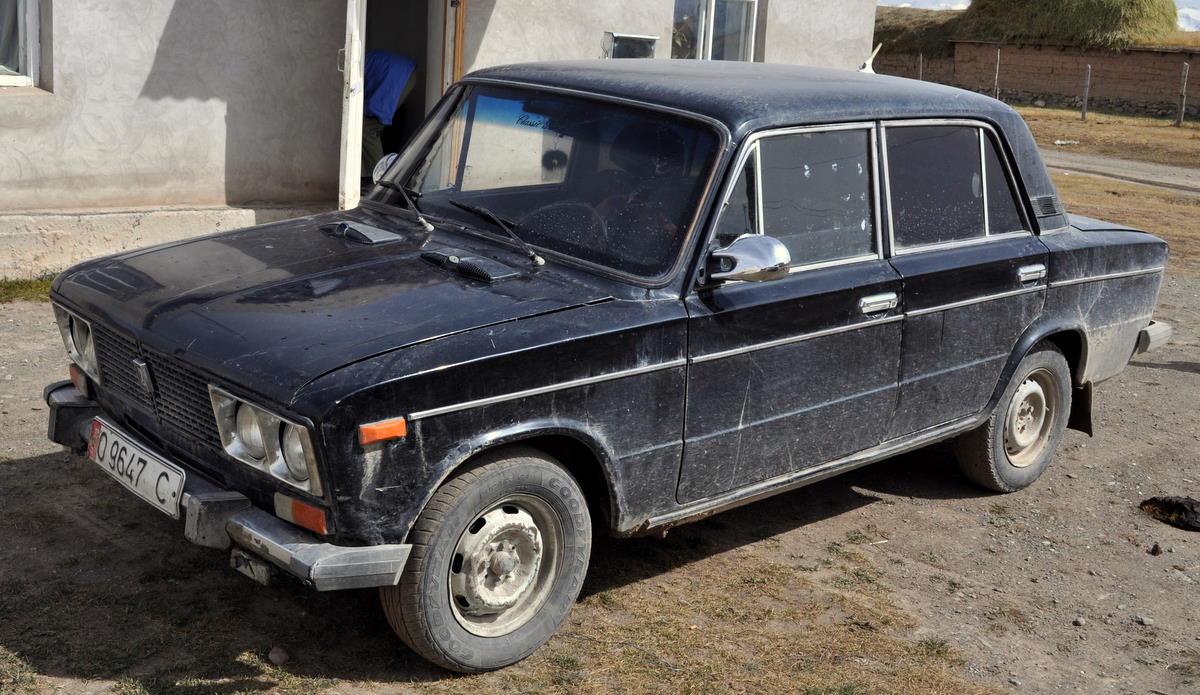
This part of Kyrgyzstan was a wide valley called the Alay, and it gave wonderful views of the first range of the Pamirs, including 7100-meter Pik Lenin. The higher 7450-meter Communism Peak lay beyond in the clouds, which were promising worse weather for the next day. A pass to the north leads across the western Tian Shan mountains to Osh and Jalalabad, the troubled region that we had decided to avoid. The Alay valley runs gradually down into western Tajikistan and eventually the Amu Darya (Oxus) river, but that border is not open to foreigners.
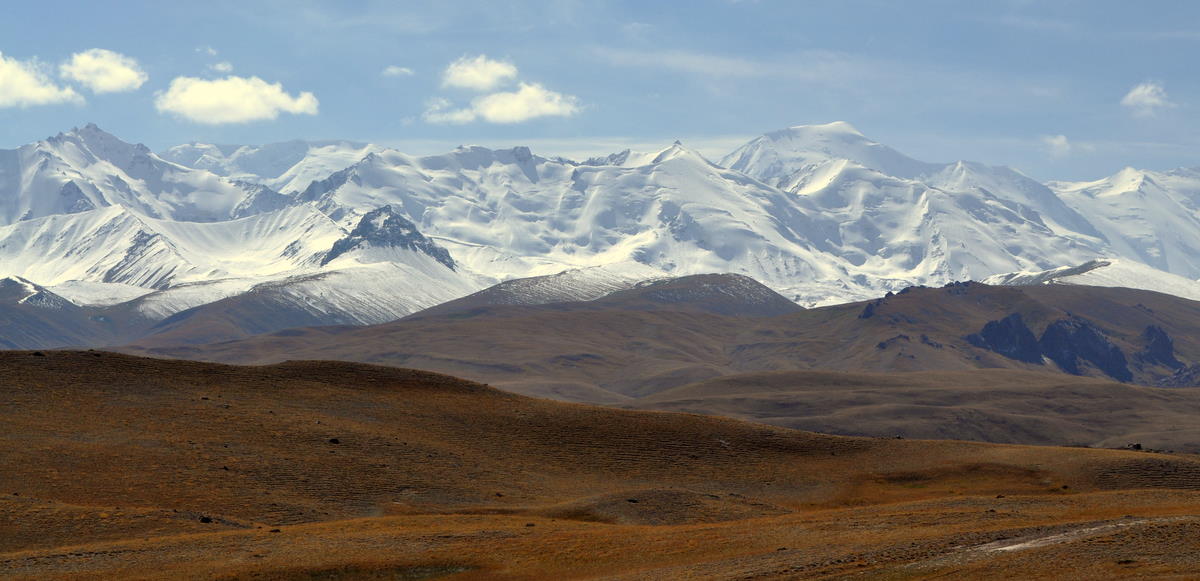

Our path the next morning lay south on the Pamir Highway across the Kyzyl-Art pass into Tajikistan. The Russian military built the Pamir Highway in the thirties and paved most of it in preparation for its invasion of Afghanistan. It has clearly seen no maintenance since independence, because potholes made the paved sections worse than the dirt.
This border crossing into Tajikistan was more painful because with so little traffic the border guards had nothing better to do than make us wait looking for bribes. Our driver, although sullen and taciturn, managed to produce packs of cigarettes at the right time to get us through. It took an hour to get out of Kyrgyzstan and another hour to get into Tajikistan. A drunk policeman demanded to have a seat in our car to the next town, and we couldn't refuse. We got rid of him as soon as we could.
The eastern half of Tajikistan was dominated by the Pamirs, a region of high mountains and wide desert valleys. Most of it was above 4000 meters (13000 feet), and the parallel mountain ranges had snow-covered peaks several thousand meters higher. It was largely uninhabited, but ruins of a caravansarai showed that travelers such as Marco Polo had been crossing this area for centuries. Lakes sometimes formed in the valleys, including the huge turquoise Karakol Lake, which we passed soon after the border.

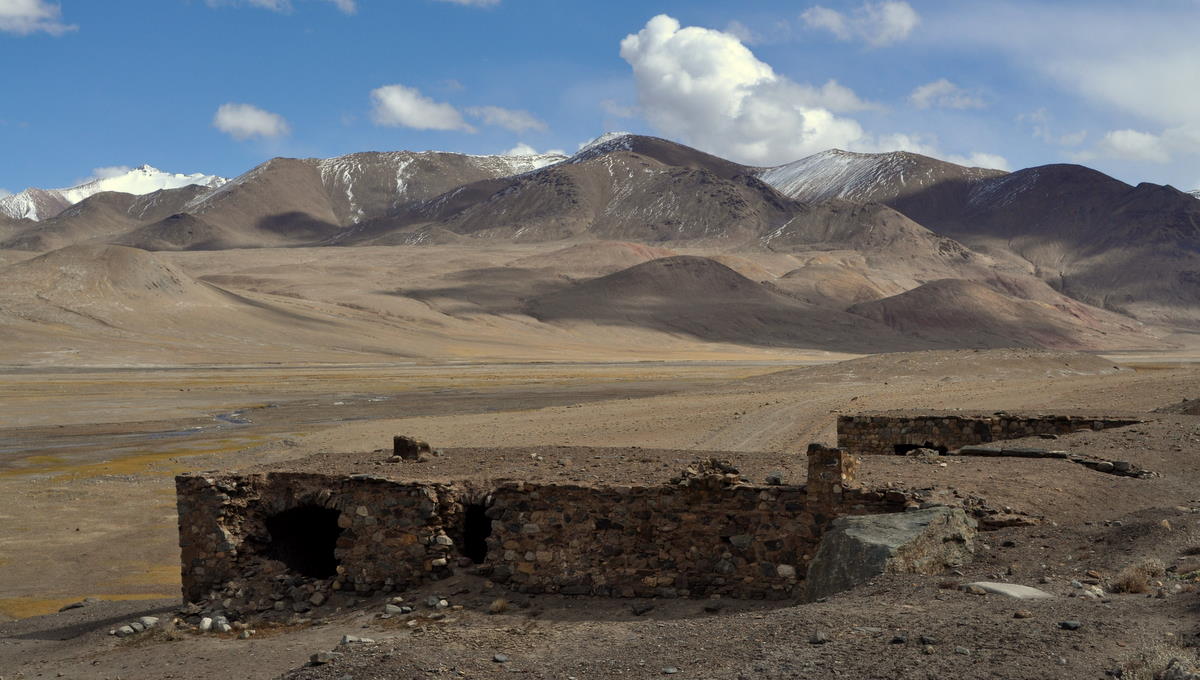
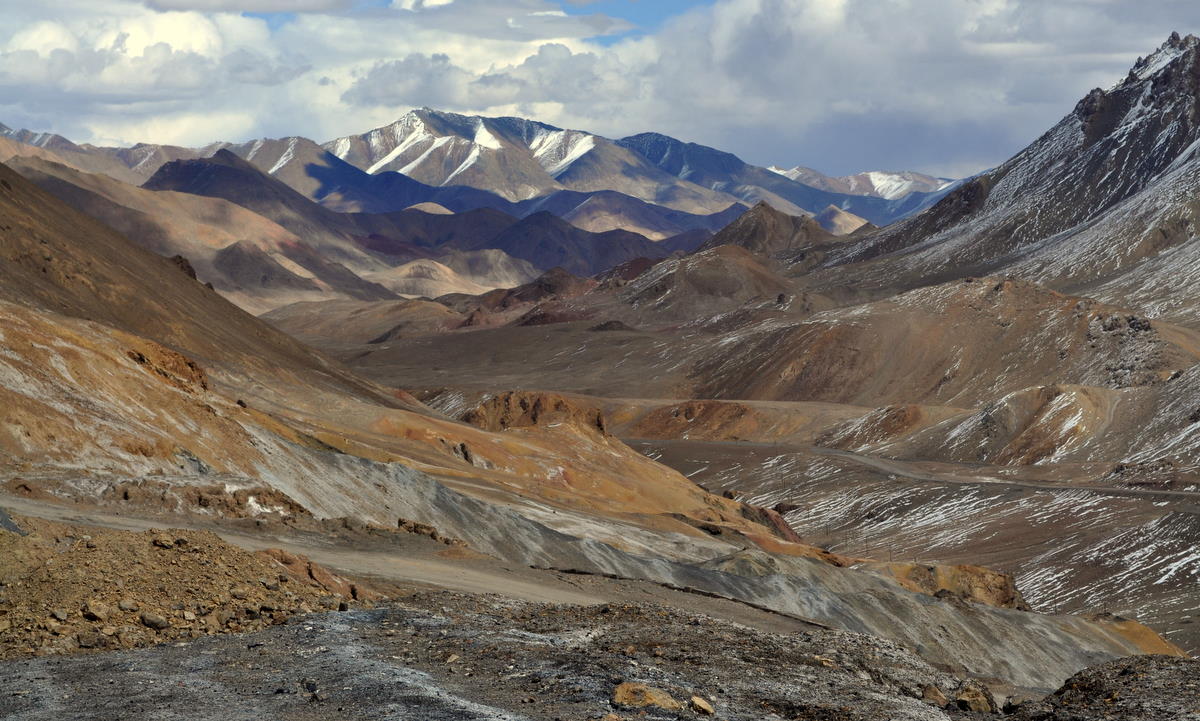
In a few more hours of driving, we reached Murghab, the only real town in the area.