Monthly Archives: October 2010

TJ-4: The Wakhan valley

After Bulunkul, we diverged from the Pamir Highway, which makes a straight shot over the mountains to Khorog, the provincial capital and the first real town on the whole road.  We were eventually headed to Khorog, but we took the longer and more interesting route down the Wakhan valley, which straddles the Afghan border to the south.

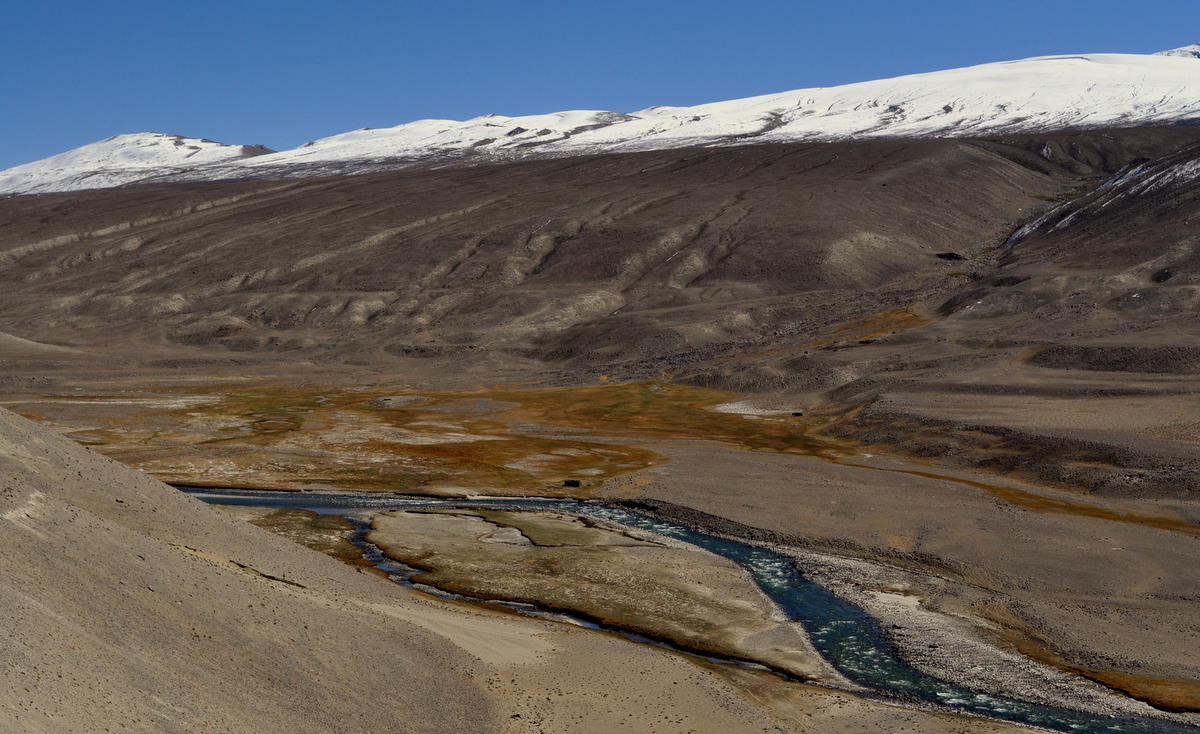
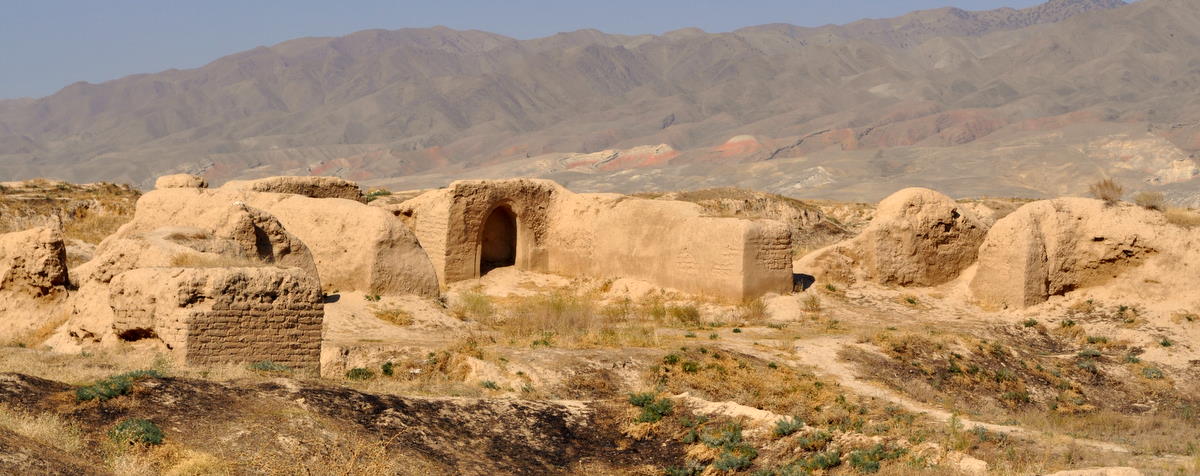
We first crossed a small pass and descended into the Great Pamir valley.  I had seen Zorkul Lake and the other end of this valley from the roadless pass a few days earlier.  But now we were 100 kilometers to the west and the water from the lake was flowing down the Pamir River.  The river formed the border with Afghanistan, and we could easily see structures like this ancient caravansarai on the other shore. The river was small and isolated enough that I considered swimming across without a visa, but prudence prevailed and I contented myself with throwing stones.  To the south rose the rugged Wakhan Range and to the north Marx and Engels Peaks.


We spent the night in Langar, where the Pamir and Wakhan rivers join to form the Panj, the local name for the upper Amu Darya (Oxus).  European explorers traced the source of the Oxus to a glacier in the far east of the Wakhan valley, which continues upstream from here in an area fully in Afghanistan and therefore inaccessible to us.  Langar is also the site of a 2000-year-old fort and a huge collection of prehistoric petroglyphs, which are gradually disappearing under local graffiti. 


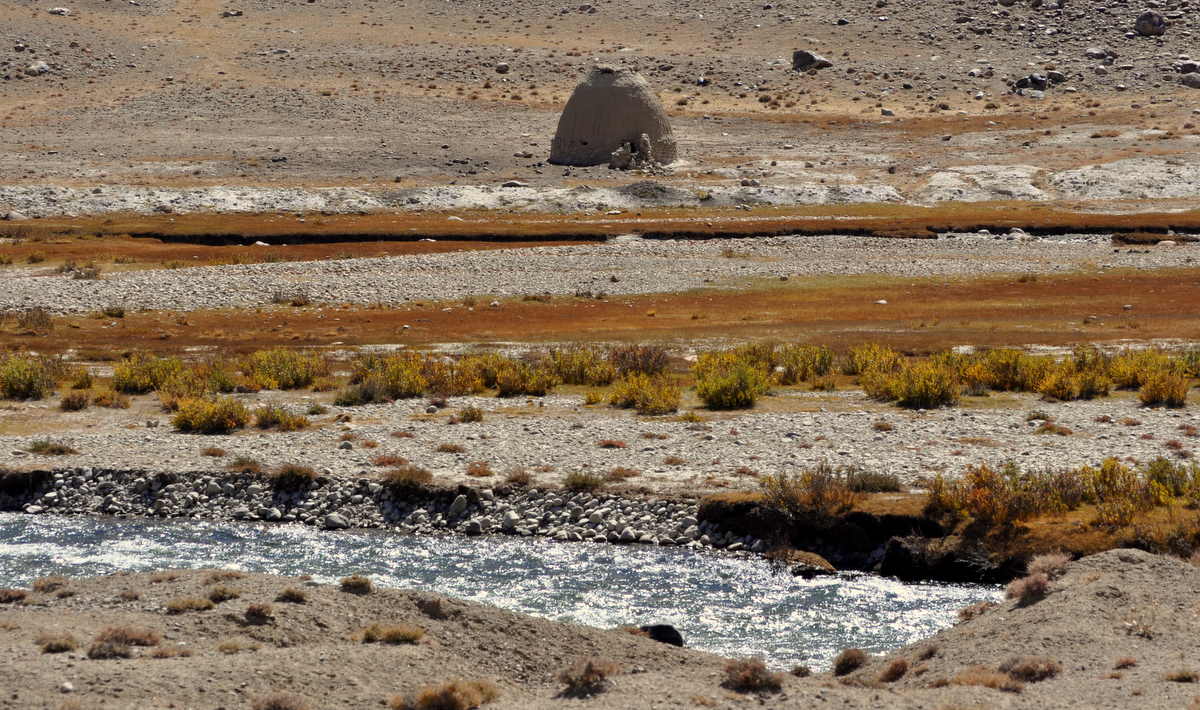
The Wakhan people follow the Ishmaili branch of Islam, but there are some interesting echos of previous religions. Animal horns and fire burning rituals grace the shrines, just as they would have done in Zoroastrian times. And there are several Buddhist stupas that date back to the Gandharan civilization long before the religion reached China or Tibet.


The lower Wakhan valley has been a center of trade and civilization for thousands of years.  Branches of the Silk Road ran through to cross passes over the Pamirs into China.  Water and a milder climate make cultivation possible, though it was striking how much more developed the Tajik side was than Afghanistan just across the river. 
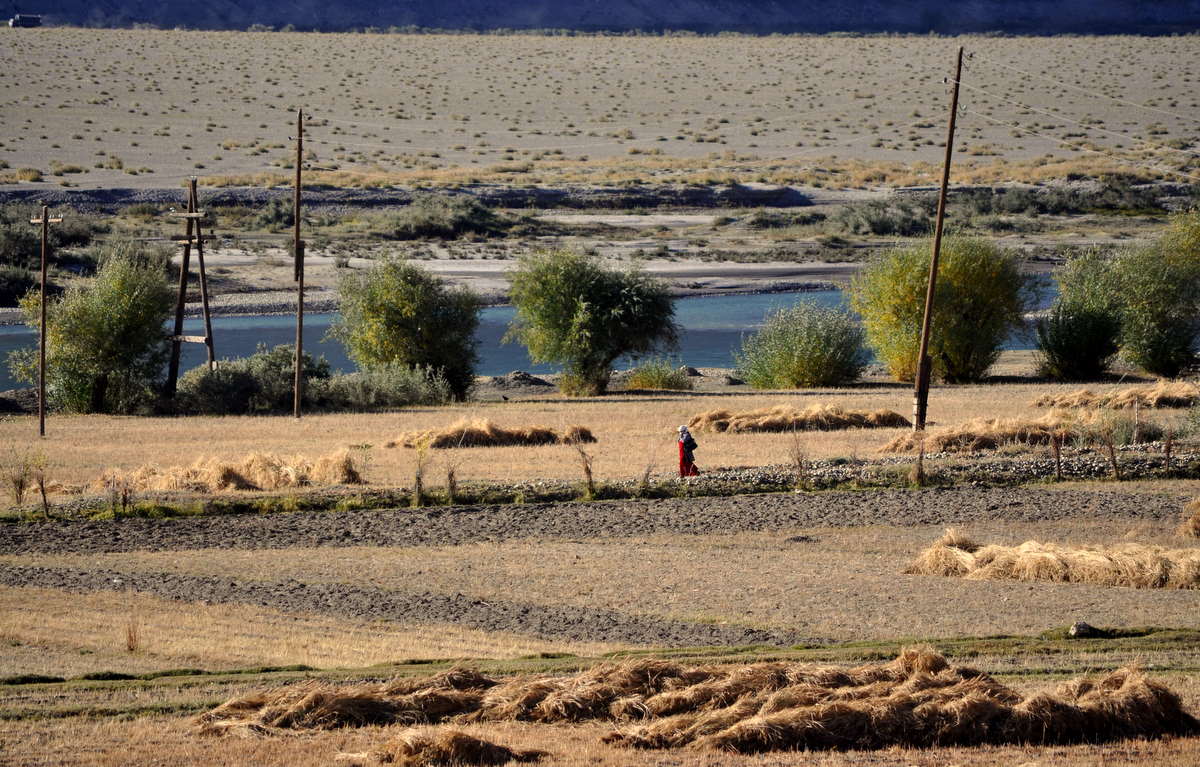

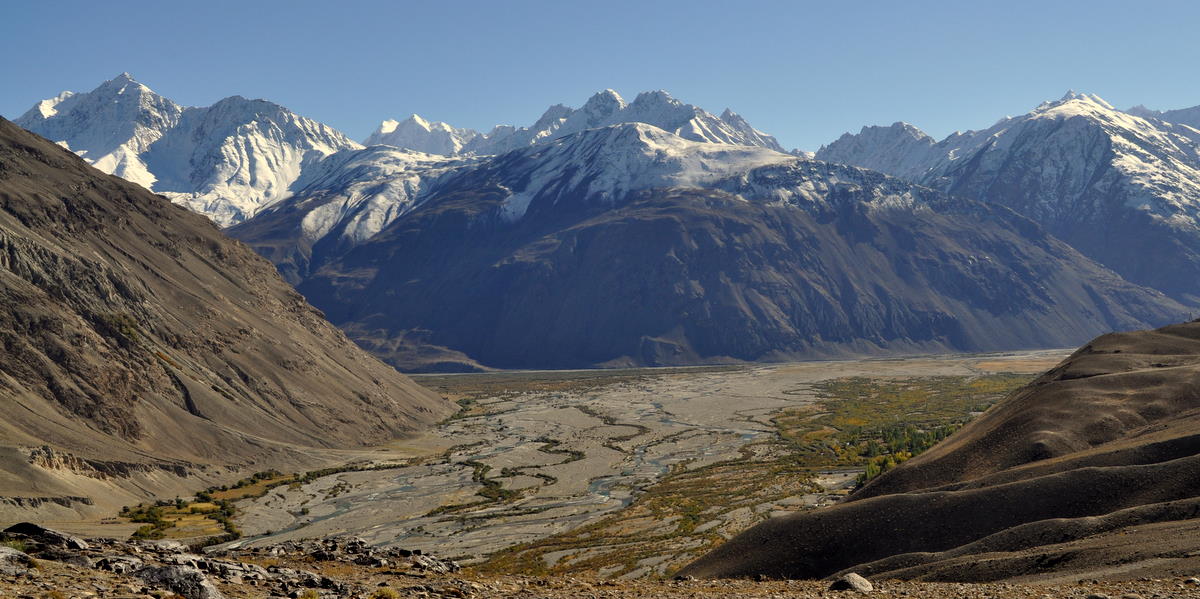
This is also the point where the Russian and British empires came closest.  The Russians controlled the north side of the valley down to the river, and the border of British India (now Pakistan) ran along the tops of the Hindu Kush mountains at the south wall less than 15 kilometers (10 miles) away.  Of course, these mountains added another 5 kilometers (15,000 feet) of vertical  relief, so the British fears of Russian artillery rolling over the mountains were largely exaggerated.  For ourselves, we were content to gaze across the valley at the magnificent snow mountains.
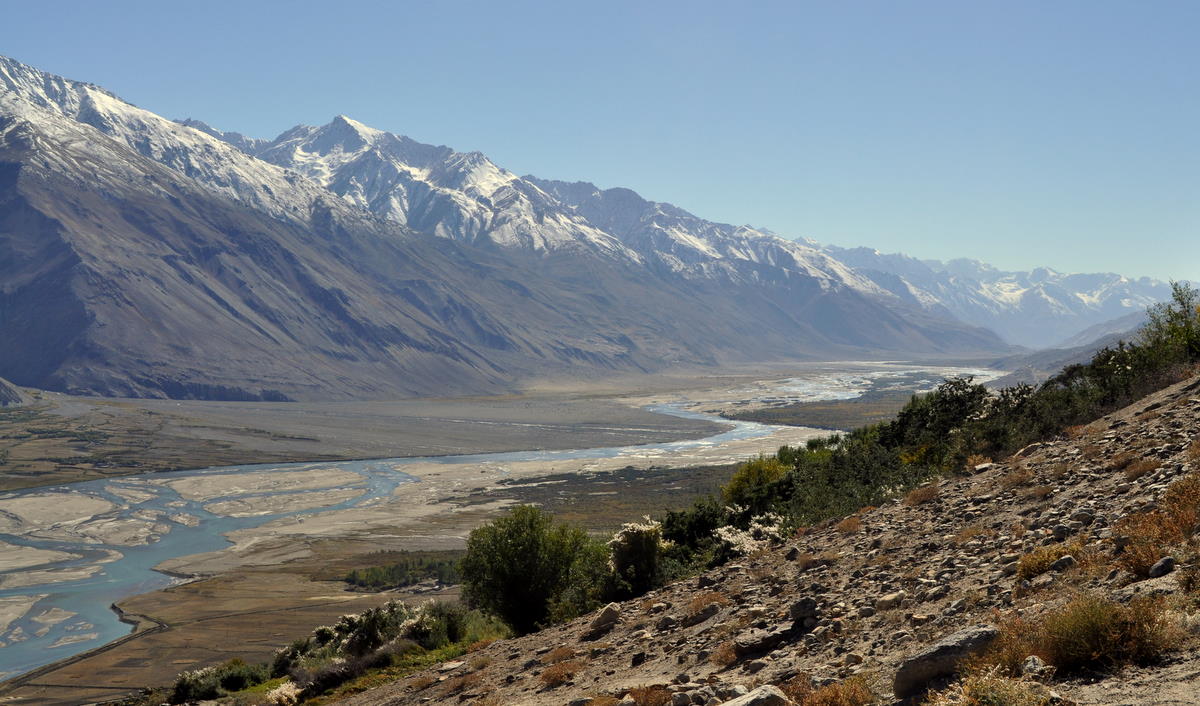


Forts, shrines, former Buddhist stupas and hot springs kept us busy all day.  At the most spectacular fort, Yamchun, our car was blocked by a French film crew, who were shooting an action movie about the Taliban.  We walked across the scene and climbed to the Bibi Fatima hot springs, a delightful soak in a cave.  Our driver had to wait and got to watch the filming of a scene involving Denzel Washington.  Pretty exciting for the resident of a town without a movie theater.  (Everyone in Tajikistan knows Arnold Schwarzenegger, though, as soon as we say we're from California.)


Homestays are among the joys of traveling in this area.  We chose to stay in simple houses without showers or toilets to get a real taste of life in the village.  Often the men of the family would gather around a tablecloth and share stories and vodka. The women would sometimes also join from a safe distance in everything but the vodka.
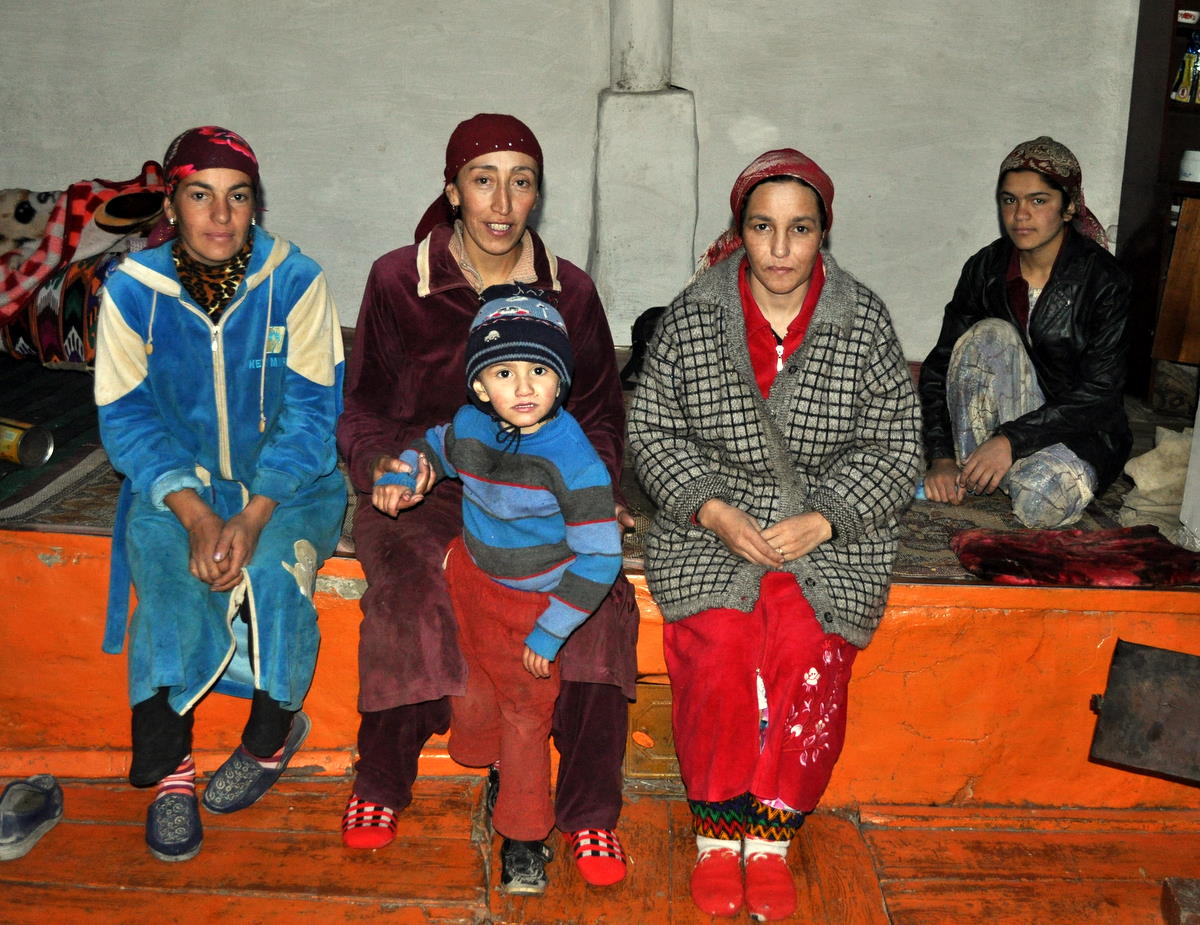


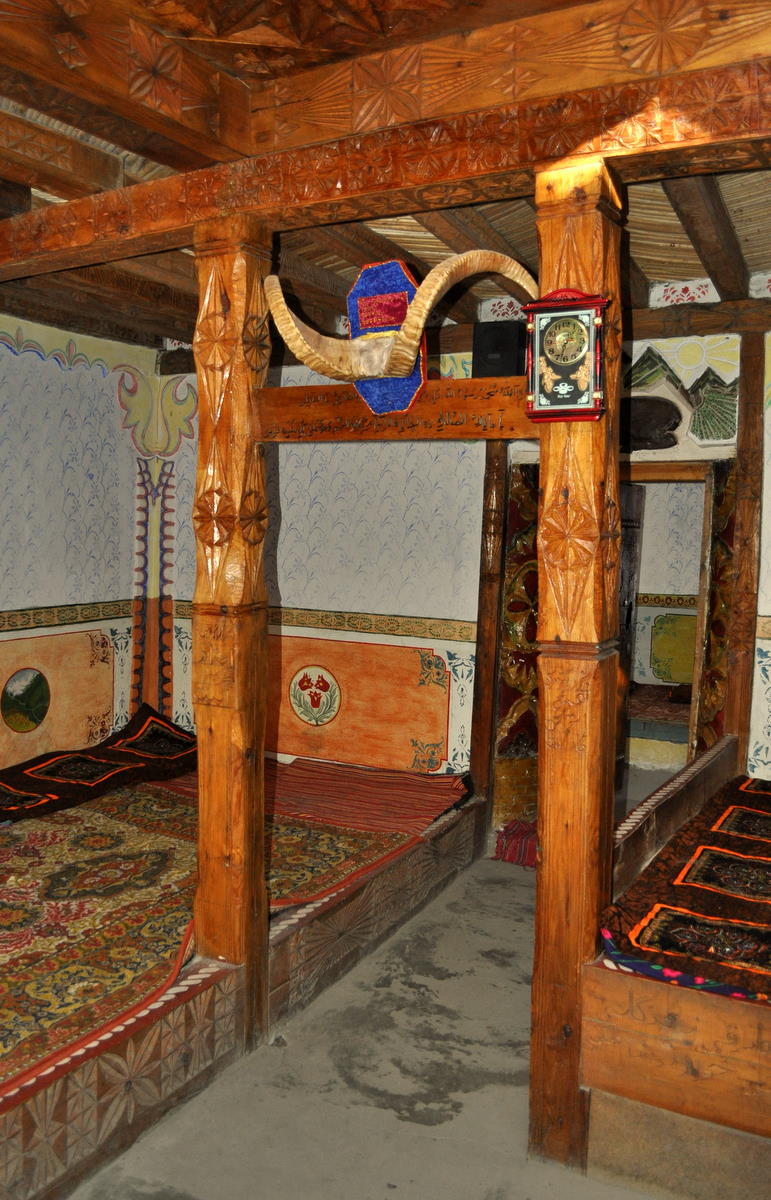
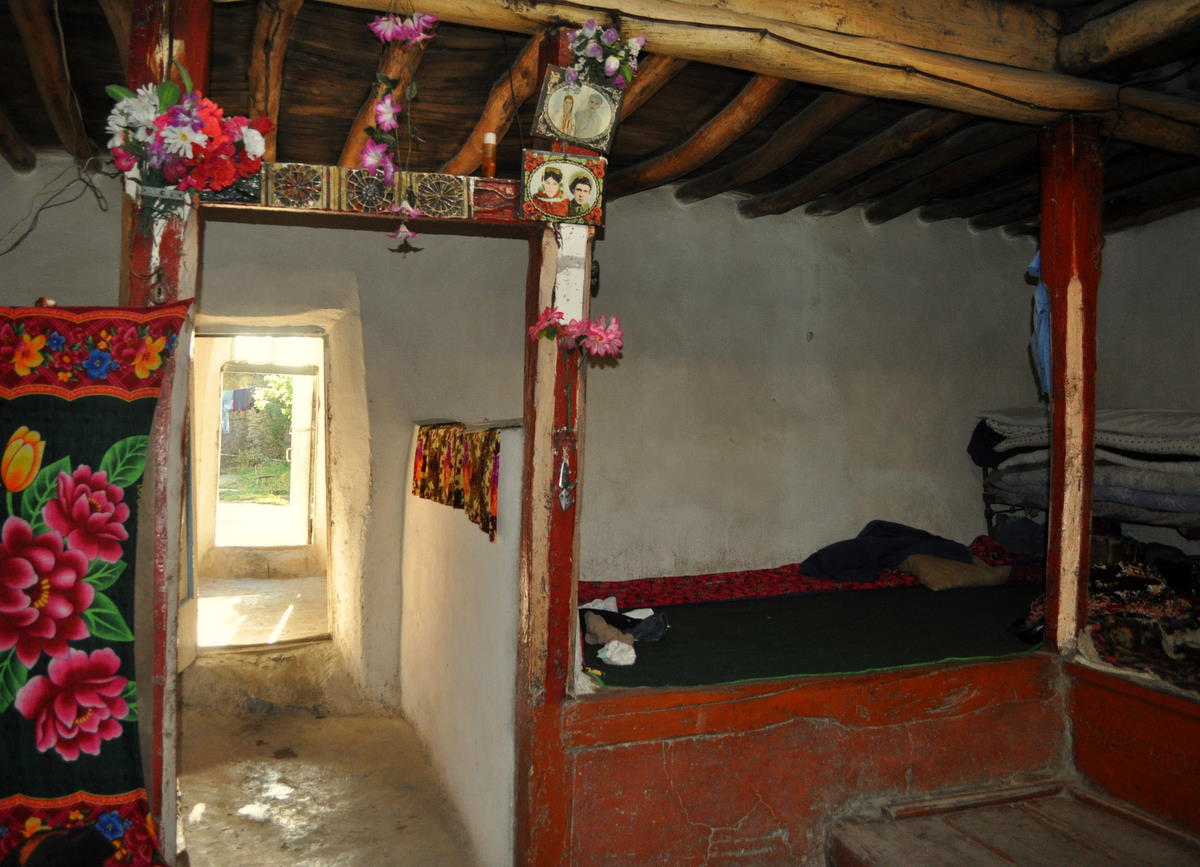
Pamiri houses are full of symbolism.  The main room is supported by five pillars, corresponding to Mohammed, Ali, Bibi Fatima, and the sons Hassan and Hussein (the latter two linked by a crossbeam).  Some believe the five pillars also have older roots in the five main gods of Zoroastrianism.  In the ceiling, a skylight is framed by four squares representing the elements earth, air, water and fire. 


On the third day, we drove the remaining route north from Ishkashim to Khorog, where nice hotels and restaurants were waiting to revive us.

TJ-5: Tajik Air – NOT!

Khorog had the advantage of an airport with one or two daily flights out of the mountains to Dushanbe, the national capital.  With the alternative being 16 hours on a horrible road, we decided to try to get tickets.

Tajik Air was like no airline I've ever seen.  Not even China in 1987 could compare. 

The Khorog planes fly only in perfect weather, which is understandable since their propellers have to skim the thin strip of land between the river and the mountains.  But they also fly only when there are enough people on the outbound flight from Dushanbe. 

Tickets go on sale the day before.  To get a ticket, you must go to the airport at 8am and hand over your passport, which they keep until the plane is in the air.  Only then do they take your money and write the ticket.  I guess that saves them having to give refunds for the frequent cancellations, but it means no one knows if they're going to be flying until they're on the plane.

We were hoping to get out the same day, which might have happened if they had had a second flight.  Our passports disappeared through a small hole and I learned that this meant we were on for the second flight if there was to be one.

Meanwhile, a dozen Tajik men were screaming through the hole to the ticket seller.  The next day's flight, whose forty seats were supposed to just be going on sale, were already overbooked by people who had paid bribes to move their passports to the head of the queue.  So the airline already had forty passports and no tickets. 

After a few hours, I finally got a straight story with the help of an aid worker who spoke Tajik and English.  There would be no second flight that day because not enough people had shown up for the outbound flight from Dushanbe.  They would be happily keep our passports overnight and maybe we would get a seat on the next day's flight.  Or maybe not, since there were already more than 40 passports waiting for 40 seats.  We said no thanks, retrieved our passports, and went to Plan B – the long drive.

With the help of some friends of the aid worker, we chartered a taxi partway, traveling the six hours of daylight that remained that afternoon.  The taxi didn't have the right license plates to go to that district, so we were joined by a policeman who could talk us through the checkpoints.  He turned out to be quite nice and spoke some English with Marcia.  We paid the driver and slept in a homestay, whose owner found us another taxi to take us the rest of the way, another ten hours.  Although it was long, we quite enjoyed the scenery, which mostly continued down the Panj (upper Oxus) river with views into the trails and rudimentary villages of Afghanistan.


Driving through Tajikistan was an experience.  The roads were generally bad except in isolated patches where the Chinese road crews had built beautiful new blacktop that had not yet deteriorated.  And the roads were especially bad in the extensive patches of construction, which tore up everything and left only a cross-country route around the worksite. 

And then there were the police checkpoints.  Neither locals nor foreigners can move around the small country without a passport.  We had to show ours about ten times in 350 kilometers (200 miles).  Our visas were in order and we avoided any unpleasantness.  But the Tajik man who had bought the remaining seat was traveling with a friend's passport, probably since he didn't have one of his own.  At most of the checkpoints he sailed right through, since the policemen never looked at his picture.  But one looked and quickly realized the man didn't match his picture.  Shouting and cell phone calls ensued and probably a bribe or two, because before long we were on our way again as if nothing had happened.  No wonder all of these checkpoints do nothing to stop the rampant drug trafficking.

We weren't so lucky once we arrived in Dushanbe.  We had reserved a nice but small hotel and no one could tell our taxi driver how to find it.  Trying to take a short cut to the main street, the driver took a turn down a street marked no entry.  We were immediately surrounded by police yelling and wanting to search our car, including our bags.  It turned out that that street was the entrance to the presidential palace, and with a suicide bombing only a few months before, the police were a little on edge.  I prevented any search of our baggage, but our driver was fined the equivalent of $40, a huge sum for a country taxi driver.  (We bumped into him later and paid him back, which quite amazed him.)

TJ-6: Around the capital city

Dushanbe is a pleasant town now, though it was hell through most of the nineties when it was the center of the civil war.  With a population of 600,000, it is twice the size of Bishkek and it would count as a city even without the palaces and patriotic monuments that the “president” has spent money on when he could have been fixing the country's roads.  With tree-lined streets, good cafes, and a vigorous market, it was a nice place to spend a few days recovering from the mountains.

Since we hadn’t seen a shower, flush toilet or even a bed for most of the last ten days, we splurged and stayed in the upscale Hotel Mercury.  Its courtyard had its own rock and water features, and its rooms were palatial. 

Like most Central Asian capitals, Dushanbe has a historical museum with a lot of old bones and a few real treasures. This one had a 13-meter (40-foot) sleeping Buddha that had been recovered from a site near the Afghan border.


We also made a short excursion to a small village called Hissar twenty kilometers west of town. At one time, this was a major outpost, with a fort, several madrassas, mosques, and a caravansarai. Much of it lies in ruins after the battles of the Bolshevik Revolution, but the great gate of the fort has been restored.


Dushanbe was built up by the Russians, and much of the architecture has the bland soviet look. But there are still nice places. Houses, while often nondescript, have interesting touches like these metal gutters.

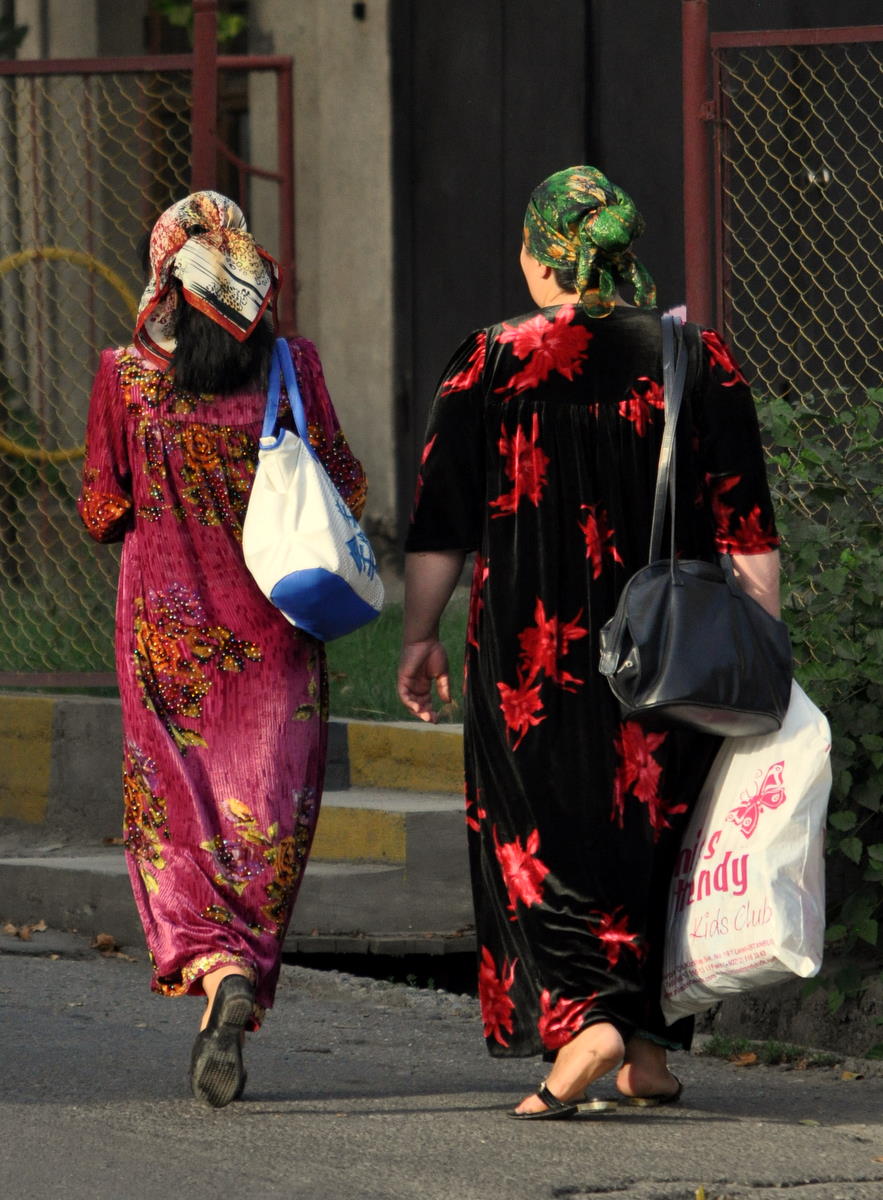
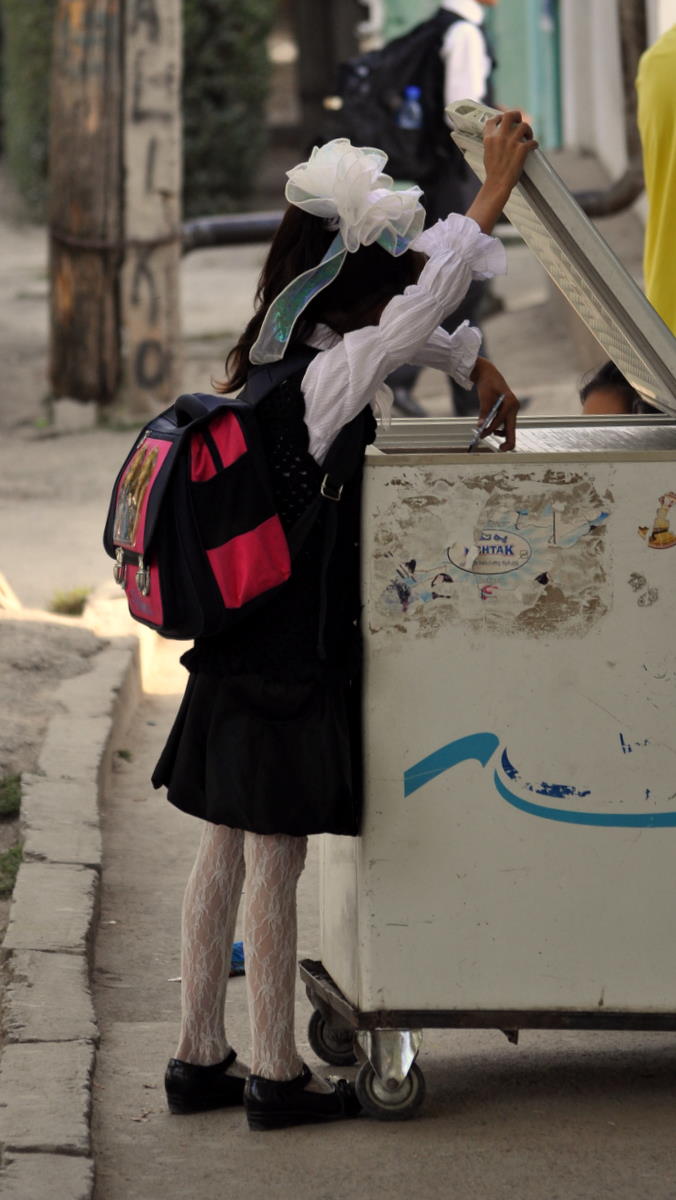
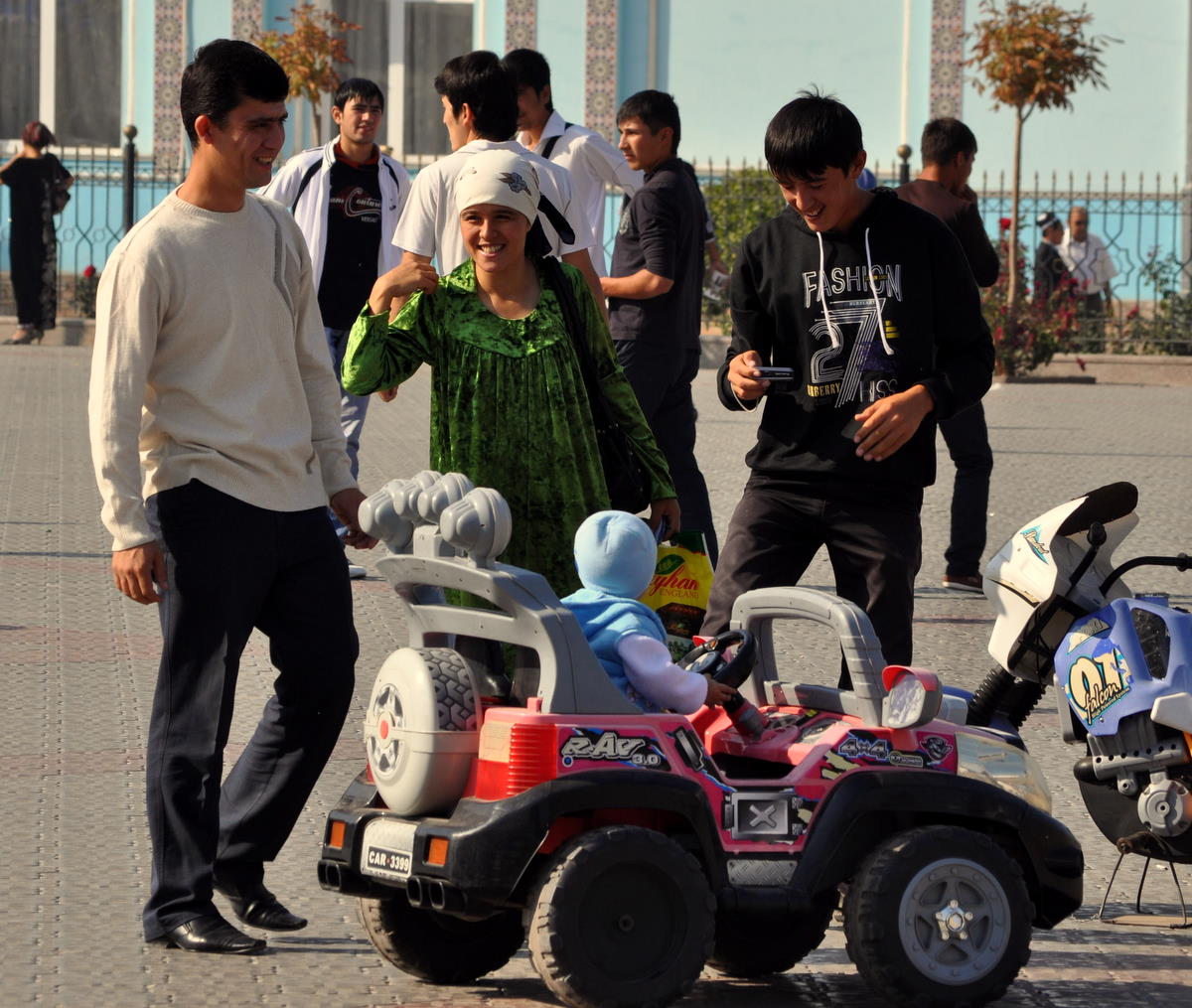
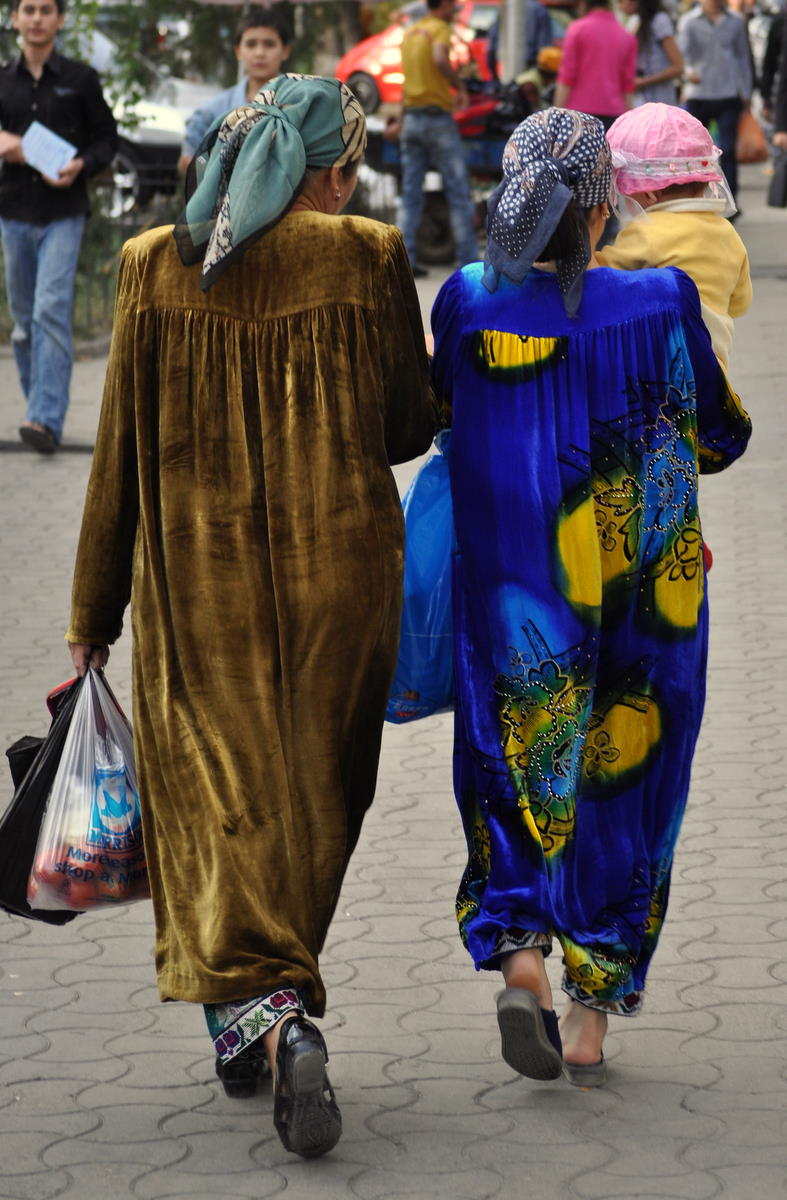
The most colorful part of any Central Asian city is the people themselves. Women dress in long, brightly colored dresses, often velvet for the cool fall air. Schoolchildren mix archaic school uniforms with the latest backpacks. Although human representation is technically forbidden in Islam, few people in Central Asia mind having their pictures taken.


TJ-7: Tajik Air – YES!

Our next destination was Khojand, the country's second-largest city in the north and the gateway to Tashkent, the capital of Uzbekistan.  Having had enough for now of 10-hour driving trips, we decided to take another chance on Tajik Air, which was supposedly more professional on this standard route.  And indeed it was, at least a little: we were able to buy confirmed tickets at the airline's office downtown, as they actually had computers and some confidence the flight would go. 

At the airport, it got more interesting.  The domestic terminal was closed when we arrived, but they opened it about 45 minutes before the flight.  We two checked bags, and the agent put both tags on the same one (I moved it to the unmarked bag).  Security consisted of an x-ray machine that spotted batteries in my checked luggage (“for cameras” I said).  They made no attempt to check my body after the metal in my pockets set off the scanner.  I could have been wearing ten kilos of explosives for all they knew.  But at least we were on the flight.

The airplane was a Soviet-era propeller model that came straight out of the 1950s.  The seats were as thin as bus chairs, most of them broken and permanently reclining.  The flight attendant passed out candies and cups of RC Cola and made announcements only in Tajik.

But the plane took off, flew calmly over the mountains and landed in Khojand.  We had made it on Tajik Air.

TJ-8: Adventures in language

Unlike the other Central Asian languages, which are of Turkic origin, Tajik is descended from Persian and closely related to the Farsi spoken in Iran and the Dari in Afghanistan.  But as a relic of the Russian domination, it is written in the Cyrillic alphabet, supplemented with a few extra letters to represent guttural sounds that are not in Russian.  Since both Tajik and Russian are commonly used, it is sometimes hard to tell which language a sign is written in.  Not that it matters, since we can't read it either way.

Arabic is the clerical language of Islam, but we didn’t see it much, even in mosques. In fact, we even spotted this minaret with Tajik (Cyrillic) writing in the brickwork.

Chinese is also becoming visible on the sides of buses and road signs, as the Chinese government is pouring in millions of dollars of aid in road and tunnel construction to gain leverage over their neighbors to the east.  Of course, no local people speak Chinese.  

But the Roman alphabet is also present, as products also come from Uzbekistan and beyond.  This makes for some interesting collisions of trademarks in the market, like the following Iranian laundry detergent, whose name means quot;snow” in Farsi.

TJ-9: Northern Tajikistan

Tajik Air deposited us in Khojand, Tajikistan's second largest city in the geographically distinct Feghana Valley. Stalin added the largely Uzbek Khojand to Tajikistan to give it the million people needed to make it a full republic, and probably also to divide and conquer the volatile valley. Uzbekistan, on the other hand, kept the traditionally Tajik areas of Samarkand and Bukhara.

Stalin's gerrymander makes for bizarre borders now that the states have become nations. The rich Ferghana Valley is divided among Tajikistan, Uzbekistan and Kyrgyzstan, and the borders cross crazily between historically connected towns. Border crossings are painful for us too, because they leave us open to searches and bribes to policemen on the make, so we decided to minimize them. So we stayed within Tajikistan until we're done, and we might later come back and visit nearby towns on the other side of the Uzbek border.

Khojand was founded by Alexander the Great, and its original name was Alexandria Eschate (“furthest”). The Soviets renamed it Leninabad for a time, and the town’s nostalgia for the more prosperous soviet times have given a place for the largest Lenin statue remaining in Central Asia. The only signs of its ancient history were the walls of its ruined citadel, but it had a nice mosque, mausoleum and covered market that kept us entertained for a morning.


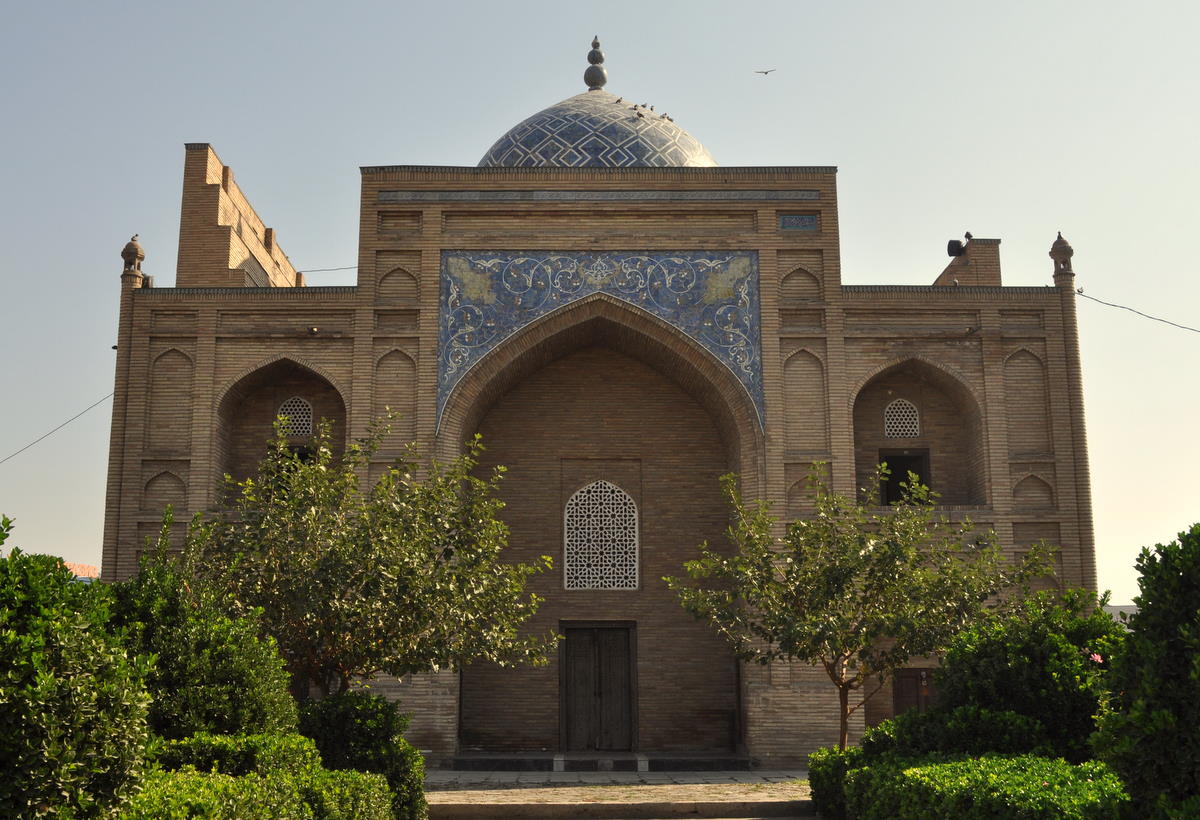
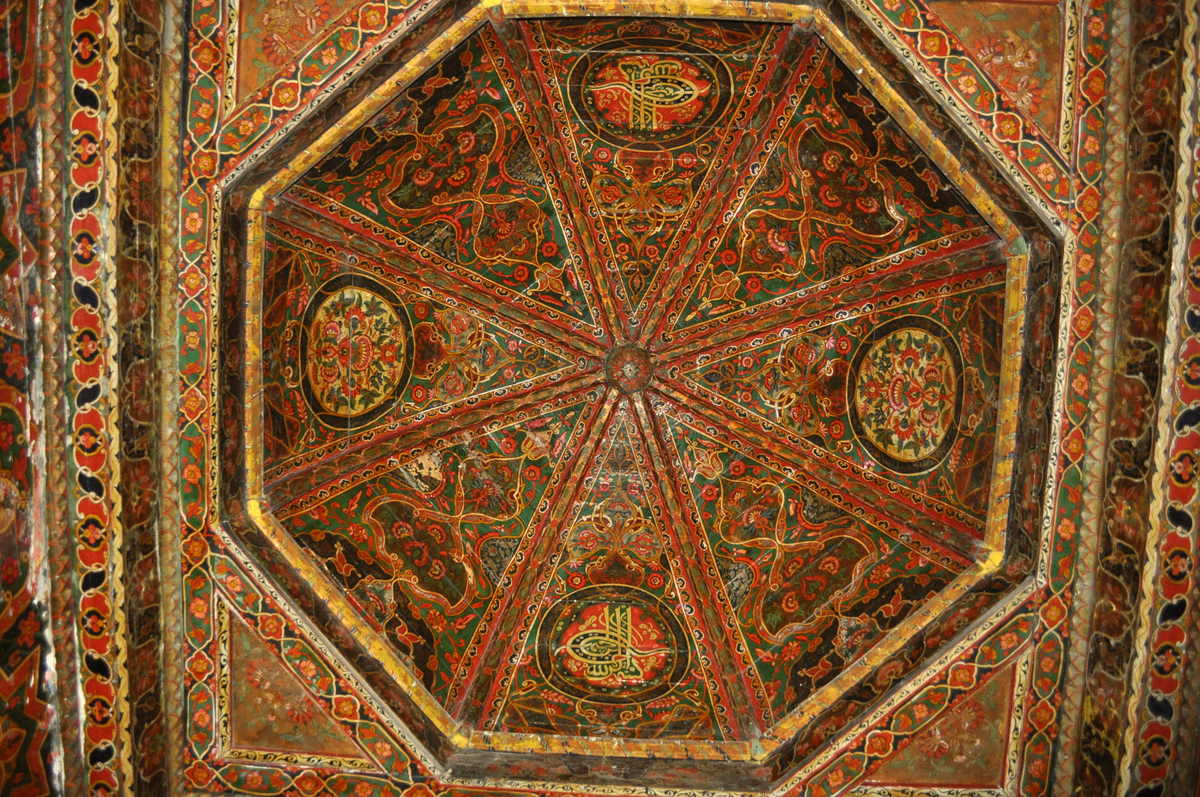
After lunch, we moved to Istaravshan, a small town an hour to the southwest. This town is known for an old town with several fine mosques and madrassas with domes and beautifully painted ceilings. We got lost quickly and would have never found these sites on our own. But we talked with an old man at a mosque, who invited us to join a group of his friends inside for watermelon. And then a group of teenagers were curious about us and served as informal tour guides. One of the teenagers would have invited us home to sleep if we hadn't already found a place, saying “A guest is a gift from God.”


The next day we traveled in a broken-down car over an even more broken road to Penjikent, a small town in the western corner of Tajikistan. Penjikent is famous as the site of a 7th-century Sogdian town and citadel. Most of its art was excavated and taken to the Hermitage (see my August pictures from St. Petersburg), but the town remains decaying on top of the hill. A small museum has a few of the frescos that weren't taken to Russia.


The following morning we finally left Tajikistan over the border connecting Penjikent to Samarkand. We had been warned to expect corruption from both the Tajik and Uzbek border guards but had no problems at all. Within an hour, we were in Samarkand. More on that soon.

———- end of detailed Tajikistan postings ———–

Out of the mountains, arrived in Dushanbe

A few hours ago, we arrived in Dushanbe, the capital of Tajikistan, after about ten days on the road. Dushanbe is a relatively civilized place, and we’re staying in a fancy hotel just to unwind and get clean. We are healthy and doing well.

Our crossing of the 1000-kilometer (600-mile) Pamir Highway and associated roads took as long as driving across the United States, but we were in no hurry in such beautiful mountains. We spent most of the last five days skirting along the Panj / Amu Darya river, known in ancient times as the Oxus. This river forms the border with Afghanistan for most of its length from the Wakhan valley to the Uzbek border. At times we were close enough to throw a rock across the border (and we did!). I was tempted to swim across, but it looked cold. We have lots of stories and pictures, which we’ll post on the blog in due time.

We expect to stay two nights in Dushanbe before moving on to a destinations in the far north of Tajikistan. We will then cross into Uzbekistan at Samarkand and Bukhara. We will then proceed into Turkmenistan on the 19th. We’ll be back in Uzbekistan on the 24th through the beginning of November, when we will pass through Kazakhstan and the western deserts of China (Xinjiang and Gansu provinces). By the third or fourth week of November, we should be back in Kunming for some more Chinese language. It sounds like a lot, but it should be generally easier travel through built-up regions with normal hotels and road transportation.

More to come as time and internet access permit.