Author Archives: Tom

Stuck in Nepalgunj

As we feared, there were no planes today. Apparently there is a small airplane in a town nearby, but it has engine problems and no estimate on when they will be fixed. And alternate planes are hard to come by because this is the busy season and they are all making more money taking tourists to see Everest. Our organizer in Kathmandu is pulling all the strings he can, but until they find or fix a plane, we will be here with nothing better to do than blog posting.

At least I seem to have found a better internet cafe. The computers actually work and the keyboard is cheap but not bad. I haven’t tried Skype yet, but there’s even some chance it might work.

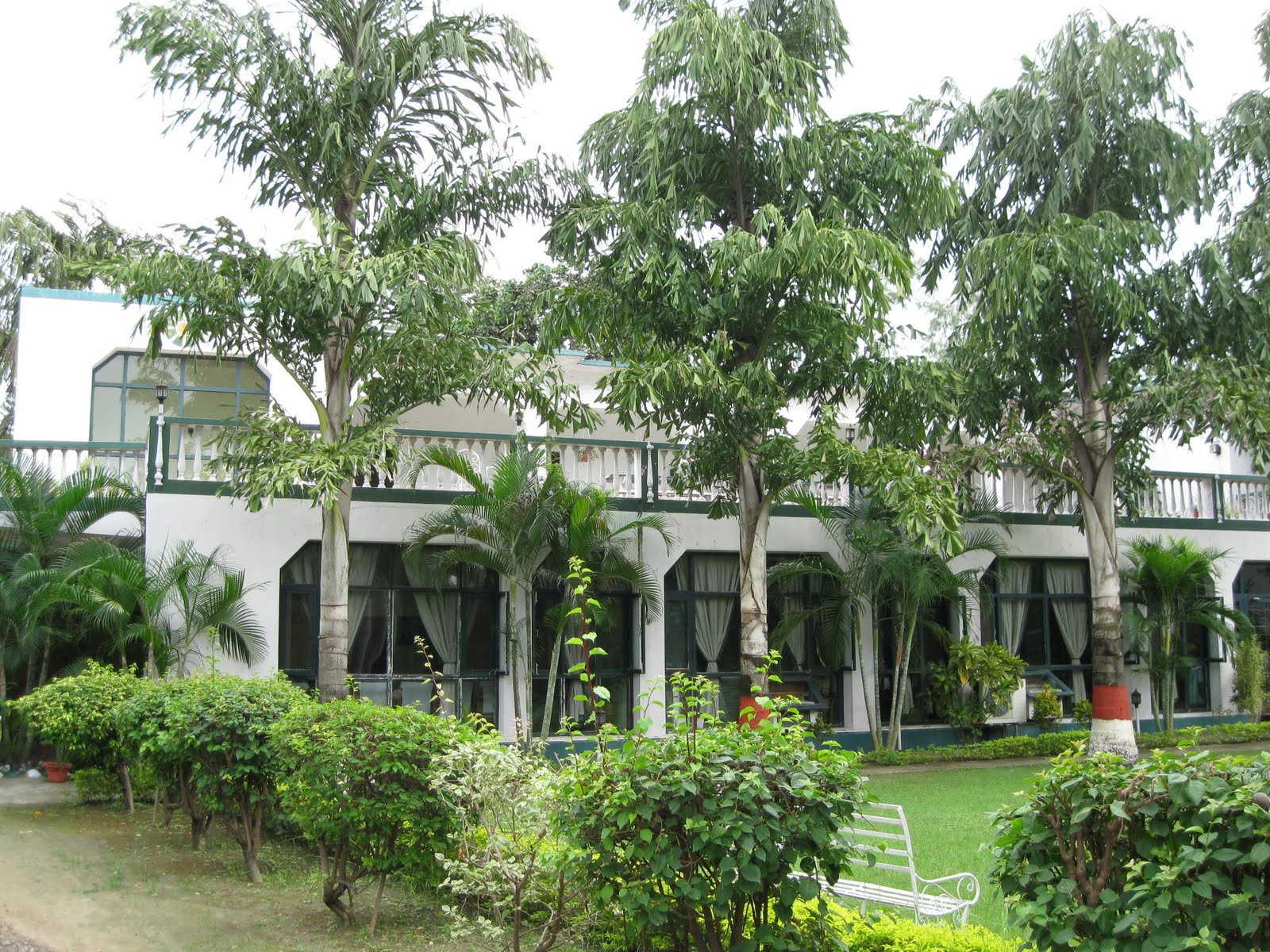
Our hotel is okay, actually quite nice in some ways (see picture). It is in a large garden with a balcony, though we wouldn’t want to sit out there in the heat. Our room has air conditioning, which works as long as there is electricity, which usually goes off in the evening when we need it most. Hot water doesn’t work in our room, but they happily brought us a couple buckets from another room. Our sherpa guide says it’s a four-star hotel, which is probably sherpa humor (deadpan and never quite sure if he’s serious).

Nepalgunj itself is just a flat, undistinguished town on the Indian border. The map says it’s at 152 meters elevation, though my iPhone’s GPS reads a little lower. It’s hard to imagine it’s in Nepal since we can’t even see a hill, though roughly half the country (and all of the usable farmland) is in the plains. Whatever it is, it’s hot.

I’ll finish this posting here, though maybe later I’ll add another to talk about our days in Kathmandu. As long as you keep seeing postings, it means we’re stuck. Once they stop abruptly, it means we’ve found a way out.
Kathmandu to Nepalgunj


We did in fact find an internet cafe in Nepalgunj, the first overnight stop on the way to our trek. Nepalgunj is a hot, flat city near the Indian border that serves as a transit hub for all flights to western Nepal. This cafe boasts the “fastest internet in the city” which is pretty pathetic if true. The keyboard is so worn that I have to fix one or two letters per sentence.

Last night was a very late night, because we found out at 6pm that we would be leaving at 7 the next morning. We have way too much stuff because we couldn’t ship certain things such as medicines from Tokyo, and we just brought too much stuff period. I finally got to sleep about 4am after filling two bags to leave in Kathmandu.

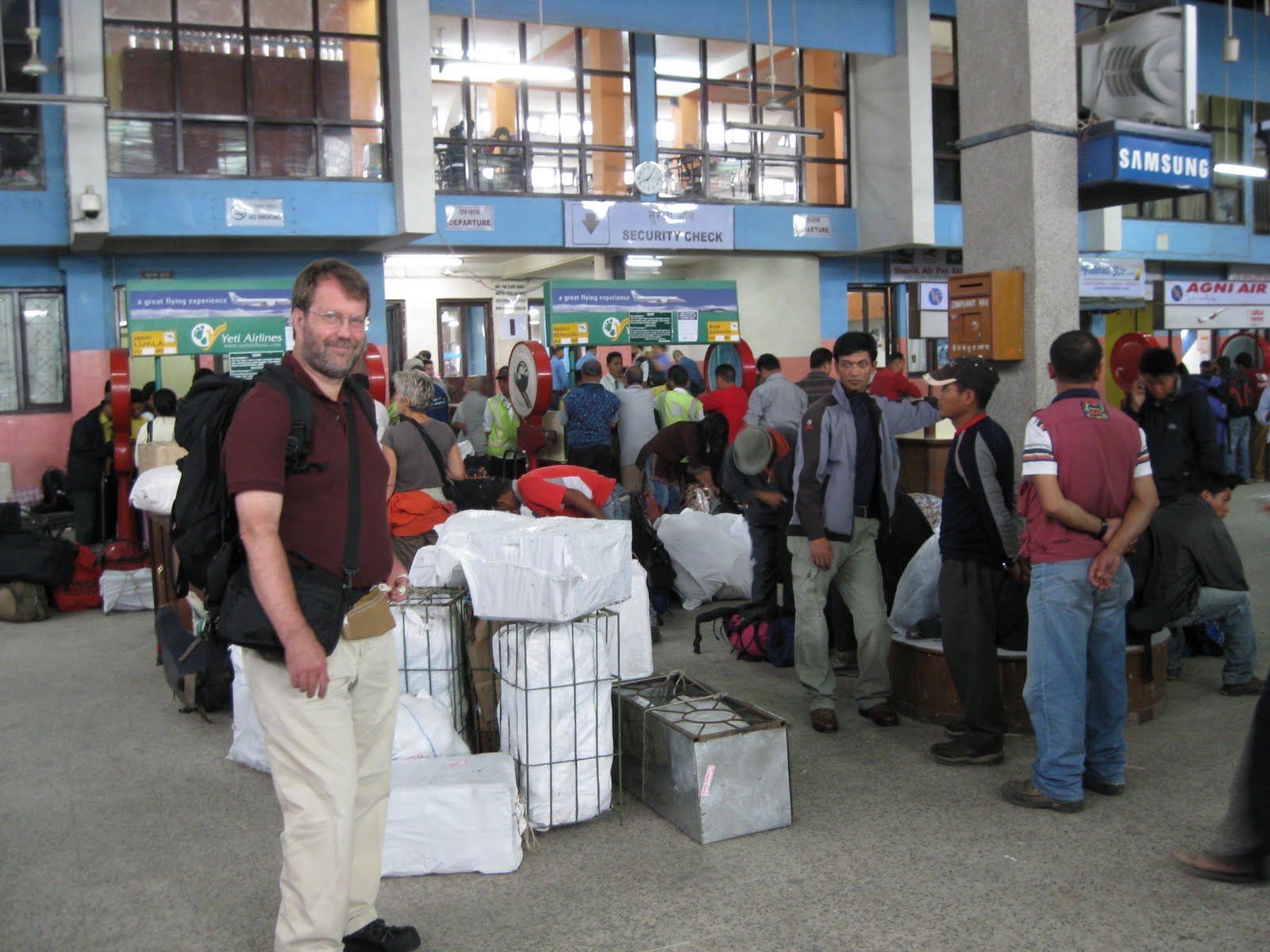
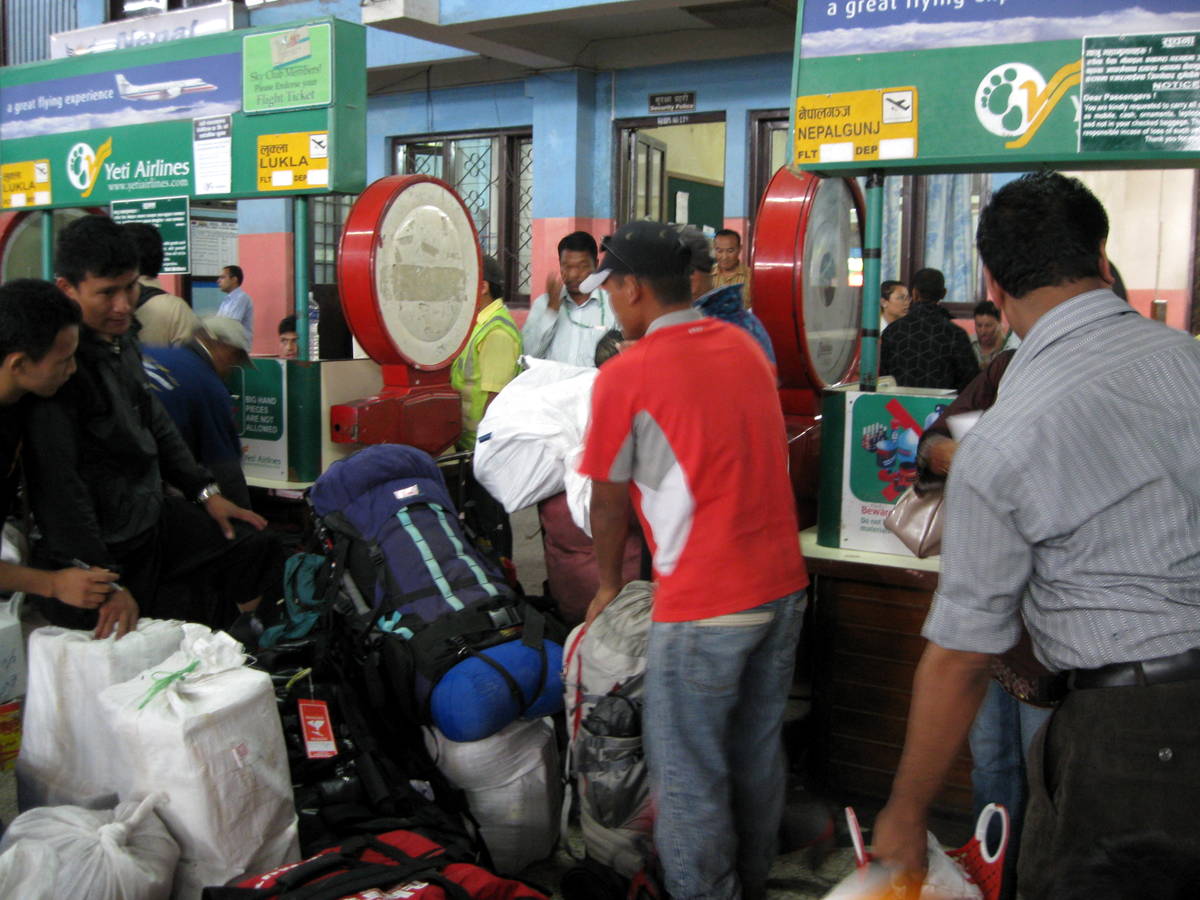
Kathmandu’s domestic terminal was actually the whole airport until they built the relatively modern international terminal about 30 years ago. It’s what an airport would have been like in the middle ages if they had been flying back then – a single big room with tables for check-in desks, piles of luggage everywhere and locals and tourists mingling with porters jockeying for tips. We were thankful for our guide and cook, who managed moving our caravan’s 10 or so bags, including our backpacks, sacks of cooking equipment, and all their own stuff. The last time we passed through here we were on our own, and it was up to me to navigate the gauntlet.

It was raining all morning in Kathmandu. The locals blame global warming for extending the monsoon, but our guide Kinna Sherpa observed that this was the second year in a row that it had rained the day after the Dasain festival, a fifteen day event marked with animal sacrifices. Kinna is Buddhist like most sherpas, and he seemed to feel the gods wanted to wash the blood off the streets.

Whatever the explanation, it was sunny when we landed in Nepalgunj, and we could actually see the tops of Annapurna and Dhaulagiri. Our plan is to walk for a few weeks in the high valleys to the west of Dhaulagiri, then cross several high passes to the north of that massive mountain and then come out at Jomosom in the Kali Gandaki valley, one of the most visited places in Nepal. It will be people shock for us then, because the previous weeks will be spent on the edge of the Tibetan plateau where only nomads and a few crazy trekkers go. In the past, traders used to bring loads of salt down from Tibet, but political changes and dropping prices have cut that to a trickle (see Eric Valli’s great 1999 movie titled Himalaya – also sometimes Caravan – if you want to know more about life in this area).

Anyway, first we have to get to Dolpo. The only airport there is a short-takeoff-and-landing airstrip with bumps like a roller coaster, and the airlines tend to cancel flights and move airplanes to the more lucrative tourist routes in the high season. Despite our confirmed reservations, there is a good chance this will happen to us tomorrow and we will be back in the internet cafe until we get on a flight. And our cook says there is internet in the next city too, though if it’s any slower than this I may not bother.

Anyway, that’s all for now. If you don’t see any more posts, it means we got on a flight and we are off on the trail. We’ll be back online when we can, probably early November.

Kathmandu and beyond

We spent our last three days of our Japanese stay in Kamikochi in the Japan Alps, sort of a warm-up trip for Nepal. The mountain trails there are at least as rugged as any we will find in Nepal, and we both found ourselves rather out of shape. I did manage to get to the top of Oku-Hotakedake, the third highest peak in Japan, and one that I’ve tried to climb on several occasions before. Marcia turned back and even so, she felt like the day had been too much for her. I’m sure we will be in much better shape as the treks go on!

We flew to Kathmandu via Singapore on September 29, arriving the 30th. We spent the next day and a half interviewing tour companies and trekking leaders and finally settled on a trip organized by Ngima Sherpa, the brother of the guide who took us around the Everest region almost 10 years ago.

Our planned trip is one of the most remote in Nepal – Lower and Upper Dolpo, the area made famous by Peter Matthiessen’s book The Snow Leopard. We will be on the trail for about 26 days and no access to cell phones, email, or even electricity from start to end. If all goes well, we will come out at Jomosom, an airport on the much more heavily traveled Annapurna loop. The Dolpo region is of Tibetan culture and very high, most of it between 4000 and 5000 meters elevation. We will acclimatize carefully and be fine, and we will have a good team of locals who can help us if anything goes wrong.

We are packing furiously tonight, because we leave the hotel tomorrow morning at 7am to fly to Nepalgunj, a low-altitude airport hub from which we will fly to Dolpo very early the next morning. With some luck, we will have internet access in Nepalgunj and can add some more notes, but if not, we’ll see you all around November 1 when we get back to something approaching modern civilization.

Take care, everyone, and come back for our next post, whenever that might be.

Tom and Marcia go on the road

Tom Blackadar and Marcia Johnson will share this blog to publish notes about our upcoming travels, which we call Rough and Ready Tours. Postings may be irregular, as we may drop off the grid for a month or more in places without electricity or internet access.

I have recently taken early retirement from the company where I have worked for almost 25 years. It’s been a great quarter century, but Marcia and I are now ready to do the many things we’ve been dreaming about but never had time to do. I doubt my break will be permanent, and I already have some ideas of what I might do when I get bored or run out of money. But for now, we’re off to parts unknown.

We have been living and working in Tokyo for a little over two years, and it’s been a great experience. Tokyo is a very livable city and we would be happy to come back (our expat friends predict it will take less than two years). It’s been a little sad to spend our last few weeks saying goodbye to our many friends, but we know we can always come visit.

So now we look forward. We leave our apartment in Tokyo this Friday, September 25 and will spend a few days hiking in the Japan Alps, weather permitting. And then, on September 29, we will fly via Singapore to Kathmandu. We have no fixed plan yet, but we expect to be trekking for most of October, November, and early December, the best season in Nepal. Our current plan is to fly back to the US on December 13 to spend the holidays with our family and friends, and then fly back to Asia on January 23.

We hope to stay in touch with all of our friends.